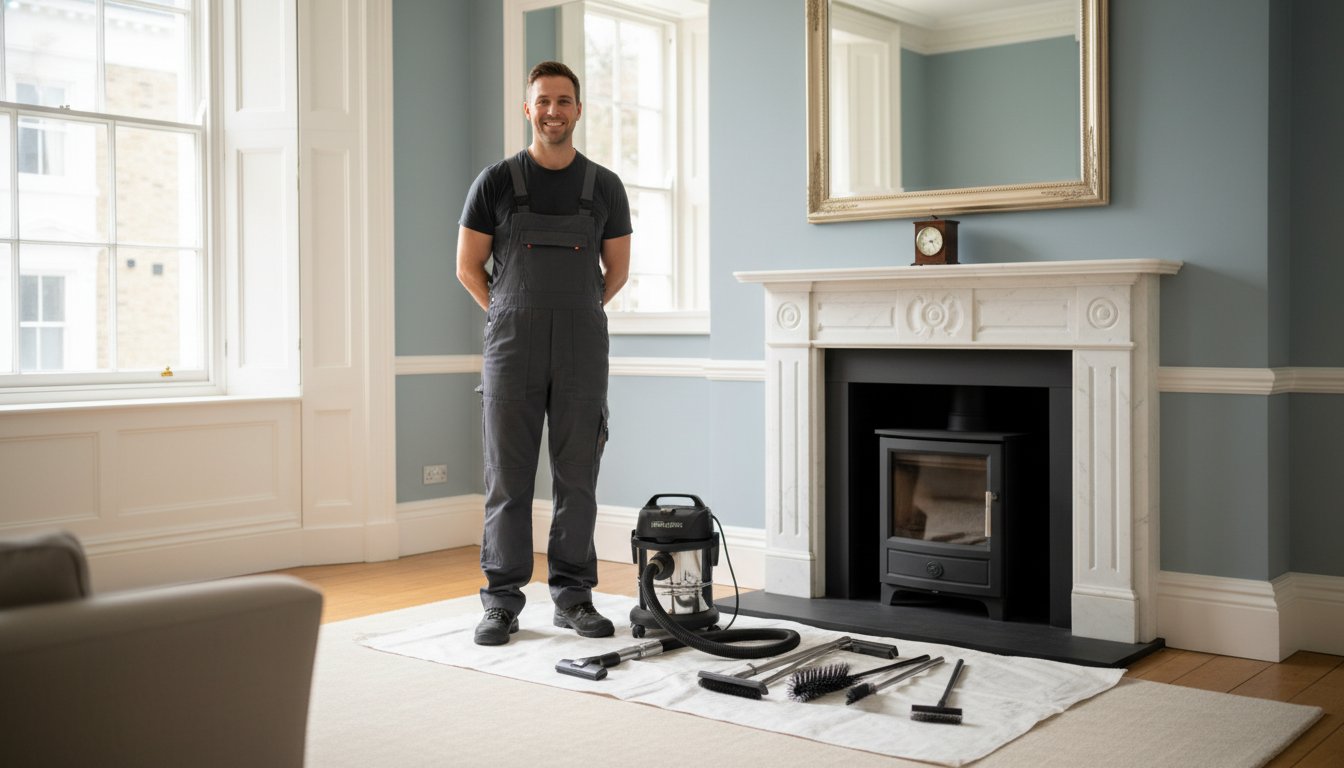
Did you know that over 3,000 chimney fires are recorded across England annually, with a significant portion occurring in historic Warwickshire properties? It's a sobering thought when you simply want to relax by the fire on a cold evening. Following the best practices for MR-SWEEP ensures your Leamington Spa home stays safe while keeping your wood burner running at peak efficiency. Most homeowners feel a genuine sense of anxiety about the hidden buildup of flammable creosote or the potential mess a professional visit might leave on their carpets.
We understand that you want a warm home without the stress of "soot-drift" or confusing legal jargon. You deserve to know exactly how often your flue needs attention and what your insurance provider actually expects from you to keep your policy valid. This guide helps you master the essential safety standards and maintenance routines required to protect your household. We'll walk you through creating a reliable maintenance schedule, understanding HETAS regulations, and why a clean workspace is a non-negotiable standard for any professional sweep.
Key Takeaways
- Learn how to determine the optimal sweeping frequency for your specific fuel type to ensure your chimney remains safe and compliant with UK insurance standards.
- Discover why the Best practices for MR-SWEEP involve using HEPA-rated vacuums and professional techniques that far exceed the capabilities of standard DIY rod kits.
- Understand the unique maintenance requirements for Leamington Spa’s period properties and why structural monitoring is vital for older Victorian flues.
- Master the simple steps to prepare your "hearth zone" for a mess-free visit, ensuring a clean and efficient professional service.
- Identify critical stove components, such as rope seals, that must be inspected alongside the flue to maintain maximum heating efficiency and prevent smoke leaks.
Defining Chimney Maintenance Best Practices in Leamington Spa
Effective chimney care isn't just about a quick brush before winter. It requires a focused, three-tier approach: regular professional sweeping, precise fuel selection, and consistent structural monitoring. For local homeowners, following the Best practices for MR-SWEEP ensures your appliance operates at peak efficiency while protecting your property from avoidable damage. A simple surface clean often misses deep-seated soot deposits. A professional diagnostic sweep, however, identifies internal cracks or obstructions that could lead to hazardous chimney fires.
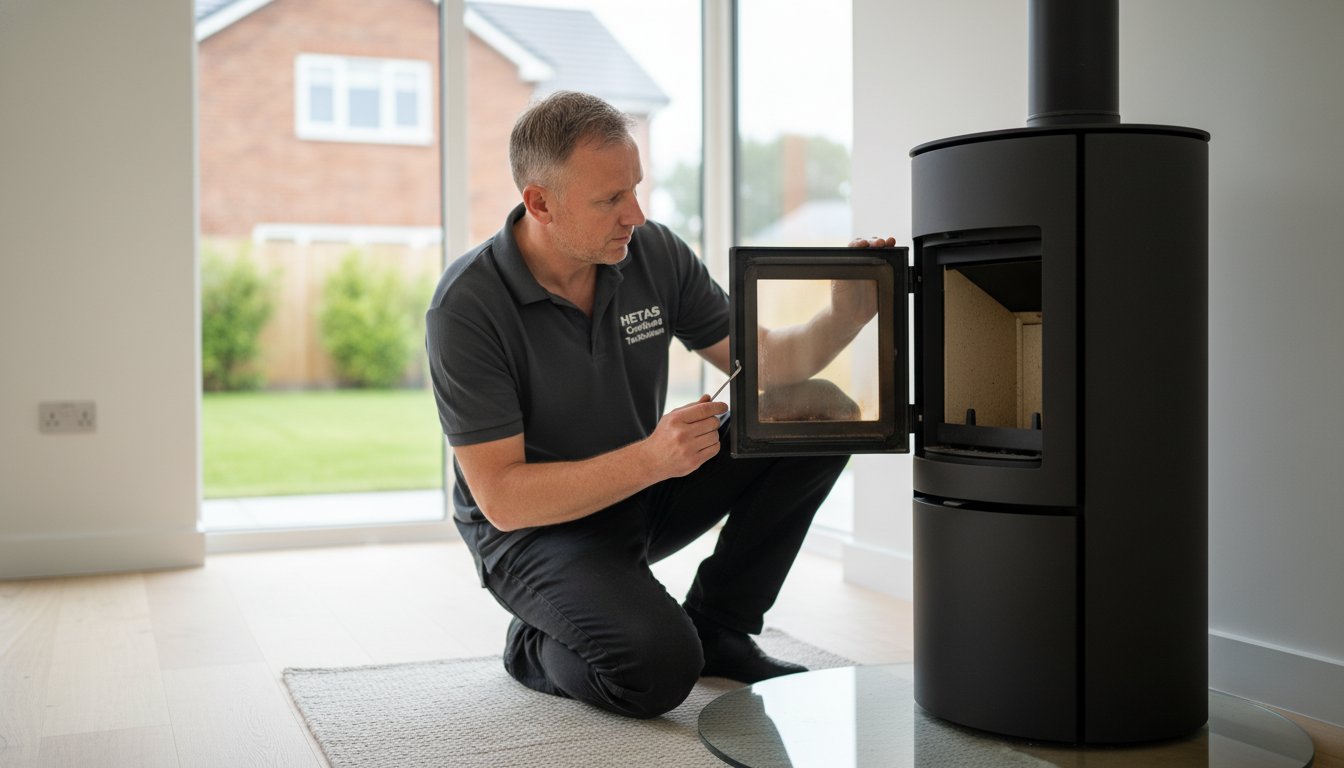
HETAS-registered technicians play a vital role in this process. They ensure every inspection meets the UK's Document J building regulations, providing the certification many insurance providers now require. By choosing a professional service, you move beyond basic cleaning into comprehensive system management.
The Unique Architecture of Warwickshire Chimneys
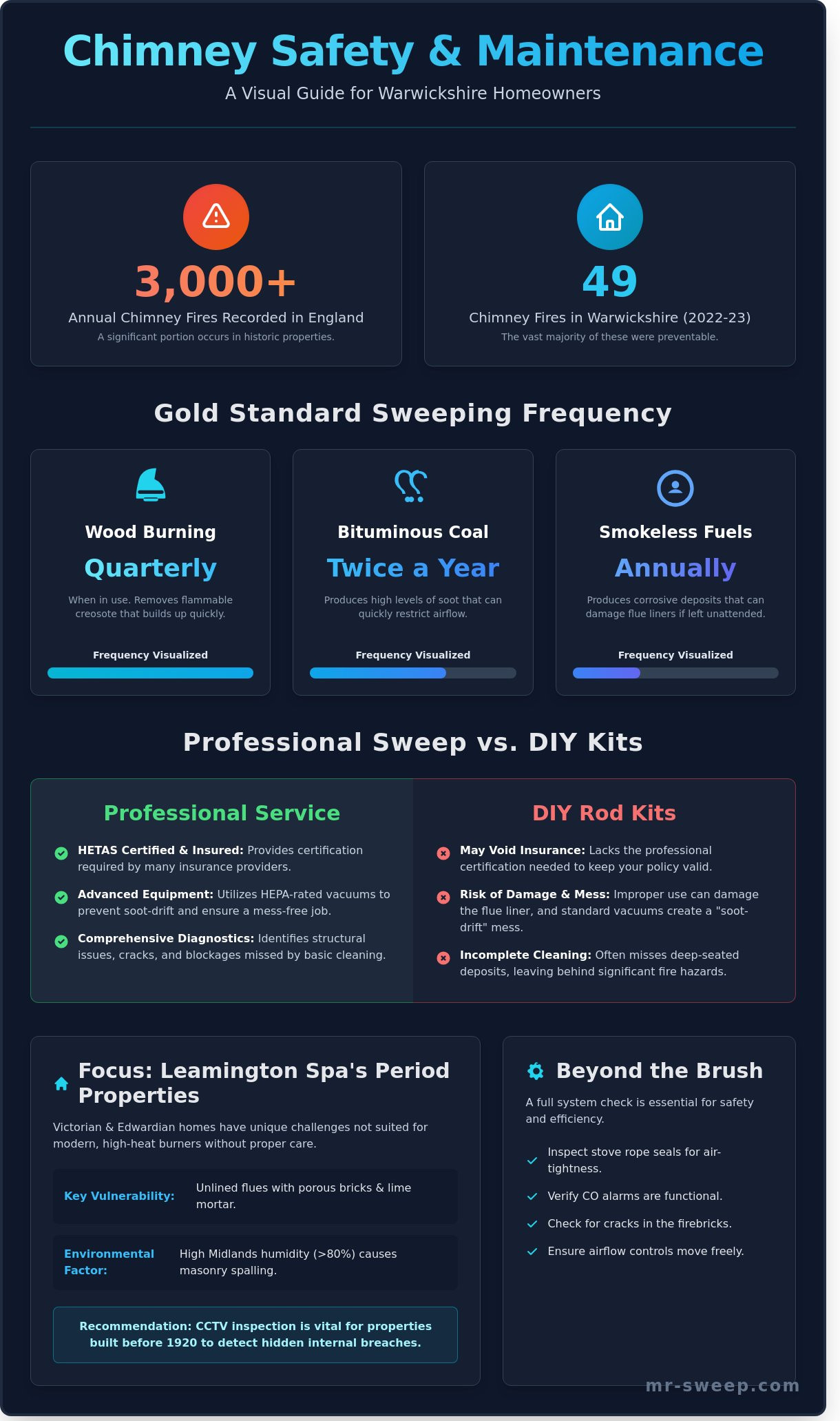
Leamington Spa is renowned for its Victorian and Edwardian architecture. These period homes often feature unlined flues that weren't designed for the intense heat produced by modern wood burners. When understanding chimney construction in these older buildings, you'll find that porous bricks and lime mortar are standard. The Midlands experiences high humidity levels, often exceeding 80% during the winter months. This moisture settles in the masonry, causing spalling where the brickwork begins to flake and degrade. We recommend CCTV inspections for any property built before 1920 in Warwick or Kenilworth to check for internal breaches that are invisible from the hearth.
Why Safety is the Core of Best Practice
Safety remains the non-negotiable priority for every household. Warwickshire Fire and Rescue Service recorded 49 chimney fires across the county between April 2022 and March 2023. The vast majority of these incidents were preventable through routine maintenance. Beyond the risk of fire, poorly maintained flues allow Carbon Monoxide (CO) to seep into living spaces. This colourless, odourless gas is lethal even in small concentrations. Creosote is the primary combustible byproduct of wood burning that accumulates inside your flue. Adhering to the Best practices for MR-SWEEP means you're not just cleaning a pipe; you're securing your family's safety against these silent risks.
- Professional Sweeping: Removes creosote and blockages that restrict airflow.
- Structural Checks: Identifies mortar decay in older Warwickshire stacks.
- CO Alarms: Essential backup to professional flue maintenance.
By staying proactive, you avoid the high costs of emergency repairs. A well-maintained chimney lasts longer, burns cleaner, and provides the peace of mind you need when lighting your fire on a cold evening.
The Gold Standard Frequency for Sweeping and Inspections
Safety in your home depends on a strict maintenance schedule. Adhering to the established best practices for MR-SWEEP ensures you aren't just cleaning a flue; you're protecting your family from carbon monoxide and chimney fires. In Leamington Spa, September remains the busiest month for professional sweeps. Homeowners often wait for the first frost to realise they've neglected their hearth, leading to a surge in bookings. A proactive approach is always better.
A pre-season sweep in late summer clears out any debris that accumulated during the warmer months. However, the post-season check is equally vital. After a long Warwickshire winter, heavy use can cause internal masonry damage or liner degradation. Identifying these issues in April allows for repairs before the next cold snap. You shouldn't ignore unused chimneys either. An annual inspection is a baseline requirement because birds, particularly Jackdaws, can fill a chimney with several feet of twigs in less than 48 hours, creating a total blockage.
Frequency by Fuel Type
The fuel you burn determines the rate of soot and creosote accumulation. We recommend following these industry intervals:
- Wood burning: Quarterly when in use. Wood creates flammable creosote that must be removed frequently.
- Smokeless fuels: At least once a year. These fuels produce corrosive deposits that can eat through liners if left sitting.
- Bituminous coal: Twice a year minimum. This traditional coal produces high levels of soot that quickly restrict airflow.
Professional standards, such as the EPA Chimney Safety Guidelines, confirm that regular professional oversight is the only way to maintain appliance efficiency and safety. Our team uses these benchmarks to ensure every Leamington home meets the highest safety criteria.
Signs You Need an Urgent Sweep
Sometimes your chimney provides warning signs before your scheduled appointment. If you notice "soot fall," which appears as black flakes or clumps in the grate, your flue is likely overdue for a clean. Visible smoke leaking back into the room is another critical red flag. This downdraught often indicates a dangerous blockage or a bird nest that has restricted the exit of toxic gases.
Listen for scratching sounds or chirping. Jackdaws are notorious for nesting in local chimneys, and their nests are dense enough to cause immediate smoke backup. If your fire seems sluggish or the room smells like stale soot when the fire isn't lit, don't wait for your annual date. It's best to arrange a professional inspection immediately to identify the cause and restore proper ventilation to your home.
Professional Sweeping vs DIY: The Insurance and Safety Gap
Many homeowners in Leamington Spa attempt to save approximately £60 by purchasing a budget rod and brush kit from a local hardware store. While the DIY approach seems cost-effective, it often creates more problems than it solves. These consumer-grade kits lack the flexibility and strength required to navigate the bends in a modern flue. We frequently receive calls to retrieve snapped brushes or stuck rods, which can cost hundreds of pounds to remove professionally. Beyond physical damage, DIY cleaning rarely addresses microscopic creosote deposits. A "clean-looking" flue isn't necessarily a safe one; invisible glazed creosote remains highly flammable despite a quick brush through. Following the best practices for MR-SWEEP means prioritising a deep, mechanical clean that DIY tools simply can't achieve.
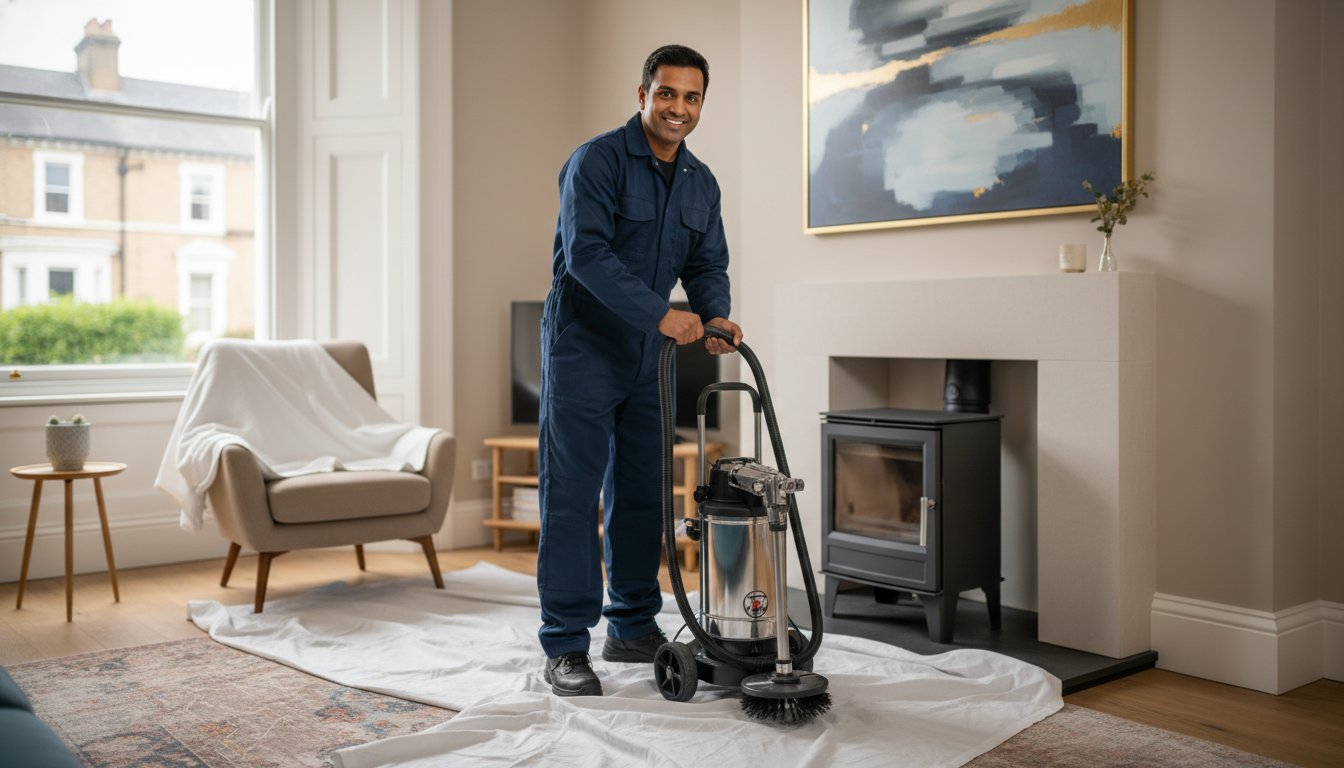
Indoor air quality is another major concern. Professional sweeps use industrial-grade HEPA-rated vacuums that capture particles as small as 0.3 microns. Hardware store vacuums or "shop vacs" often blow fine soot particles back into your living room, coating your furniture and lungs in toxic dust. While UK regulations are specific to our region, global safety benchmarks like the NFPA 211 Chimney Standard highlight that annual inspections are non-negotiable for fire prevention and system integrity.
The HETAS Advantage for Warwickshire Homeowners
Adrian at MR-SWEEP is a HETAS-registered technician, which provides a level of accountability you won't find with a DIY kit. HETAS is the official body recognised by the UK government to approve biomass and solid fuel heating appliances. When we visit your home, we don't just push a brush. We use power-sweeping technology that adapts to the shape of your liner, ensuring every centimetre is cleared of soot. Every session concludes with a formal safety report. This document identifies cracks in the masonry or signs of "spalling" that a homeowner would likely miss. It’s about professional diagnostic care, not just moving dirt.
Insurance Validity and Your Fireplace
Your home insurance policy likely contains a "duty of care" clause. This requires you to maintain your property to a reasonable standard. In the event of a chimney fire, the first thing an investigator will ask for is your latest sweep certificate. If you've been cleaning the chimney yourself, you have no legal proof of maintenance. Most UK insurers will reject a claim if you cannot provide a certificate issued by a qualified professional. This could leave you liable for thousands of pounds in structural repairs. We've detailed these requirements further in our guide for Leamington homeowners. Adhering to the best practices for MR-SWEEP ensures that your paperwork is as robust as your chimney, protecting both your family and your financial assets.
Homeowner Preparation: Best Practices for a Clean Sweep
A successful chimney sweep is a partnership between the technician and the homeowner. While our team brings the technical expertise and specialized equipment, your preparation ensures the job is completed safely and without delay. Following the best practices for MR-SWEEP appointments helps us maintain our high standards of efficiency and cleanliness in every Leamington Spa home we visit.
Step-by-Step Room Preparation
Preparing the area around your appliance is the first step toward a hassle-free service. We require a clear workspace of at least 2 metres in front of the fireplace or stove. This space allows our technicians to manoeuvre rods, brushes, and industrial vacuums without risking damage to your furniture. You should also remove delicate ornaments, photographs, or mirrors from the mantelpiece and the immediate hearth area. Even though we work with precision, the physical nature of sweeping can cause slight vibrations that might displace fragile items.
Temperature control is vital for safety. You must ensure the fire is completely extinguished and the appliance is stone cold before we arrive. We recommend a cooling period of at least 24 hours. A hot stove or lingering embers can damage our equipment and pose a significant fire risk during the soot extraction process. If the appliance is too hot to touch, it's too hot to sweep.
The MR-SWEEP Cleanliness Guarantee
Many homeowners worry about soot escaping into their living rooms. We've eliminated this concern through our "dust-free" promise. We use heavy-duty industrial sheeting to cover the hearth and the surrounding carpet. This creates a secure seal that prevents soot migration. Our technicians use high-powered, HEPA-filtered vacuums that capture 99.97% of fine particles, ensuring that the air in your home remains clean throughout the process.
Managing waste is part of the service. Once the sweep is finished, we securely bag all soot and debris. Under current UK waste regulations, soot from a domestic chimney is classified as household waste. We will leave the sealed bag with you for disposal in your general waste bin, ensuring your home remains as tidy as when we arrived. Implementing these best practices for MR-SWEEP ensures that 98% of our appointments are completed without a single speck of dust left behind.
Safety extends to everyone in the household. We ask that you keep children and pets in a separate room while the work is being carried out. The equipment we use involves long rods and heavy machinery that can be a trip hazard. A quiet, distraction-free environment allows our sweep to focus entirely on the integrity of your flue.
Ready to ensure your chimney is safe and efficient for the coming season? Book your professional sweep with MR-SWEEP today to experience our industry-leading cleanliness guarantee.
Beyond the Brush: Advanced Maintenance and Stove Care
A thorough chimney sweep is vital, but a truly safe home requires looking at the appliance as a complete system. Best practices for MR-SWEEP involve a detailed inspection of every stove component to ensure peak performance. If you only focus on the flue, you might miss small faults that lead to £250 in wasted fuel costs or, worse, carbon monoxide leaks. A stove is a precision instrument; it requires all parts to work in harmony to maintain a clean burn.
Rope seals are the first line of defence against inefficient burning. Even a 2mm gap allows excess air to enter the firebox, causing fuel to burn too quickly and reducing heat output by up to 15%. This "over-firing" can also damage the internal baffle plate. Similarly, firebricks act as a thermal barrier. If these bricks are cracked or crumbling, the intense heat can warp the stove's outer metal casing, leading to permanent structural damage. Replacing a £35 brick today prevents a £1,200 stove replacement later.
Wood Burning Stove Repairs in Leamington Spa
Worn door ropes often manifest as blackened glass or a fire that's difficult to control. If your stove burns through logs faster than usual, it's time for a seal test. When it comes to the glass, never attempt a DIY fix with standard heat-resistant panels. Stove glass is actually a transparent ceramic designed to withstand temperatures exceeding 700°C. Using the wrong material leads to explosive failure. Local homeowners in Warwick and Southam benefit from professional servicing that ensures every gasket and glass clip meets British safety standards.
CCTV Inspections for Total Peace of Mind
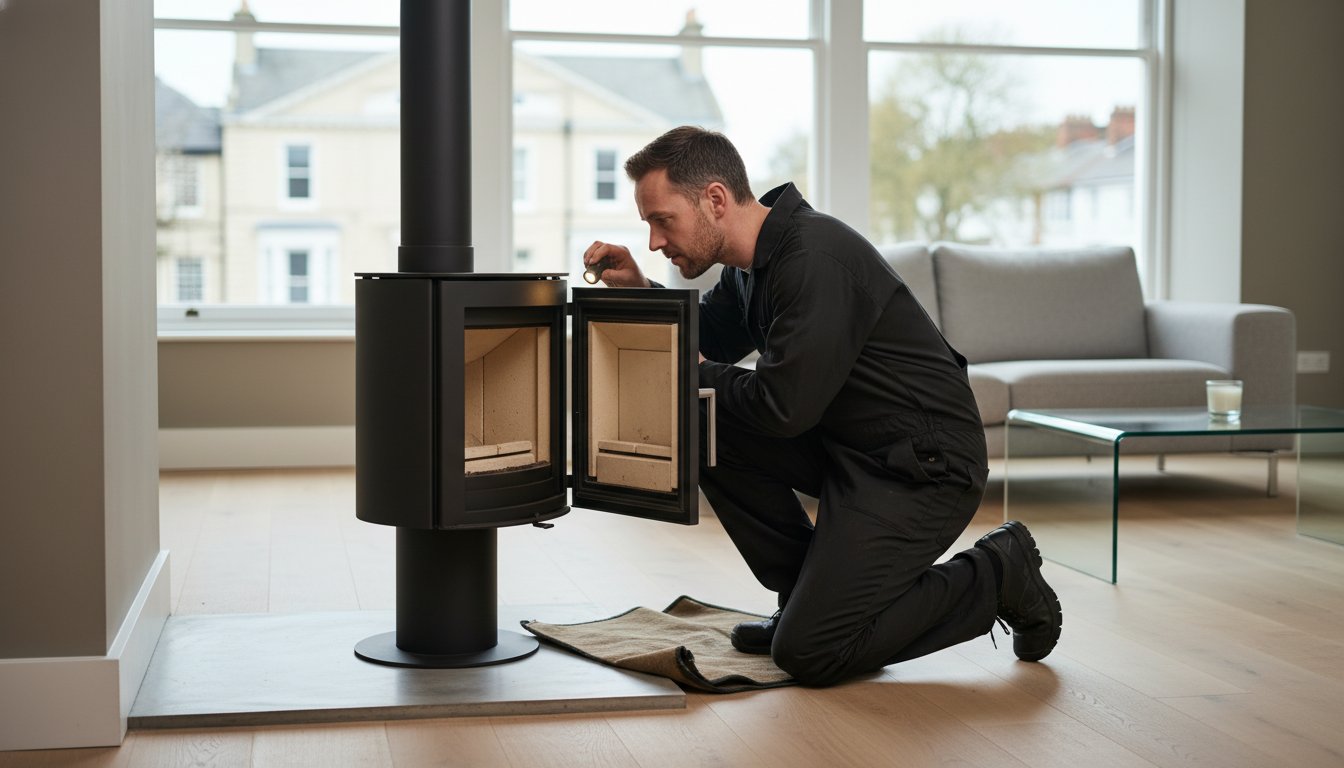
While traditional brushes are effective for removing soot, they cannot see through the walls of your chimney. Best practices for MR-SWEEP include high-definition CCTV inspections to identify internal blockages or structural decay. A camera spots a hairline fracture in a clay liner or 15% corrosion in a stainless steel flue that a brush would simply pass over.
These inspections provide visual proof of your chimney's health, which is often essential for insurance claims or when moving into a new property in Leamington Spa. Identifying a bird nest or a collapsed mid-feather wall early saves thousands in potential masonry repairs. You can book your next comprehensive service with Adrian at MR-SWEEP to ensure your heating system is safe from the inside out.
Secure Your Home with Expert Chimney Care
Maintaining a safe fireplace requires more than a quick brush once a year. It's a precise safety protocol that protects your household from the 3,000 chimney fires reported across England annually. Following the best practices for MR-SWEEP ensures your appliance operates at peak efficiency while meeting strict UK insurance requirements. By scheduling a professional sweep at least once every 12 months, you prevent the dangerous buildup of flammable creosote and eliminate carbon monoxide hazards before they start.
Our HETAS-registered technicians provide a comprehensive service that DIY methods simply can't match. We issue professional safety certificates upon completion, which are essential for valid home insurance claims in Leamington Spa and Warwick. We serve every street from the town centre to the surrounding villages, ensuring every flue we touch meets the highest British safety standards. You won't have to worry about mess either; our clean-work guarantee means your living room stays spotless throughout the process.
Don't leave your home's safety to chance this winter. Book your professional HETAS-registered sweep with MR-SWEEP today to secure your certificate and enjoy a warmer, safer home. You'll feel the difference that true expertise brings to your hearth.
Frequently Asked Questions
How much does a professional chimney sweep cost in Leamington Spa?
A standard chimney sweep in Leamington Spa typically costs between £60 and £85 per flue. This price covers the full cleaning of a standard wood burner or open fire, including a smoke draw test and a safety certificate for your insurance. Prices may increase if you require additional services like bird nest removal or if your property has multiple chimneys that need attention.
Do I need to sweep my chimney if I only use it a few times a year?
You must have your chimney swept at least once every 12 months regardless of how often you light a fire. Even infrequent use leads to soot buildup, and dormant flues often become home to cobwebs or debris that restrict airflow. Following these best practices for MR-SWEEP ensures your home stays compliant with standard UK home insurance policies that require annual maintenance records.
Can a chimney sweep remove a bird nest in Warwickshire?
We provide expert bird nest removal across Warwickshire, usually charging between £100 and £150 for this specialised service. It's vital to remember that the Wildlife and Countryside Act 1981 prohibits the removal of active nests during the breeding season, which runs from March to August. Once the nesting season ends, we can safely clear the blockage and install a bird guard to prevent future issues.
Will my house get covered in soot during a chimney sweep?
Your home will remain spotless because we use advanced HEPA-filtered vacuums and heavy-duty floor coverings to protect your carpets. We seal the fireplace opening with specialised sheeting before any brushing begins, ensuring that 100% of the soot is contained within the vacuum system. Our technicians take pride in leaving your living room exactly as they found it, minus the dirty chimney.
How long does a standard chimney sweep visit take?
A routine chimney sweep appointment usually takes between 45 and 60 minutes to complete. This window allows enough time for the initial inspection, the actual sweeping, a smoke draw test, and the completion of your safety paperwork. If we encounter significant blockages or complex flue bends, the process might extend to 90 minutes to ensure a thorough clean.
What is the best fuel to burn to keep my chimney clean?
Kiln-dried hardwood with a moisture content of 20% or less is the best fuel for maintaining a clean flue. Burning "wet" wood is the primary cause of creosote buildup, which is responsible for over 4,000 chimney fires in the UK every year. Always check for the "Ready to Burn" certification label when purchasing logs to ensure you are protecting your appliance and the environment.
Does a liner mean I do not need to sweep my chimney?
A stainless steel liner still requires an annual sweep to remove soot and prevent the buildup of corrosive residues. Even a lined chimney can suffer from creosote deposits that reduce the flue's diameter and increase the risk of carbon monoxide leakage. Adhering to the best practices for MR-SWEEP means your liner will reach its full 15 to 20 year life expectancy without failing prematurely.
What happens if the sweep finds a problem with my stove?
If we discover a fault like a cracked firebrick or a perished door seal, we will provide you with a written report and a clear photo of the issue. We won't leave you with a dangerous appliance; we'll explain the risks and offer a competitive quote for the repair. In about 12% of our visits to older Leamington Spa homes, we find minor defects that can be resolved quickly to keep the household safe.