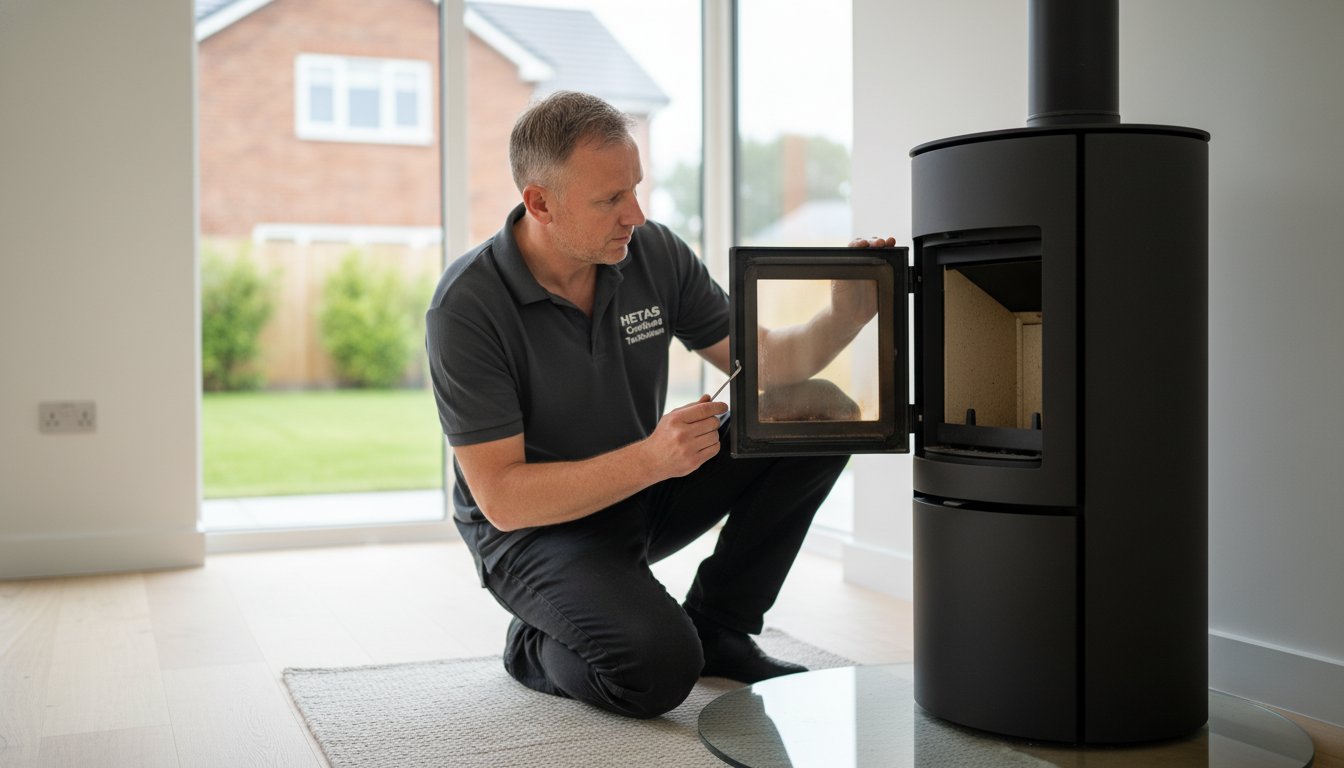
Last Tuesday, a homeowner in Warwick discovered a jagged line running through the back of their wood burner during a routine cleaning. While it seemed like a minor cosmetic flaw, that single crack was allowing intense heat to reach the stove's outer steel casing, risking a permanent warp. If you've noticed similar damage, you're likely worried about the safety of your next fire or the potential cost of a full repair. Professional firebrick replacement warwickshire ensures these small issues don't turn into expensive, dangerous failures.
It's common to feel uncertain about whether a brick is truly "too far gone" or just showing its age. You want your home to stay warm without the constant fear of a chimney fire or structural damage to your appliance. This guide provides the clarity you need to identify critical wear and understand the risks of delaying maintenance. We will walk through the specific signs of firebrick failure, explain the safety implications for your property, and show you how to secure a reliable local technician for a professional fix.
Key Takeaways
- Identify the critical differences between traditional clay bricks and modern vermiculite boards to understand how your stove’s internal lining functions.
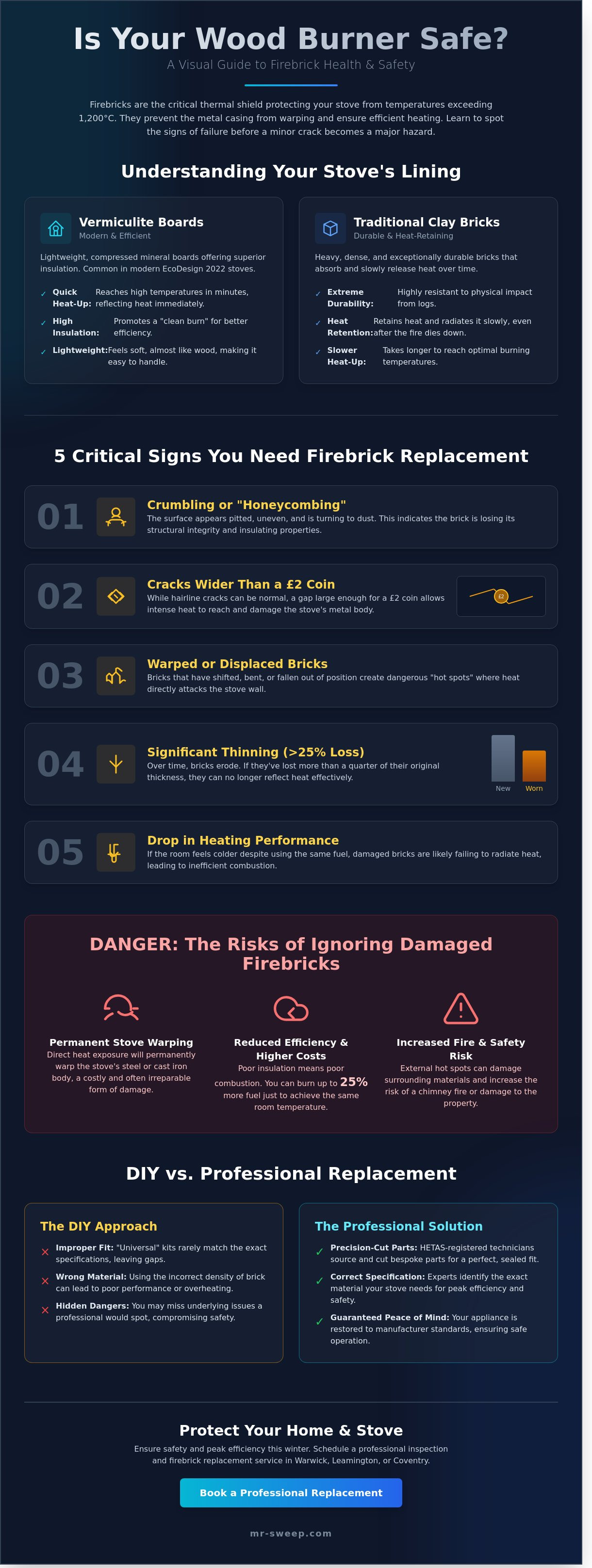
- Learn to spot early warning signs of failure, such as surface "honeycombing" or cracks wider than a £2 coin that expose the stove's metal body.
- Understand the serious safety risks of ignoring damaged liners, including permanent warping of the stove casing and the development of dangerous external hot spots.
- Discover why professional firebrick replacement warwickshire is essential for sourcing and precision-cutting bespoke parts that "universal" kits cannot match.
- Find out how HETAS-registered expertise in Leamington, Warwick, and Coventry provides the peace of mind that your appliance is restored to peak efficiency.
What are Firebricks and Why are They Essential for Your Stove?
Firebricks are the unsung heroes of your wood burner or multi-fuel stove. They aren't just there for aesthetics. These components are What are firebricks: specialised refractory liners engineered to endure temperatures exceeding 1,200°C without cracking or melting. Most stoves in the UK rely on either traditional heavy clay-based bricks or modern, lightweight vermiculite boards to maintain a safe and efficient burn. Without these liners, the intense heat of a domestic fire would quickly compromise the structural integrity of your appliance.
Your stove's outer body is usually made of cast iron or steel. While these metals are tough, direct exposure to a roaring fire causes them to warp, thin, or even crack over time. Firebricks act as a sacrificial shield. They absorb the thermal shock so the expensive metal casing doesn't have to. If you notice your liners crumbling or thinning, seeking a firebrick replacement warwickshire specialist is the best way to prevent permanent damage to your appliance. Replacing a brick is a minor maintenance cost compared to the price of a whole new stove body.
The Science of Heat Reflection
Efficiency depends on internal temperature. Firebricks don't just sit there; they reflect heat back into the heart of the firebox. This process helps the stove reach an optimal "clean burn" temperature, typically between 250°C and 450°C. A stove with missing or damaged bricks loses heat through the metal walls too quickly. This results in poor combustion, meaning you'll burn up to 25% more fuel just to achieve the same room temperature. Insulating bricks like vermiculite are better at reflecting heat immediately, whereas heavy clay bricks retain heat and release it slowly over several hours.
Vermiculite vs. Clay Bricks
Choosing the right material is vital for stove performance. Traditional clay bricks are exceptionally durable but take longer to heat up. In contrast, modern EcoDesign 2022 compliant stoves in Warwickshire almost exclusively use vermiculite. This material is a compressed mineral that provides superior insulation, allowing the fire to reach high temperatures in minutes. You can identify your needs by weight and texture. Vermiculite feels light and slightly soft, almost like wood, while clay bricks are heavy, stone-like, and often thicker. Always check your stove’s manual or consult a professional, as using the wrong density of brick can lead to poor draw or overheating. If you are unsure which material you need, a local firebrick replacement warwickshire expert can identify the correct specification for your specific model.
5 Signs You Need Firebrick Replacement in Your Warwickshire Home
Identifying exactly when to invest in firebrick replacement warwickshire is vital for maintaining both stove safety and heating efficiency. Firebricks act as a sacrificial thermal shield. They protect the outer metal body of your stove from warping or cracking under extreme heat. Because they take the brunt of every fire, they eventually wear out. You should inspect your stove lining every month during the heating season to look for these five specific indicators:
- Visible crumbling or "honeycombing": This appears as a pitted, uneven surface where the brick material is turning to dust or small flakes.
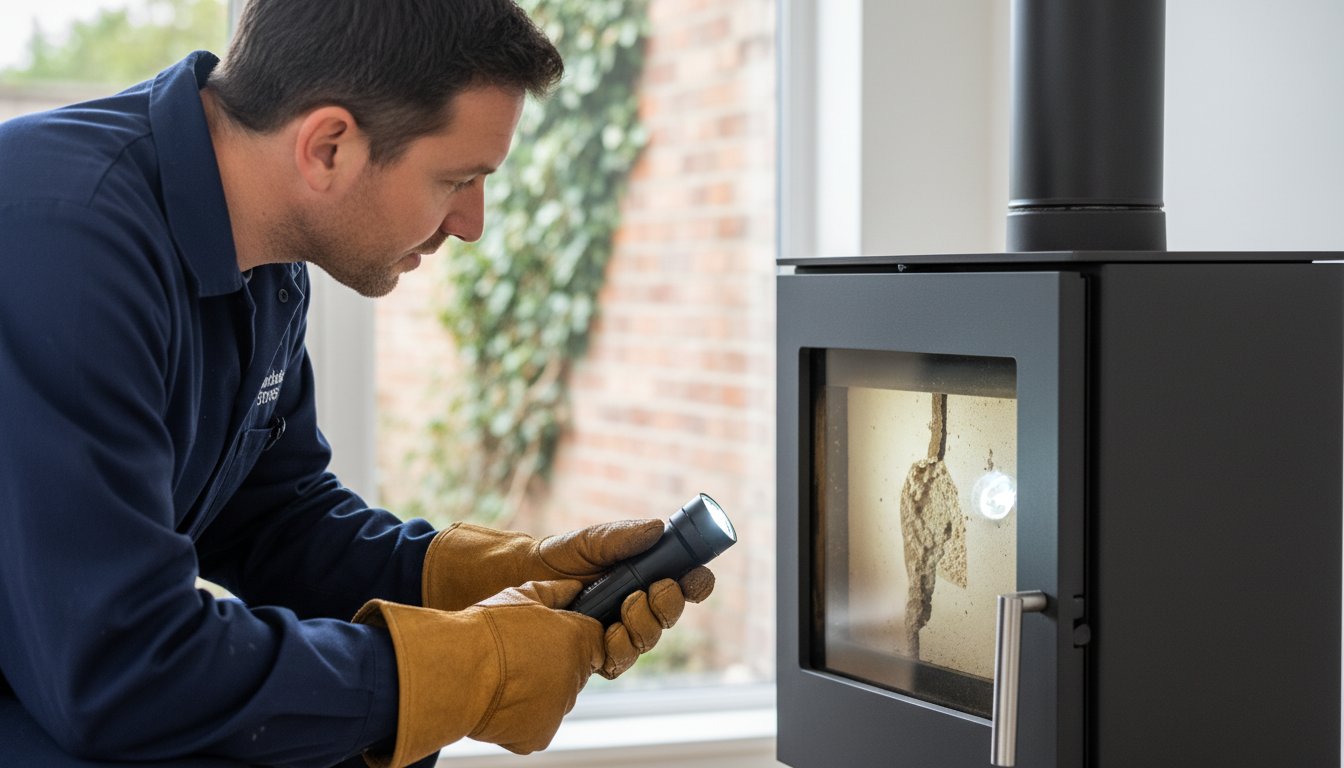
- Cracks wider than a £2 coin: If a gap is large enough to fit a £2 coin, it allows heat to bypass the insulation and strike the stove's steel or iron casing directly.
- Displaced or warped bricks: Bricks that have shifted out of their original position create "hot spots" on the stove wall.
- Significant thinning: Bricks that have lost more than 25% of their original thickness over years of use cannot reflect heat effectively.
- A drop in heating performance: If your room feels colder despite burning the same amount of fuel, your bricks are likely failing to radiate heat back into the firebox.
Ignoring these signs doesn't just reduce efficiency. It can lead to permanent damage to your stove's structural integrity. If you're unsure about the condition of your lining, a professional can provide an expert assessment to ensure your home remains safe.
Hairline Cracks vs. Structural Failure
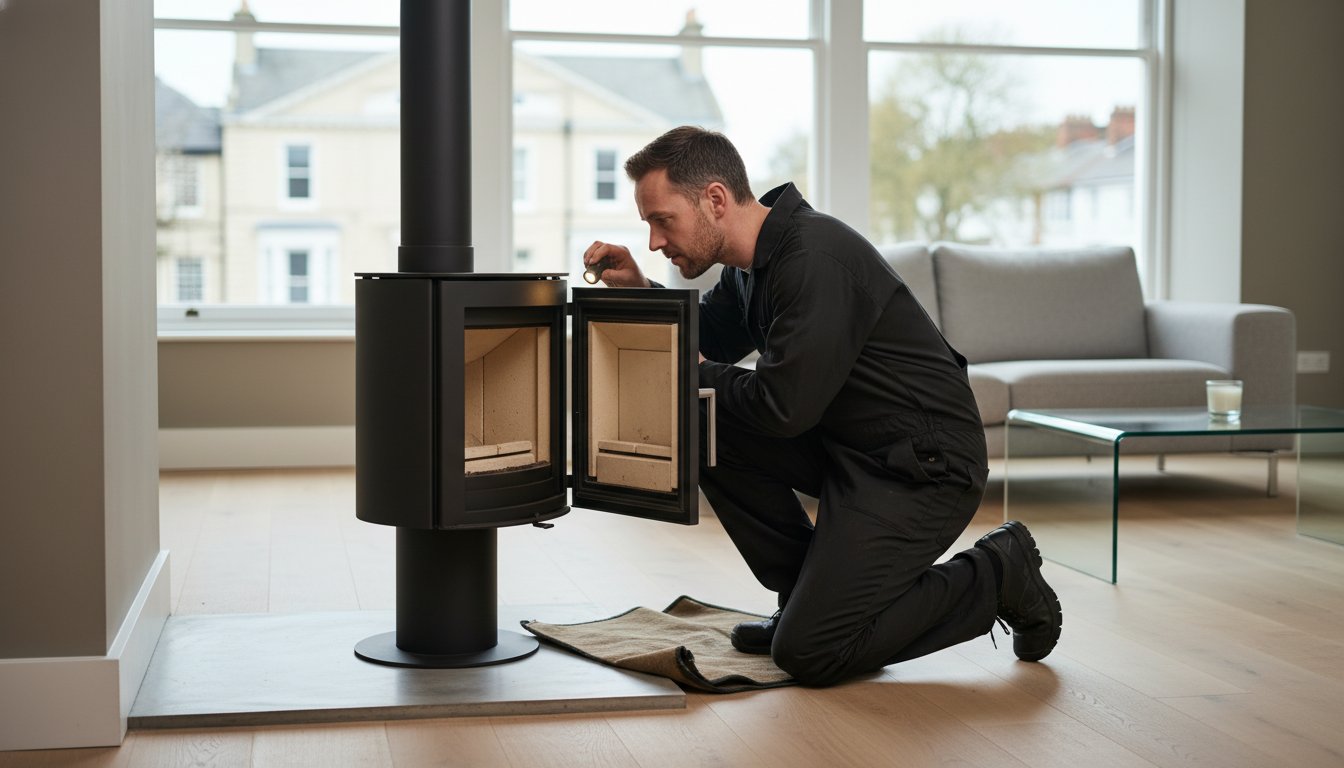
You don't need to replace a brick the moment a tiny line appears. Small hairline cracks are often a normal result of thermal expansion as the brick grows and shrinks with the heat. Use the "light test" to check for danger. Shine a bright torch into the crack. If you can see the metal stove wall through the gap, the brick has reached structural failure. Cracks at the base of the brick are more urgent than those at the top. Base bricks support the weight of the fuel, so a fracture here often leads to the entire brick collapsing into the grate.
Assessing the Impact of Thermal Shock
Thermal shock is a leading cause of firebrick replacement warwickshire. This happens when you "over-fire" your stove during a freezing Warwickshire winter by loading it with too much fuel and opening the air vents fully. The rapid jump from room temperature to over 450°C causes the bricks to expand too quickly, leading to deep fractures. Physical impact is another factor. Throwing heavy logs against the rear bricks instead of placing them carefully will eventually shatter the material. Moisture also plays a hidden role. During the humid off-season, porous bricks can absorb dampness. When you light the first fire of autumn, that moisture turns to steam and can cause the brick to "pop" or crack from the inside out.
Is it Safe to Use a Wood Burner with Cracked Firebricks?
Operating a wood burner with damaged internal masonry is a gamble with your home's safety. While a single hairline crack might not require an immediate shutdown, any gap that allows you to see the metal casing behind the brick is a serious hazard. Firebricks serve as the primary thermal barrier. Without them, the intense heat of a 600°C fire makes direct contact with the steel or cast-iron outer shell. This creates "hot spots" that can cause the stove's body to glow red, compromising the structural integrity of the entire appliance.
Neglecting a firebrick replacement Warwickshire homeowners often find, leads to irreversible mechanical damage. When the outer casing overheats, it expands at a different rate than the internal components. This often results in the stove door or the main body warping. Even a 3mm shift in the frame can prevent the door from sealing correctly, making the stove impossible to control. Beyond the appliance itself, excessive heat transfer poses a fire risk to combustible materials. If your stove sits near timber studs, skirting boards, or wallpaper, the lack of insulation from a broken brick can raise these materials to their ignition point.
Efficiency also takes a hit. Firebricks are designed to reflect heat back into the combustion chamber to maintain high temperatures. When bricks are crumbled or missing, the firebox stays cooler, leading to an incomplete burn. This results in:
- Increased fuel consumption as you struggle to get enough heat.
- Excessive smoke production.
- Rapid creosote buildup, which significantly increases the risk of a chimney fire.
Protecting Your Flue and Liner
A compromised firebox sends uncontrolled, high-temperature gases directly into your chimney system. For those with a stainless steel flexible liner, this thermal stress can cause the metal to fatigue and fail prematurely. You might also find yourself needing more frequent chimney sweeping because of the soot produced by an inefficient, cool-running fire. From a financial perspective, most UK home insurance providers require appliances to be maintained in "good working order." Operating a stove with known defects like cracked bricks could lead to a claim being rejected in the event of a fire.
The Risk of Carbon Monoxide
The most invisible danger of operating a damaged stove is carbon monoxide (CO) leakage. A wood burner relies on a vacuum-sealed environment to pull air in through the vents and push exhaust up the flue. If the body warps due to heat stress from missing bricks, gaps open up in the seams. These gaps allow toxic gases to bypass the chimney and spill into your living room. Professional firebrick replacement Warwickshire services ensure your stove maintains the airtight seal necessary for safety. Keeping your firebricks in top condition is not just about heat output; it is a vital part of protecting your family from the "silent killer."
Professional Firebrick Replacement vs. DIY in Warwickshire
Choosing between a weekend DIY project and a professional service for firebrick replacement warwickshire is a decision that impacts both stove efficiency and home safety. Many homeowners in Leamington Spa and Warwick own older stove models where original parts are no longer in mass production. Sourcing the correct bespoke bricks is often the first hurdle. While "universal" vermiculite boards are widely available, they aren't ready-to-use. They require precision cutting with specialised masonry tools to fit the unique internal geometry of your specific appliance.
A professional installation ensures the bricks are seated correctly without gaps. If you don't have the right equipment, you risk leaving spaces that allow heat to reach the stove's outer skin. This can lead to permanent structural warping. A HETAS-registered technician provides the peace of mind that the work meets UK building regulations and manufacturer specifications, ensuring your insurance remains valid.
The Pitfalls of DIY Firebrick Repairs
It's tempting to use fire cement to patch up a crumbling brick, but this is only a temporary bandage. Fire cement is rigid and often cracks further under the intense thermal expansion of a working fire. During a DIY attempt, many people accidentally snap the delicate vermiculite clips that hold the side bricks in place. If these clips fail or the bricks are installed incorrectly, the entire set can fall forward into the firebox during operation. This creates a significant hazard and blocks the airflow required for a clean, safe burn.
What a Professional Service Includes
A professional visit isn't just about swapping parts. It's a full diagnostic of your stove’s internal health. We inspect the rope seals and the glass for signs of wear while the unit is dismantled. This comprehensive approach is often part of a wider wood burning stove repair leamington programme, ensuring every component works in harmony. We use high-quality refractory materials that withstand temperatures exceeding 1,100°C, ensuring longevity that standard DIY kits rarely match.
Ensure your stove stays safe and efficient this winter. Book your professional firebrick inspection with Mr. Sweep today.
Expert Stove Maintenance and Firebrick Services in Warwickshire
MR-SWEEP provides specialised stove repair and maintenance across Leamington Spa, Warwick, and Coventry. Adrian brings years of HETAS-registered experience to every job, ensuring that local homeowners receive advice grounded in strict UK safety regulations. A damaged firebrick isn't just a cosmetic issue; it's a structural risk to your stove's outer casing. By choosing a professional firebrick replacement warwickshire service, you protect the longevity of your appliance and the safety of your property. Adrian’s expertise means he can spot the difference between a minor surface craze and a deep crack that threatens the stove’s integrity.
Combining a brick replacement with your standard annual sweep is the most logical choice for efficiency. It minimises disruption to your day and ensures that every part of the system, from the grate to the chimney pot, is inspected in a single visit. This holistic approach identifies issues like warped baffles or degraded door seals before they cause a total breakdown during a cold spell. It’s a cost-effective way to manage your home heating, as it eliminates the need for multiple call-out fees throughout the year.
Serving the Heart of Warwickshire
Our service covers the entire CV postcode area, including Kenilworth, Rugby, and Southam. We understand the diverse range of housing stock in these towns, from 19th-century Victorian terraces to contemporary eco-homes. This local knowledge allows us to source parts for popular brands like Stovax, Hunter, and Arada with minimal delay. We don't rely on generic, ill-fitting solutions. Every firebrick set is fitted with precision to match the original manufacturer’s specifications. Being local means we arrive on time and treat your home with the respect it deserves, leaving your hearth spotless after every repair.
Your Maintenance Schedule
The best time to check your stove's internals is during the spring or summer months. Industry data shows that 70% of homeowners wait until the first frost to book a sweep, which often results in a three-week wait for parts and appointments. By organising your firebrick replacement warwickshire during the off-season, you ensure your stove is ready the moment you need it. A proactive survey in July can prevent a safety risk in December. Don't leave your comfort to chance when the temperature drops. Contact MR-SWEEP today to book a survey or repair. We'll ensure your stove meets all safety standards, giving you total peace of mind for the winter peak.
Restore Your Stove’s Performance and Safety Today
Maintaining your wood-burning stove ensures it remains a safe, efficient heat source for your home. Neglecting cracked or crumbling liners often leads to irreversible damage to the stove's outer casing, potentially resulting in repair bills exceeding £500 for a full stove refurbishment. By prioritising a professional firebrick replacement warwickshire service, you protect your investment and maintain the high combustion temperatures required for clean burning.
When a stove repair evolves into a larger home renovation or property clear-out, managing the resulting waste is essential; for reliable roll-off services, many homeowners turn to Book Your Dumpster USA.
At MR-SWEEP, our HETAS-registered technician specialises in wood-burning stove repairs throughout the Warwickshire area. We don't just swap out parts; every service includes a detailed safety inspection to ensure your appliance complies with Document J of the UK Building Regulations. Our approach combines technical precision with a commitment to leaving your home spotless. You won't have to deal with ash or debris once the job's finished.
Don't wait for a minor crack to become a major fire hazard. Book your professional firebrick replacement with MR-SWEEP today and enjoy the peace of mind that comes with expert maintenance. You'll be ready to enjoy a warm, efficient fire the moment the temperature drops.
Frequently Asked Questions
Can I use my wood burner if the firebrick is cracked?
You can continue using your stove if the crack is a minor hairline, but you must stop immediately if the brick is crumbling or the metal stove body is visible. A damaged brick fails to insulate the outer casing, which leads to the metal warping or cracking under intense heat. We recommend replacing any brick that has a gap wider than 2mm to ensure your home's safety and protect your appliance.
How much does it cost to replace firebricks in Warwickshire?
A standard set of replacement firebricks typically costs between £40 and £120 for the parts, depending on your stove's make and model. If you require professional installation for firebrick replacement Warwickshire residents should budget an additional £60 to £100 for a service call. Costs vary based on whether you need pre-cut manufacturer sets or bespoke vermiculite boards cut to specific dimensions for older models.
How long do firebricks usually last before needing replacement?
Most firebricks last between 2 and 5 years under normal domestic use conditions. Their lifespan depends heavily on how often you light the fire and the type of fuel you choose. Dry wood with a moisture content below 20% helps bricks last longer, while burning household waste or over-firing the stove can cause bricks to fail in less than 12 months.
Why do the bricks in my wood burner keep cracking?
Bricks usually crack due to thermal shock from rapid temperature changes or physical impact when loading logs. If you throw heavy wood into the stove, the brittle vermiculite can snap instantly. Moisture is another factor; if damp logs are used, the steam produced can penetrate the brick's pores and cause it to split when the heat rises suddenly.
Can I buy universal firebricks and cut them to size myself?
You can purchase universal vermiculite boards and cut them to size using a standard hand saw or jigsaw. This is often a cost-effective solution for older stoves where original parts are no longer manufactured by the brand. Ensure you measure the original bricks accurately to maintain the correct airflow and combustion efficiency within the firebox during operation.
What is the difference between vermiculite and clay firebricks?
Vermiculite bricks are made from a compressed mineral that reflects heat back into the fire, making the stove more efficient. Clay bricks are denser and store heat for longer periods, but they don't insulate the stove's outer shell as effectively as vermiculite. Most modern Ecodesign stoves use vermiculite because it helps reach the high internal temperatures required for a clean burn.
Will a cracked firebrick affect my chimney sweep certificate?
A professional chimney sweep will note any damaged internal components on your official industry certificate. While a hairline crack might only be recorded as an observation, a missing or crumbling brick constitutes a safety fail in many inspections. This documentation is vital for your home insurance, so it's best to fix the issue before your scheduled annual sweep.
Do I need a HETAS engineer to replace my firebricks?
You don't need a HETAS registered engineer to replace firebricks because it's considered a routine maintenance task rather than a structural installation. However, many homeowners in Warwickshire prefer a professional to handle it during their annual sweep to ensure the bricks are seated correctly. Proper fitting prevents smoke leakage and ensures the baffle plate remains properly supported.