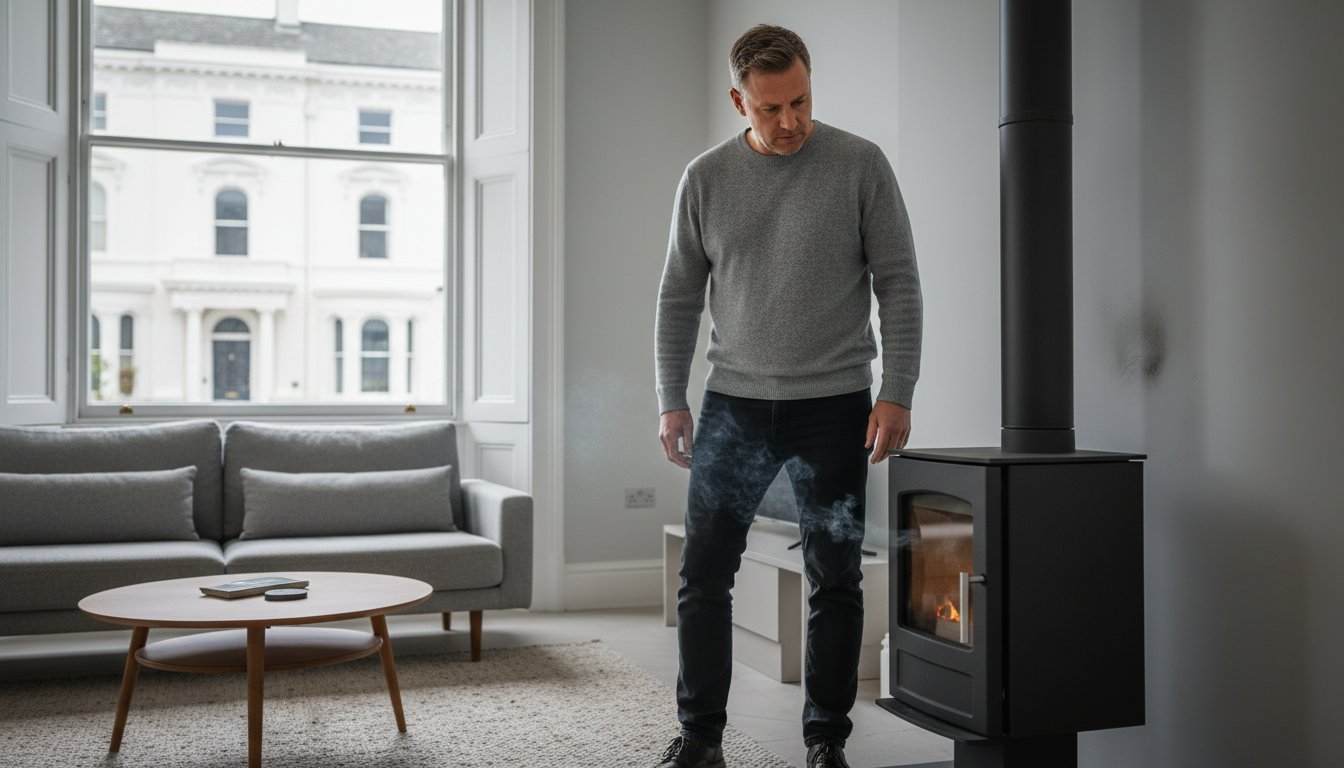
Last November, a homeowner in Leamington Spa discovered that a single evening by the fire had left her newly decorated lounge smelling like a campsite. She didn't realize that common wood burner problems often start with these subtle signs before turning into hazardous safety risks or expensive repairs. You likely invested in your stove to create a warm, efficient heart for your home, not to deal with soot-stained walls or the nagging fear of a chimney fire.
It's frustrating when your appliance produces more smoke than heat, especially since poor maintenance contributes to over 3,000 avoidable chimney fires in the UK annually. We'll help you identify the root causes of poor performance and show you exactly how to resolve them. This guide provides a clear roadmap to troubleshooting your stove, ensuring your Warwickshire home stays safe, compliant with 2026 HETAS standards, and genuinely warm throughout the winter season.
Key Takeaways
- Learn how to distinguish between a temporary "bad burn" and chronic mechanical issues that require urgent attention to keep your home safe.
- Discover how to diagnose common wood burner problems related to poor draft and fuel quality to restore your stove’s heating efficiency.
- Identify critical wear and tear on internal components like firebricks and rope seals before they lead to permanent stove damage.
- Understand the seasonal risks unique to Warwickshire chimneys, from local Jackdaw nesting habits in Leamington to dangerous winter creosote buildup.
- Find out exactly when to transition from DIY maintenance to a professional HETAS-registered service for guaranteed safety and peace of mind.
Why is My Wood Burner Acting Up? Common Signs and Symptoms
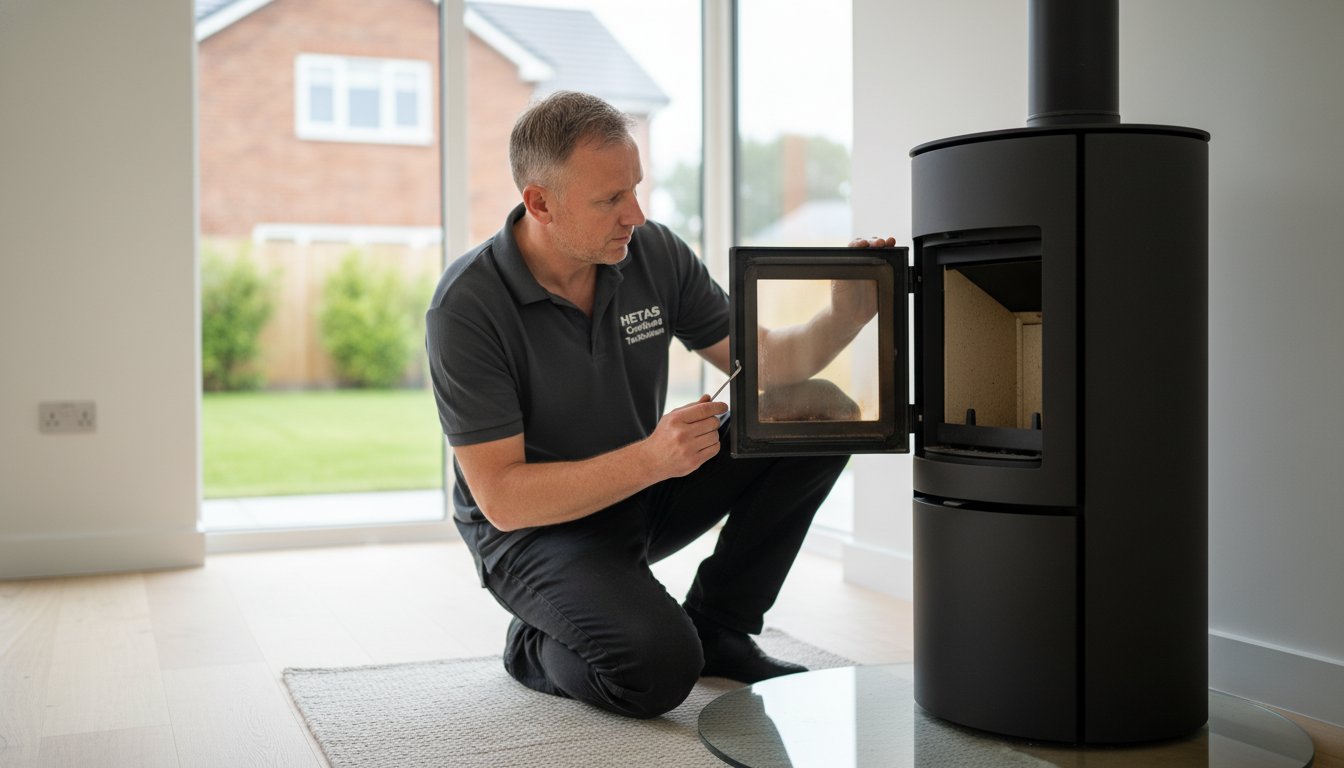
Owning a wood-burning stove brings warmth and character to a home, but it also requires a keen eye for maintenance. You'll likely encounter minor wood burner problems at some point, ranging from poor draw to excessive soot buildup. It's vital to distinguish between a "bad burn" caused by a damp batch of logs and a chronic mechanical failure that threatens your safety. Recognising these signs early prevents a minor fix from turning into a dangerous emergency.
In Warwickshire towns like Leamington Spa and Warwick, many residents live in properties built before 1900. These older homes often feature narrow chimney stacks or original masonry that can negatively affect how a modern stove breathes. If you ignore a small crack in a firebrick or a slight smoke leak, you risk a chimney fire or permanent damage to your flue liner. Replacing a damaged liner can easily cost over £1,000, so staying vigilant is a financial necessity as much as a safety one.
- Mechanical issues: These include warped baffle plates, perished door seals, or cracked glass that requires physical replacement.
- Operational issues: These often stem from using wood with a moisture content above 20% or incorrect vent control.
Telltale Signs of a Struggling Stove
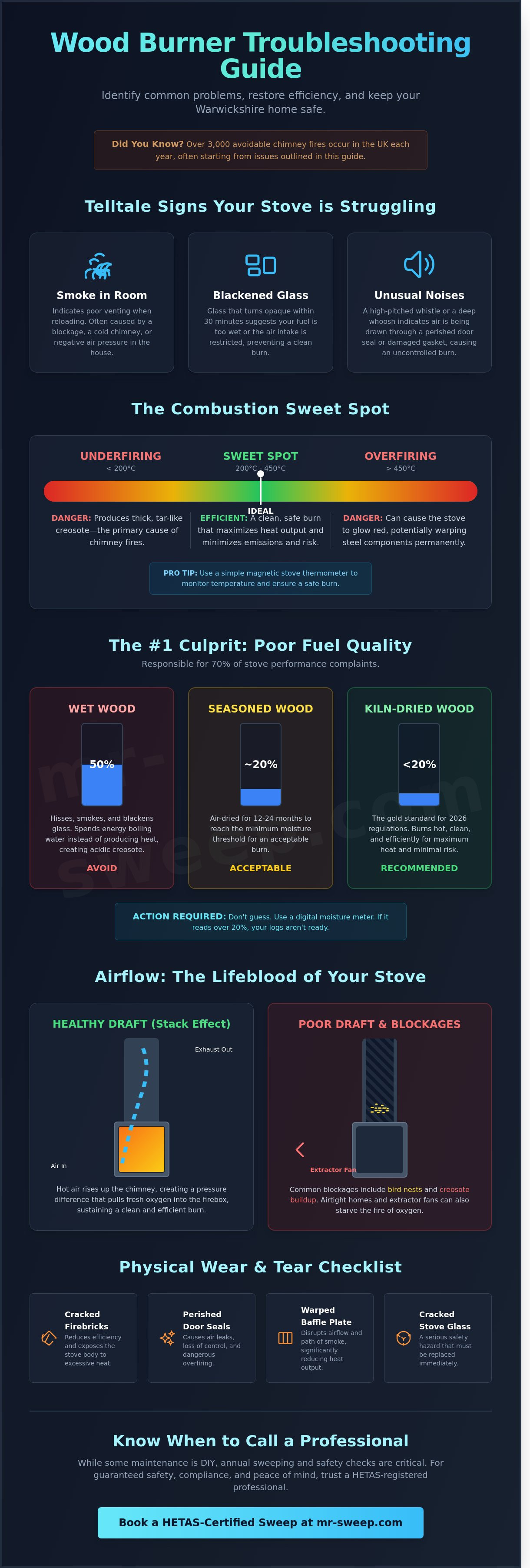
If smoke drifts into your living room when you open the door to reload, your system isn't venting correctly. This often points to a blockage or a cold chimney. Blackened glass is another red flag. While a little soot is normal, glass that turns opaque within 30 minutes of lighting suggests your fuel is too wet or your air intake is restricted. Listen for unusual sounds. A high pitched whistling or a deep whooshing noise usually indicates air is being drawn through a perished door seal or a damaged gasket.
The Dangers of Overfiring and Underfiring
Efficiency depends on staying within the "sweet spot" of combustion. A runaway burn occurs when too much oxygen enters the firebox, causing the stove to glow red and potentially warp the internal steel components. Conversely, "slumbering" a fire by closing the vents too far leads to underfiring. This produces thick creosote, a tar like substance that's the primary cause of the thousands of chimney fires reported annually across the UK. Use a magnetic stove thermometer to stay between 200°C and 450°C. This simple £15 tool prevents long term damage and ensures you're burning fuel cleanly and safely.
Troubleshooting Poor Performance: Why Your Log Burner Won’t Stay Lit or Smokes
A wood-burning stove relies on a physical process called the stack effect. Think of your chimney as an engine. The 'draft' is the pressure difference created by hot air rising, while 'draw' is the actual flow of air into the firebox. When these forces fail, you face the most common wood burner problems: stubborn lighting and smoke leakage. If the engine isn't pulling air, the fire simply cannot breathe.
In 2026, UK air quality regulations are stricter than ever, making efficient combustion a necessity rather than a choice. Performance isn't just about heat; it's about clean burning. In Warwickshire, local weather patterns and valley locations often cause atmospheric pressure to 'cap' a chimney. This prevents hot air from escaping, forcing smoke back into your living room. If your fire dies ten minutes after lighting, you're likely fighting a lack of oxygen or a cold air blockage.
The Fuel Factor: Is Your Wood the Problem?
Fuel quality is the primary culprit in 70% of performance complaints. Wood with a moisture content above 20% won't burn effectively. Instead, the fire spends its energy evaporating water. This creates heavy steam and acidic creosote rather than heat. This process cools the flue, which kills the draft and leads to many wood burner problems that homeowners mistake for stove defects.
- Wet Wood: Freshly cut timber can be 50% water. It hisses, smokes, and blackens the glass instantly.
- Seasoned Wood: Left outside under cover for 12 to 24 months to reach a 20% moisture threshold.
- Kiln-Dried Wood: The gold standard for 2026. Processed in ovens to reach consistent 15% moisture levels for immediate use.
Don't guess the quality of your fuel. Use a digital moisture meter to check every delivery. If your logs register above 20% on the internal grain, they aren't ready for the hearth.
Airflow and Ventilation Issues
Modern UK homes are increasingly airtight. While great for insulation, it's often a disaster for stoves. New triple-glazing or powerful kitchen extractor fans can starve the fire of oxygen. If opening a nearby window makes the fire roar to life, your room lacks the permanent ventilation required for the stove to function safely.
Internal blockages are another common hurdle. Ash often builds up behind the internal throat plate or baffle, choking the exit route for smoke. During a cold winter, a "plug" of heavy, freezing air can also sit inside the flue. This acts like a lid. You must warm the chimney first, perhaps with a small heat gun or a single firelighter, to establish a draft before loading heavy logs. If you've checked your fuel and airflow but the smoke persists, a professional chimney sweep and safety check can identify hidden structural blockages or soot buildup that DIY checks might miss.
Identifying Physical Damage: Stove Glass, Firebricks, and Rope Seals
Your stove's internal components operate under extreme thermal stress every time you light a fire. Regular inspection prevents minor wear from becoming dangerous wood burner problems. The firebricks, glass, and seals form the primary defense for the stove's structural integrity. Understanding how these parts function helps you identify when a simple fix is needed versus when you must stop using the appliance immediately.
Firebricks are designed as sacrificial components. They insulate the firebox, reflecting heat back into the chamber to ensure a cleaner burn while protecting the outer steel or cast iron body from warping. Because they absorb the brunt of the heat, they will eventually crack or crumble. While a hairline crack is often cosmetic, any gap that allows flames to touch the outer metal shell is a safety risk. Operating a stove with missing bricks can lead to permanent structural failure of the appliance body.
Cracked Stove Glass and Firebricks
Stove glass is incredibly durable but remains vulnerable to two main issues: physical impact and "pinch" cracks. Physical damage often occurs when a log rolls forward against the glass. Pinch cracks happen when the metal retaining clips are over-tightened. As the stove heats up, the metal expands; if there's no room for the glass to move, it snaps.
You should never use a stove with a missing or crumbling firebrick. If you notice the internal lining is starting to disintegrate, it's time for a professional assessment. For a detailed walkthrough on restoring your stove's interior, see our guide on firebrick replacement warwickshire.
The "Paper Test" for Stove Door Seals
An airtight combustion chamber is essential for fuel efficiency. If the rope seal fails, oxygen leaks into the firebox, causing fuel to burn too fast and potentially overheating the unit. You can check the integrity of your seal using the "paper test." With the stove cold, place a sheet of paper between the door and the stove body. Close the door and try to pull the paper out. If it slides out with no resistance, the seal is no longer effective.
Other signs of a failing seal include white ash patterns forming around the door frame or flames that won't settle down even when you close the air vents. These are common wood burner problems that lead to wasted money and higher emissions. Replacing rope seals is a standard, essential part of wood burning stove repair leamington, ensuring your home stays safe and your fuel lasts longer.
External Blockages: Bird Nests and Creosote in Warwickshire
In Warwickshire, particularly around Leamington and Warwick, the local jackdaw population sees a chimney pot as a prime nesting site. These birds are highly social and incredibly persistent. Between March and July, a pair can fill a flue with several metres of twigs, moss, and mud in less than 48 hours. This creates one of the most dangerous wood burner problems because it completely restricts the exit of toxic gases, including carbon monoxide.
The seasonal cycle of blockages follows a predictable pattern. Spring brings the initial nest building. If these nests aren't removed, the organic material dries out over the summer months. By the time the first frost arrives in October, you have a highly flammable tinderbox sitting inside your flue. Winter then adds layers of soot and creosote on top of this debris, narrowing the airway until the stove eventually smokes back into your living room.
The Jackdaw Problem: Nest Removal in Leamington & Warwick
Identifying a nest is usually straightforward. You might see twigs falling into the hearth or notice birds circling your chimney pot with nesting material in their beaks. It's vital to remember the legal context; under the Wildlife and Countryside Act 1981, it's illegal to remove or destroy an active nest during the breeding season. You must wait until the chicks have fledged before any clearance can begin.
A standard sweep isn't enough to clear a compacted bird nest. These structures are wedged tight to support the weight of the birds. Removal requires specialist power sweeping equipment and patience to ensure every twig is extracted. Once cleared, we always recommend fitting a bird guard to prevent a repeat occurrence next spring.
Creosote and Tar: The Silent Blockage
Creosote is a hardened, carbon-rich byproduct of incomplete combustion. It typically forms when you burn unseasoned wood with a moisture content exceeding 20%. Stage 3 creosote is particularly dangerous, appearing as a thick, shiny, glass-like coating on the inside of the flue. It's the primary fuel for chimney fires across the UK.
Poor fuel quality and restricted airflow lead to rapid chimney fouling. When the flue temperature stays too low, gases condense on the walls rather than escaping. This buildup acts as an insulator, making it even harder for the chimney to reach the temperatures needed for a clean burn. Modern CCTV inspections are now the industry standard for diagnosing these hidden internal issues. A camera allows us to see the exact state of the liner and identify cracks or tar deposits that a brush simply cannot detect. This level of precision is essential for solving recurring wood burner problems and ensuring your home remains safe.
If you've noticed a drop in your stove's performance or suspect a blockage, you should book a professional chimney sweep and inspection to ensure your flue is clear and safe for use.
Professional Solutions: When to Call a HETAS Sweep in Leamington Spa
While clearing ash and cleaning glass are simple DIY tasks, deeper wood burner problems require a specialist. A HETAS-registered sweep doesn't just remove soot; they verify that your entire system operates within safe parameters. Statistics from UK fire services suggest that regular professional maintenance prevents 90% of chimney fires. Professional servicing identifies structural faults, flue blockages, or ventilation issues that a standard brush might miss.
Hiring a certified professional like MR-SWEEP provides more than a clean flue. You receive a Chimney Safety Certificate upon completion. This document is essential for home insurance compliance in the UK. Most insurers won't pay out for fire damage if you can't prove the chimney was swept by a qualified technician within the last 12 months. It's a small investment that protects your property and your family's safety while ensuring your stove runs at maximum efficiency.
The MR-SWEEP Diagnostic Process
Adrian uses advanced technology to find the root cause of persistent wood burner problems. By employing a CCTV chimney inspection leamington spa, he can view the internal condition of your liner or masonry. This allows for the detection of hidden cracks or bird nests that obstruct airflow. The MR-SWEEP approach focuses on precision and cleanliness. Every visit includes:
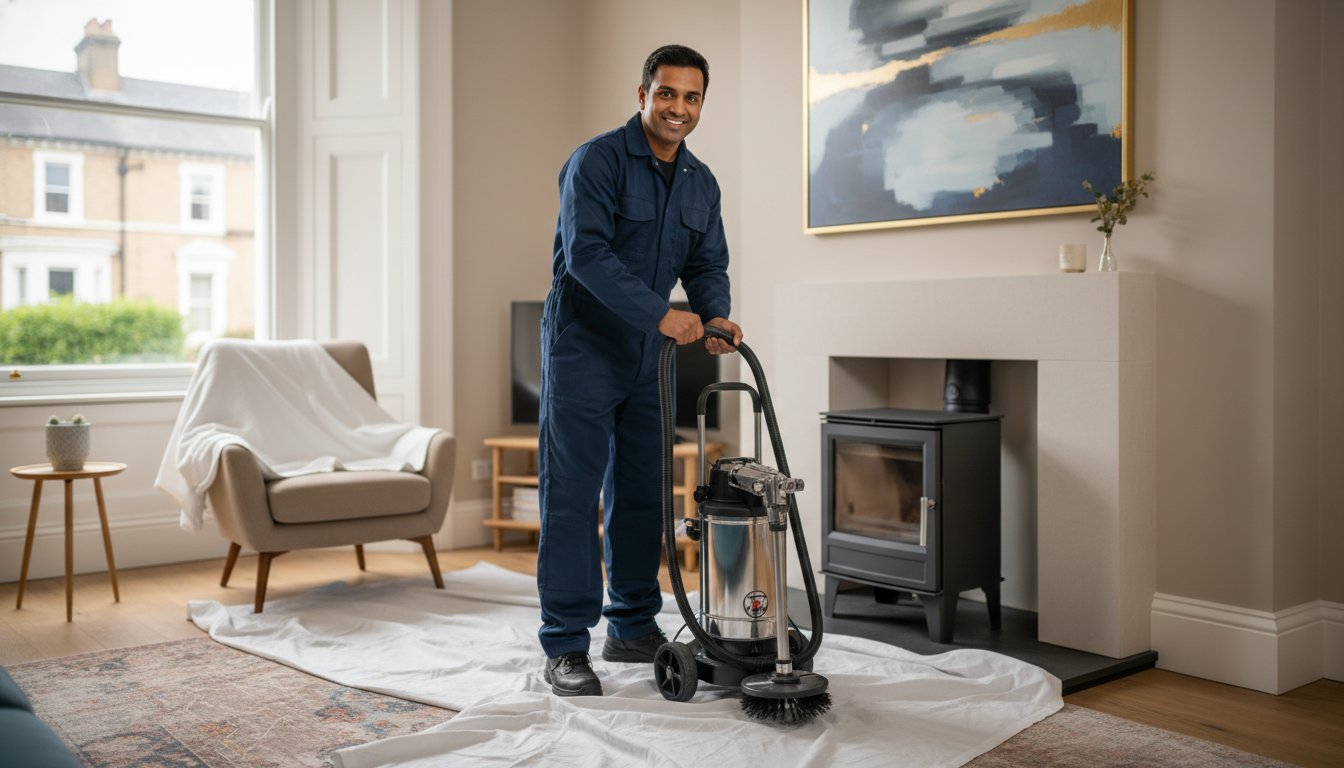
- Full floor protection and industrial-grade HEPA vacuum filtration to ensure zero soot escapes into your living room.
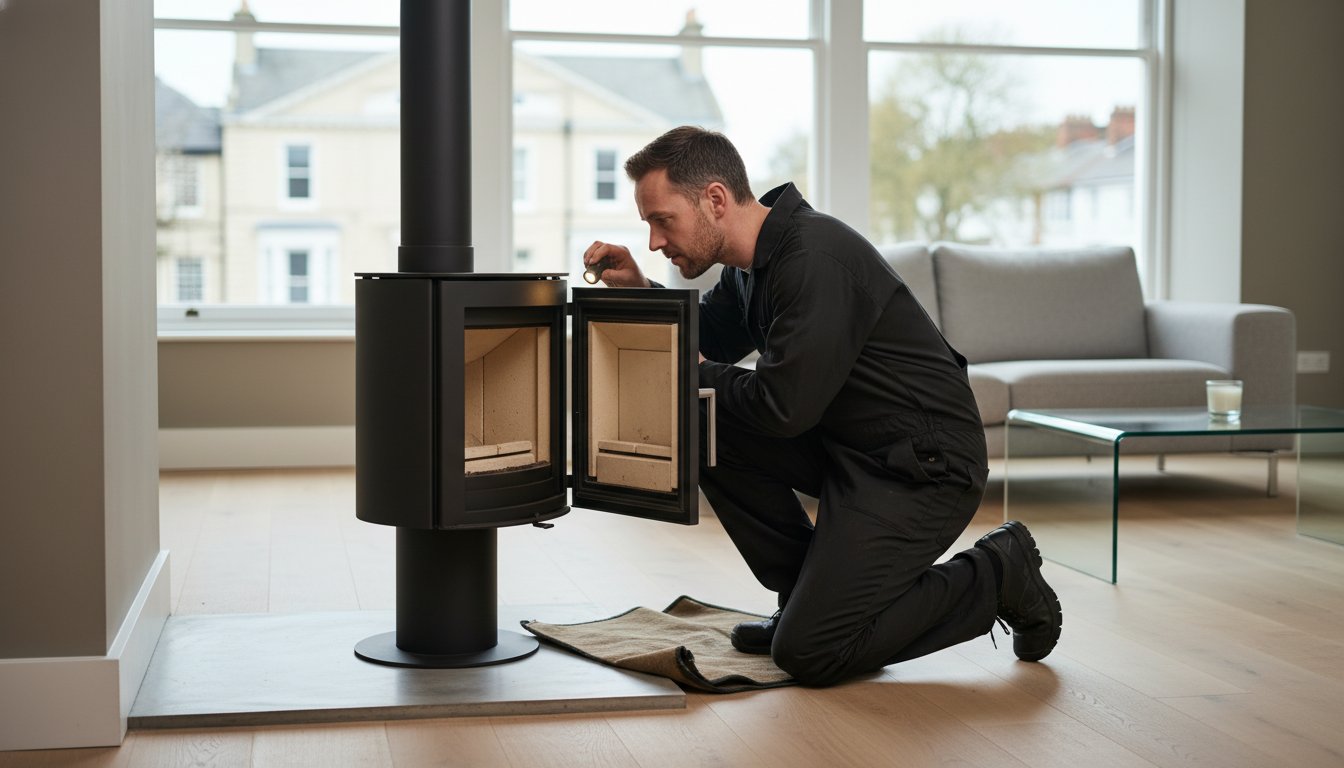
- Detailed inspection of the stove rope seals, baffle plates, and fire bricks to ensure they aren't compromised.
- Mechanical power sweeping for a more thorough clean than traditional rods and brushes can provide.
- Service coverage across the heart of Warwickshire, including Coventry, Kenilworth, Warwick, Southam, and surrounding villages.
Booking Your Annual Service
Don't wait until the first frost in November to find a fault. The best time to schedule your sweep is between April and August. Booking during the spring or summer ensures you avoid the peak season rush and gives you time to complete any necessary repairs before the cold weather hits. Maintaining a consistent service record is also a requirement for most stove manufacturer warranties. If a component fails and you haven't had a professional service, your claim might be rejected by the manufacturer.
Ready to ensure your home stays warm and safe this winter? Book your stove health check with MR-SWEEP today and get expert advice on keeping your wood burner in peak condition.
Restore Your Home’s Efficiency and Safety
Addressing wood burner problems early prevents minor issues from turning into dangerous hazards. Whether you're dealing with smoke leakage in Leamington Spa or a stubborn blockage in Warwick, professional maintenance is the only way to ensure your appliance operates at peak performance. Most issues, from cracked firebricks to failing rope seals, are easily solvable when identified by a specialist before the cold weather sets in.
Don't leave your chimney's health to guesswork. As a HETAS-registered technician, I provide thorough inspections using high-definition CCTV diagnostic equipment to find exactly what's wrong. This technology allows us to see deep inside the flue to spot creosote buildup or structural damage that a standard sweep might miss. You'll receive a full safety certificate after every visit, giving you the professional documentation you need for insurance and total peace of mind. It's the most reliable way to protect your property and keep your family warm throughout the winter months.
Get expert wood burner troubleshooting from MR-SWEEP
You can look forward to a cleaner, safer, and more efficient fire tonight.
Frequently Asked Questions
Why does my wood burner smoke when I open the door?
Smoke usually enters the room because of a pressure imbalance or a cold chimney flue that isn't drawing air upward. You should open the door slightly for 20 seconds before fully opening it to let the pressure equalize. If the issue persists, your flue might be blocked or too short. A cold plug of air can often sit in the chimney, so pre-warming the flue with a firelighter can help establish a draft.
Is it safe to use a wood burner with a cracked firebrick?
It's safe to use your stove if the crack is a minor hairline fracture, but you must replace the brick if it's crumbling or the metal casing is visible. Firebricks protect the stove's outer shell from temperatures exceeding 600°C. Using a damaged brick can lead to permanent structural damage to the appliance. Check your bricks monthly and replace any that have gaps wider than 5mm to ensure your home stays safe.
How do I know if there is a bird nest in my chimney?
You'll likely see twigs, straw, or droppings falling into the stove's firebox if a bird has nested inside. A nest also causes a sudden lack of draw, leading to smoke backing up into your living room immediately after lighting a fire. Jackdaws account for nearly 90% of these blockages in UK chimneys. They often build nests that can fill the entire length of a flue, requiring professional removal.
Why is my stove glass turning black so quickly?
Your stove glass turns black because you're burning wood with a moisture content higher than 20% or the air wash system isn't engaged. This soot buildup is a sign of incomplete combustion. It's one of the most common wood burner problems we encounter during the winter months. Always use "Ready to Burn" certified wood and keep the air vents open enough to maintain a hot, efficient flame.
What is the most common cause of a chimney fire in Warwickshire?
The most common cause of a chimney fire in Warwickshire is the accumulation of flammable creosote within the flue. According to regional fire safety data, failure to sweep the chimney at least once a year is the primary factor in these incidents. Creosote is a highly combustible byproduct of burning unseasoned wood. Regular maintenance can reduce the risk of a chimney fire by approximately 80%.
Can I replace my own stove rope seal or do I need a pro?
You can replace a stove rope seal yourself using a DIY kit, which typically costs between £15 and £25. However, a professional ensures the seal is perfectly airtight and won't fail under high heat. An incorrectly fitted seal allows 15% more air into the firebox, which causes the wood to burn too fast and lowers efficiency. If you're unsure about the adhesive or rope thickness, it's best to call a technician.
How often should I have my wood burner serviced in Leamington Spa?
You should have your wood burner serviced at least once every 12 months to comply with home insurance requirements and HETAS recommendations. For residents in Leamington Spa who use their stove as a primary heat source, a second sweep during the peak of winter is often recommended. This ensures the system remains safe and efficient throughout the coldest months. Professional servicing includes a full safety check of all internal components.
Why does my wood burner smell like wet soot when it is not in use?
That smell occurs when moisture from the air or rain mixes with soot deposits inside the flue to create an acidic, odorous paste. It's especially common during humid summer months or after heavy rainfall. Statistics show that 70% of these odours are caused by downdrafts that push damp, stale air back into your home through the chimney. Having your chimney swept at the end of the burning season usually solves this issue.