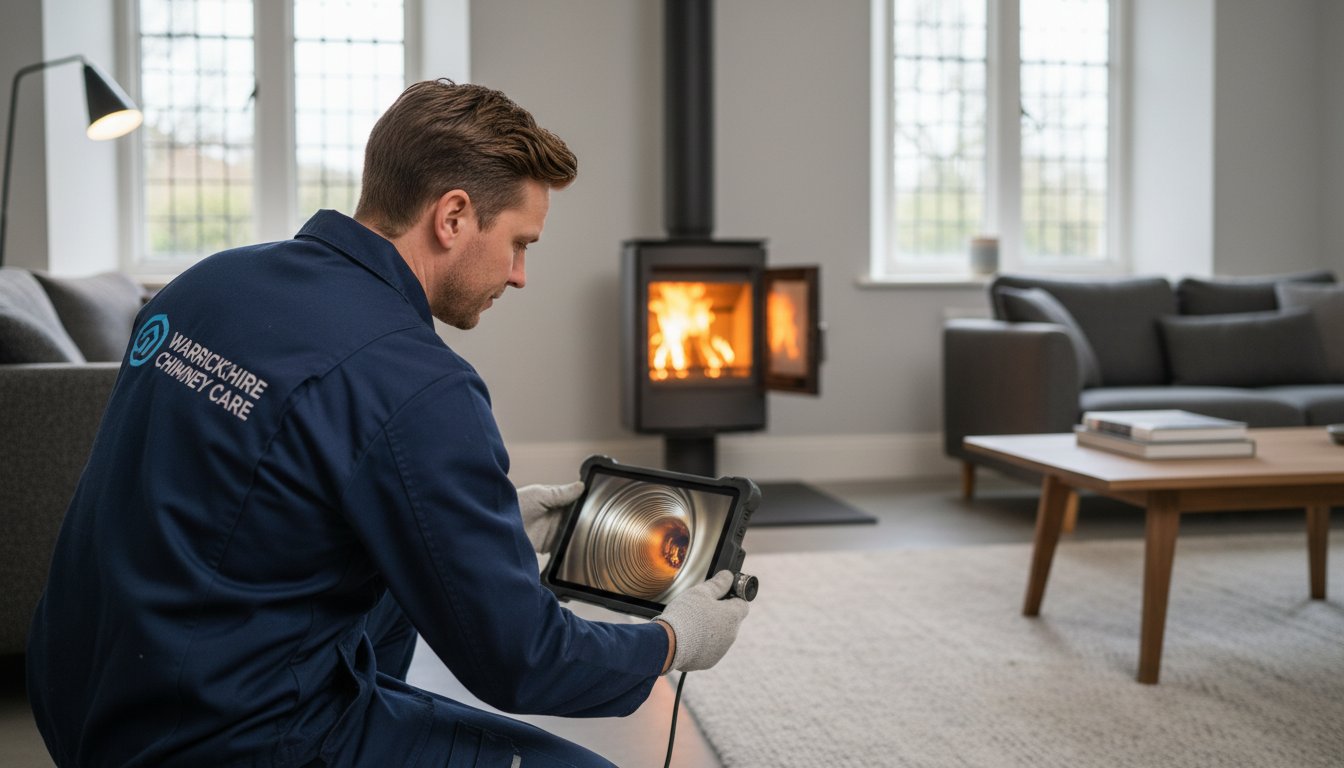
According to the latest Home Office incident recording system data, fire services across England attended 2,540 chimney fires between April 2022 and March 2023. For many families in Warwickshire, these statistics represent a preventable risk that often begins with an aging or incorrectly installed log burner chimney liner. You likely already feel that your wood burning stove should be a source of comfort, not a cause for concern. It's the one part of your home where you deserve to feel completely relaxed while the fire is roaring.
It's natural to feel uncertain about technical jargon like 316 versus 904 grade steel or the specifics of local building regulations. We promise to simplify these choices and show you how to maintain a high performing, safe heating system. This guide provides a clear roadmap for identifying liner failure, understanding the benefits of professional camera inspections, and establishing a maintenance routine that keeps your household protected through 2026 and beyond.
Key Takeaways
- Understand why a high-quality log burner chimney liner is essential for improving heat draw and protecting older Warwickshire homes from dangerous leaks.
- Learn the technical differences between 316 and 904L grade stainless steel to ensure you select the most durable option for your specific fuel choice.
- Identify the critical warning signs of liner failure, such as metal debris appearing in the grate or smoke escaping into your living room.
- Discover the benefits of the specialized "Soft Sweep" method and why annual maintenance is vital for preserving the safety of your flue system.
- Find out how professional CCTV inspections in Leamington Spa reveal hidden corrosion and installation errors that a standard visual check cannot see.
What is a Log Burner Chimney Liner and Why is it Essential?
A flue liner is a protective stainless steel conduit for combustion gases. It's a critical component that bridges the gap between your modern stove and an older masonry structure. In many Warwickshire homes built during the Victorian or Edwardian eras, the original brickwork wasn't designed for the intense, concentrated heat produced by modern wood burners. A log burner chimney liner provides a continuous, smooth path for smoke, ensuring it exits your home safely without lingering in the chimney breast.
Safety remains the primary reason for this installation. Building Regulations, specifically Document J, state that a chimney must be capable of safely discharging combustion products. If your existing masonry flue has degraded mortar or cracked bricks, toxic gases like carbon monoxide can seep into upper floors or attic spaces. Installing a liner is often the only way to meet these legal safety standards during a new stove installation. It offers peace of mind by creating a gas-tight seal from the stove to the chimney pot.
The Mechanics of a Flue Liner
A liner creates a sealed environment that optimizes the "draw" of the stove. Modern Ecodesign stoves, which became the legal manufacturing standard in January 2022, are highly sensitive to flue pressure. These appliances usually require a specific 125mm or 150mm diameter to function correctly. A liner ensures the flue stays warm, which keeps the internal air rising quickly. To understand the different materials used in these systems, you can explore the technical details of What is a Flue Liner? on Wikipedia. Without this controlled environment, your stove will struggle to light and may spill smoke back into the room.
Lined vs. Unlined Chimneys
Using a log burner in an oversized, unlined chimney is a significant fire risk. Large Victorian flues allow hot gases to expand and cool too rapidly. This cooling causes the moisture and chemicals in the smoke to condense, forming thick layers of creosote and tar on the brickwork. Data from UK fire services shows that thousands of chimney fires occur annually, often fueled by these flammable deposits. A log burner chimney liner prevents this buildup by providing a narrow, insulated channel that stays hot. It protects the structural integrity of your home and makes the chimney much easier to sweep and maintain throughout the year.
316 vs 904 Grade: Choosing the Right Flue Liner for Your Home
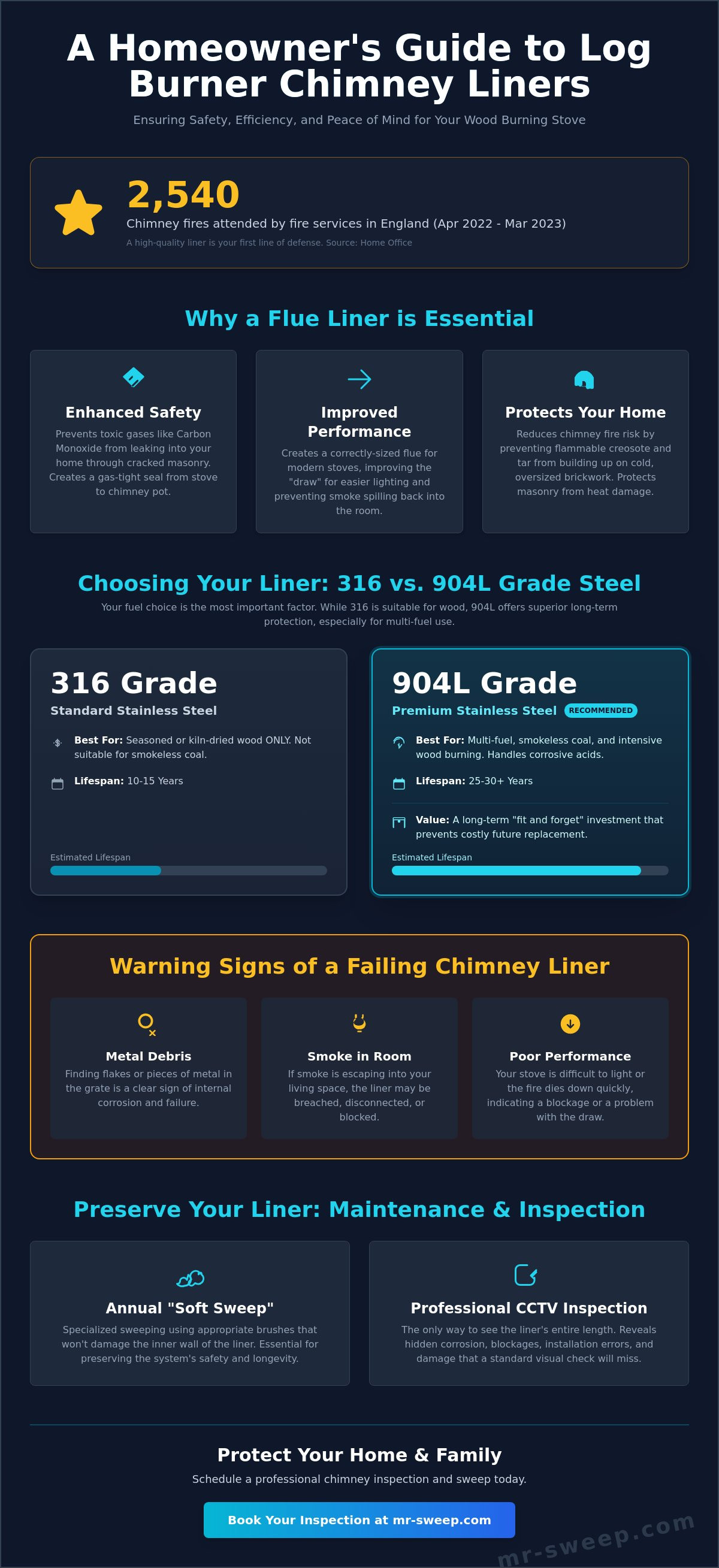
Choosing the right log burner chimney liner is a decision about metallurgy and safety. Most homeowners face a choice between 316 and 904L grade stainless steel. While they look identical, their chemical makeup dictates how they handle heat and acid. 316 grade is the standard option, constructed with two layers of steel suitable for burning seasoned wood. 904L is the premium alternative, featuring a higher concentration of nickel and molybdenum to resist extreme corrosion.
The fuel you burn is the most important factor in this choice. Wood produces soot and creosote, which 316 grade handles well. However, smokeless coal and multi-fuel alternatives release acidic condensates during combustion. These acids can eat through 316 steel in just a few years. Following NFPA 211 safety standards helps ensure your flue system remains compliant and structurally sound, regardless of the metal grade you select.
Longevity expectations vary significantly between the two. A 316 liner typically offers a lifespan of 10 to 15 years. In contrast, 904L liners are designed to last 25 to 30 years. For residents in Leamington homes, investing in a higher grade often saves money. While 904L costs roughly 20% more for materials, it prevents the massive expense and disruption of a full replacement a decade down the line. It's a "fit and forget" solution for long-term property owners.
When to Choose 316 Grade
This grade is ideal if you're a "wood only" burner. If you exclusively use kiln-dried or seasoned logs with a moisture content below 20%, 316 steel provides ample protection. It's more flexible than 904L, making it easier for technicians to pull through tight or offset chimney stacks. It's a cost-effective choice for homeowners who only use their stove occasionally or those planning to move house within the next five years. You can consult a specialist to confirm if your chimney stack's dimensions suit this thinner, more flexible material.
The Benefits of 904 Grade
- Acid Resistance: Essential for anyone using multi-fuel stoves or smokeless coal.
- Extreme Durability: Withstands higher temperature spikes without warping or degrading.
- Long-Term Value: Often comes with a 30-year manufacturer warranty for total peace of mind.
- Professional Recommendation: HETAS technicians frequently advise 904L for heavy users who light their stove daily throughout the winter.
Choosing 904L ensures your log burner chimney liner remains intact even if you accidentally burn high-sulphur fuels. It provides an extra layer of safety against chimney fires and carbon monoxide leaks, making it the gold standard for modern home heating installations.
Warning Signs: How to Tell if Your Chimney Liner is Failing
A log burner chimney liner doesn't last forever. While high-quality stainless steel versions are designed for durability, they eventually succumb to the intense heat and chemical stresses of combustion. Ignoring the early warning signs can lead to poor stove performance, or worse, a dangerous chimney fire. You must be proactive in spotting these issues before they escalate into a safety hazard.
The most common visual indicator is the appearance of small metal flakes or debris on top of the stove or inside the grate. These silver-grey fragments are often pieces of the liner's inner skin that have started to delaminate. If you notice smoke blowing back into the room when you open the door, it's a sign the draft is restricted. A failing log burner chimney liner can also produce a persistent metallic or heavy soot odour that lingers even when the stove hasn't been lit for days.
Internal collapse is the most serious stage of failure. This occurs when the structural integrity of the metal fails, causing the tube to buckle or fold inward. This restriction prevents gases from escaping correctly, which is a direct violation of safety standards outlined in the UK Building Regulations (Approved Document J). If your fire suddenly becomes difficult to light or dies out quickly, the flue may be partially blocked by a collapsed section.
Physical Degradation of Stainless Steel
Stainless steel is tough, but it isn't invincible. "Hot spots" occur when the stove is consistently over-fired, causing the metal to expand and contract violently. Over time, this cycle leads to buckling or splits in the steel. The fuel you choose plays a massive role here too. Burning wet wood with a moisture content above 20% creates acidic condensation. This liquid eats away at the metal, leading to rapid corrosion. Keep an eye on your chimney pot; if you see rust stains or a decaying cowl, the damage has likely spread throughout the entire length of the liner.
When a Sweep Spots Trouble
A professional sweep is your first line of defence against hidden damage. During a standard cleaning, we can often feel a "snag" or an unusual resistance as the brush passes through a specific section of the flue. This often points to a distorted liner or a failing joint. We also analyze the soot consistency. If we find large, glassy flakes of creosote rather than fine dust, it suggests the liner isn't maintaining the correct temperature. Because you can't see through metal, a CCTV chimney inspection leamington spa is the only way to confirm internal tears or structural breaches with 100% certainty.
Maintaining Your Liner: Sweeping and Care in Warwickshire
Installing a log burner chimney liner doesn't mean you can skip the annual maintenance routine. Even the highest quality stainless steel liners collect soot and creosote over a single heating season. You need to book a professional sweep at least once every 12 months to prevent blockages and reduce the risk of chimney fires. In Leamington Spa, home insurance providers frequently demand a valid Chimney Sweep Certificate to validate a policy. If you can't prove the system was maintained by a professional, you might find your claim rejected after a fire incident.
The tools used during the sweep are just as important as the frequency. Traditional heavy metal brushes are a significant threat to flexible liners. These stiff, aggressive bristles can puncture or tear the thin metal walls, leading to dangerous carbon monoxide leaks into your home. We utilize the "Soft Sweep" method, which employs specialized power-sweeping brushes. These flexible nylon heads adapt to the shape of the flue, removing deposits safely without causing structural damage to the metal surface.
Best Practices for Liner Longevity
Protecting your log burner chimney liner starts with your fuel choice. Use only "Ready to Burn" certified wood with a moisture content under 20%. Burning wet wood creates thick, acidic tar that clings to the liner and accelerates corrosion. We also recommend using a stove thermometer. This simple device allows you to monitor the flue temperature, ensuring you don't run the stove too cold, which causes creosote buildup, or too hot, which stresses the steel. Never burn treated wood, painted offcuts, or household rubbish. The chemicals released from these materials can degrade a 316-grade liner in just a few seasons.
Professional Maintenance in Warwick
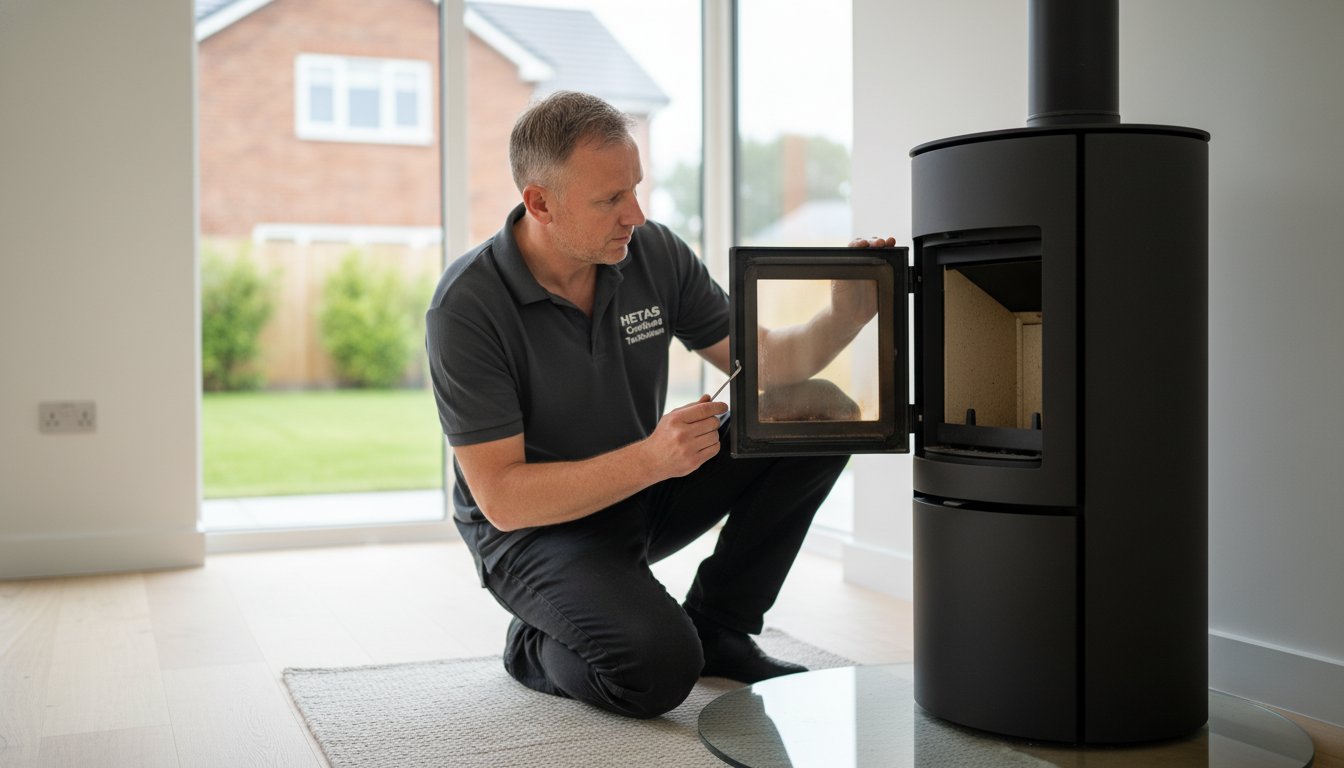
When Adrian conducts a standard sweep in Warwick, he doesn't just remove soot. He inspects the entire system for signs of wear, ensuring your appliance remains efficient. Regular cleaning helps prevent the need for an expensive wood burning stove repair leamington by catching minor issues like loose firebricks or failing door seals before they escalate. A HETAS-registered sweep ensures the liner remains clear and structurally sound, providing you with total peace of mind. Keeping the flue clear ensures the draw remains strong, which keeps your glass cleaner and your fuel bills lower.
Don't leave your home's safety to chance this winter. Contact Mr. Sweep to schedule your professional chimney liner maintenance.
Professional CCTV Inspections for Chimney Liners in Leamington Spa
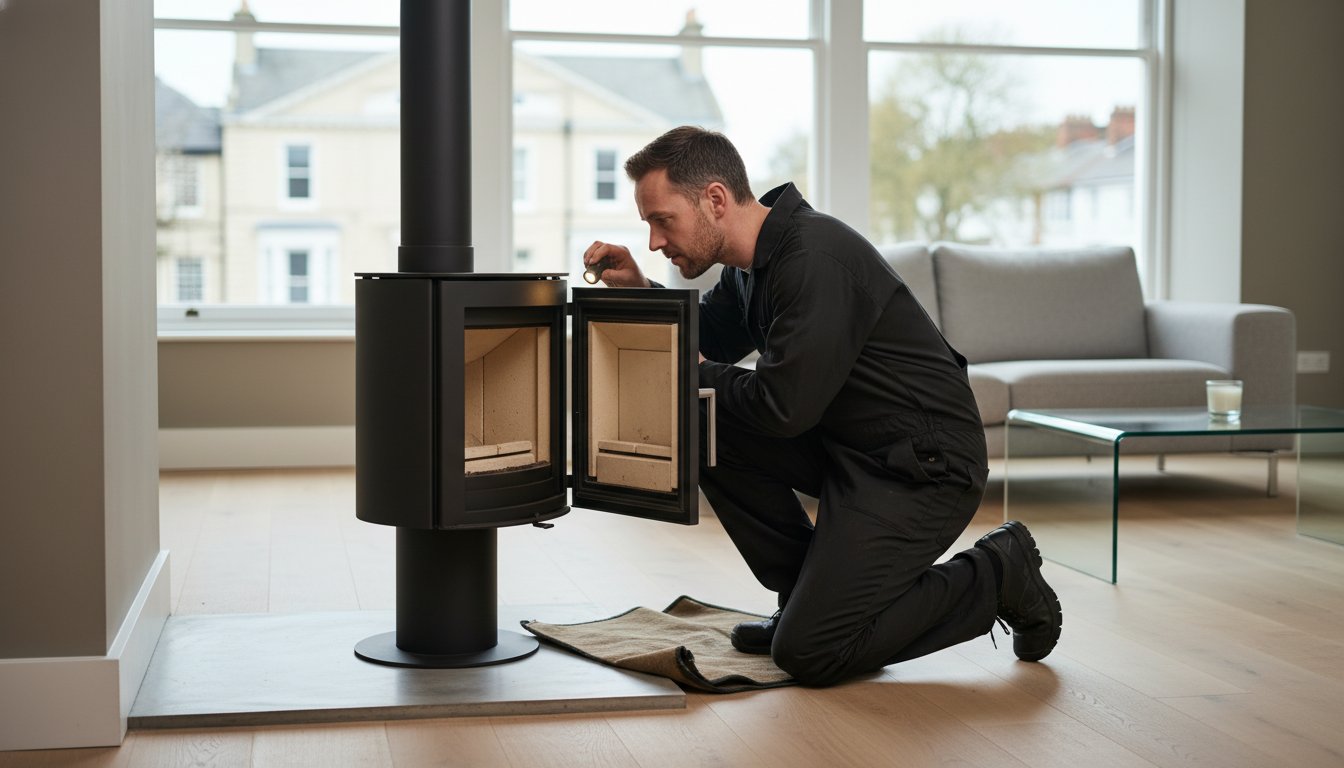
A quick glance from the hearth with a torch won't tell you if your flue is safe. You can only see the first few inches of the system, leaving the most critical sections hidden from view. Your log burner chimney liner is subject to intense thermal expansion and contraction every time you light a fire. This physical stress, combined with the chemical byproduct of burning wood, can lead to invisible points of failure. Professional CCTV inspections are the only way to verify the structural integrity of the entire length of the flue.
For homeowners in Leamington Spa and the wider Warwickshire area, these surveys provide essential data. We often find liners that were installed upside down or those that have "slumped" due to poor support at the chimney pot. If you've just moved into a new property in Leamington, you're responsible for the safety of your family. Relying on the previous owner's word isn't a safety strategy. A camera survey removes the guesswork, showing you exactly what's happening behind the brickwork.
When to Book a Camera Survey
Timing is everything for chimney maintenance. You must book a survey immediately after any chimney fire, even if you think the flames didn't cause damage. Intense heat can warp stainless steel or cause it to "unravel" at the seams. You should also consider an inspection if your log burner chimney liner is nearing the end of its 10-year or 25-year warranty period. Internal corrosion often starts at the bends where moisture and soot collect. To understand the full technical process, read our chimney camera survey warwickshire guide for 2026.
Expert Diagnostics by MR-SWEEP
At MR-SWEEP, we use specialized high-definition cameras designed for the dark, confined environment of a flue. We don't just look for soot; we perform a full diagnostic check. This includes looking for bird nests, which are common in Warwickshire during the spring, and identifying debris that could puncture the liner walls. Our footage provides a clear view of every joint and connection point.
- Detection of hidden corrosion or "pitting" in the steel.
- Verification of correct installation and support.
- Identification of blockages or restricted airflow.
- Detailed evidence for insurance or property sale purposes.
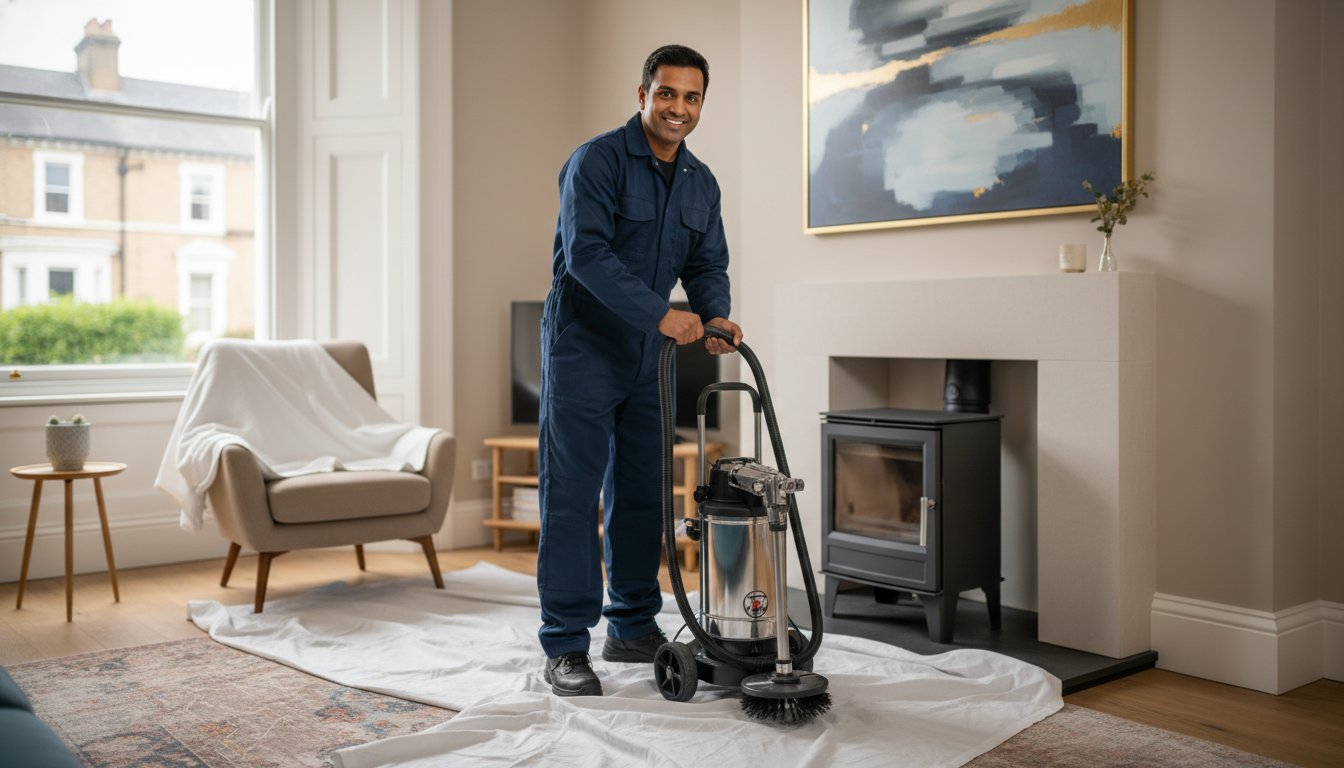
Our process is clean, efficient, and leaves no mess in your living room. We use protective sheeting and industrial dust extraction to ensure your home stays spotless. Don't wait for a problem to manifest as smoke leaking into your house. You can ensure your liner is safe for the winter by booking a diagnostic survey with your local Leamington expert today.
Future-Proof Your Warwickshire Home for 2026
Your log burner chimney liner is the most critical safety component in your heating system. Choosing between 316 and 904 grade stainless steel depends on your specific usage patterns, but both require annual professional attention to function correctly. Statistics from the UK government Fire Statistics Data Tables highlight that chimney fires account for thousands of incidents across England each year. Regular sweeping prevents the buildup of dangerous creosote and ensures your flue remains structurally sound for the long term.
Peace of mind comes from knowing a professional has verified every inch of your flue. Every inspection we perform uses high-definition CCTV diagnostic equipment to spot internal damage that's invisible to the naked eye. We provide a full safety certificate with every sweep to satisfy home insurance requirements and keep your household protected. It's the simplest way to ensure your stove operates at peak efficiency while eliminating hidden risks.
Book a HETAS-registered chimney inspection with MR-SWEEP today to ensure your installation is ready for the winter months ahead. You'll enjoy a warmer, safer home with the confidence that only expert maintenance provides.
Frequently Asked Questions
Do I legally need a liner for my log burner in the UK?
You aren't strictly required by law to install a liner if your existing chimney is sound and passes a professional pressure test. However, UK Building Regulations Document J dictates that the flue must be smoke tight and the correct size for the appliance. Most HETAS installers won't certify an installation in a pre-1965 home without a log burner chimney liner because older masonry flues are often too large and porous to draft safely.
How much does it cost to have a chimney liner swept in Leamington Spa?
A standard sweep for a lined chimney in Leamington Spa typically costs between £60 and £85. This price reflects the local Warwickshire market rates for 2024 and 2025. You might pay more if the flue is heavily blocked or if you require bird nest removal. Booking your appointment during the spring months can sometimes save you 15% compared to peak winter prices when demand is highest.
How long does a stainless steel chimney liner actually last?
A high quality stainless steel liner usually lasts between 10 and 20 years depending on the grade of steel and your burning habits. 316 grade liners typically come with a 10 year warranty, while 904 grade versions often carry a 20 year guarantee. If you burn wet wood with a moisture content over 20%, acidic soot will corrode the metal and can reduce this lifespan by 5 or 6 years.
Can I sweep my own log burner chimney liner?
You can sweep it yourself, but it's a risky choice that might void your home insurance. Most UK insurers require a certificate of sweeping from a registered professional to process fire related claims. If you use the wrong equipment, like a stiff wire brush on a flexible log burner chimney liner, you can scrape or puncture the steel. Professionals use specialized nylon power sweeping heads that clean thoroughly without damaging the flue walls.
What happens if a bird builds a nest in my lined chimney?
A bird's nest causes a total blockage that forces carbon monoxide back into your living room and creates a significant fire hazard. Under the Wildlife and Countryside Act 1981, it's illegal to remove an active nest during the nesting season, which runs from March to August. Once the birds fledge, you must hire a professional to clear the debris and install a bird guard cowl to prevent the same problem next year.
Is a 316 or 904 grade liner better for a standard wood burner?
A 316 grade liner is adequate if you strictly burn seasoned wood, but a 904 grade liner is the better long term investment. The 904 grade is thicker and contains higher levels of chromium and nickel, which makes it resistant to the harsh acidic condensates produced by smokeless fuels. If you use your stove as a primary heat source more than 3 times a week, the 904 grade offers superior durability.
Can a chimney liner be repaired if it is damaged?
No, you cannot safely repair a flexible stainless steel liner once it's suffered a crack, tear, or severe corrosion. Because the flue must be 100% gas tight to protect your family from toxic fumes, any structural failure requires a full replacement of the entire length. Attempting to patch a section of the liner is a violation of safety standards and won't pass a professional inspection or a smoke test.
Why is my log burner smoking even though I have a liner?
Smoking is usually caused by poor draught or wet fuel rather than a failure of the liner. If your wood has a moisture level above 20%, it produces heavy smoke that can't rise quickly enough. Other common issues include a blocked bird guard, a room that's too airtight for the stove to "breathe," or a liner that's the wrong diameter for the stove's output. A professional sweep can use a manometer to check if the draught meets the required 12 to 25 pascals.