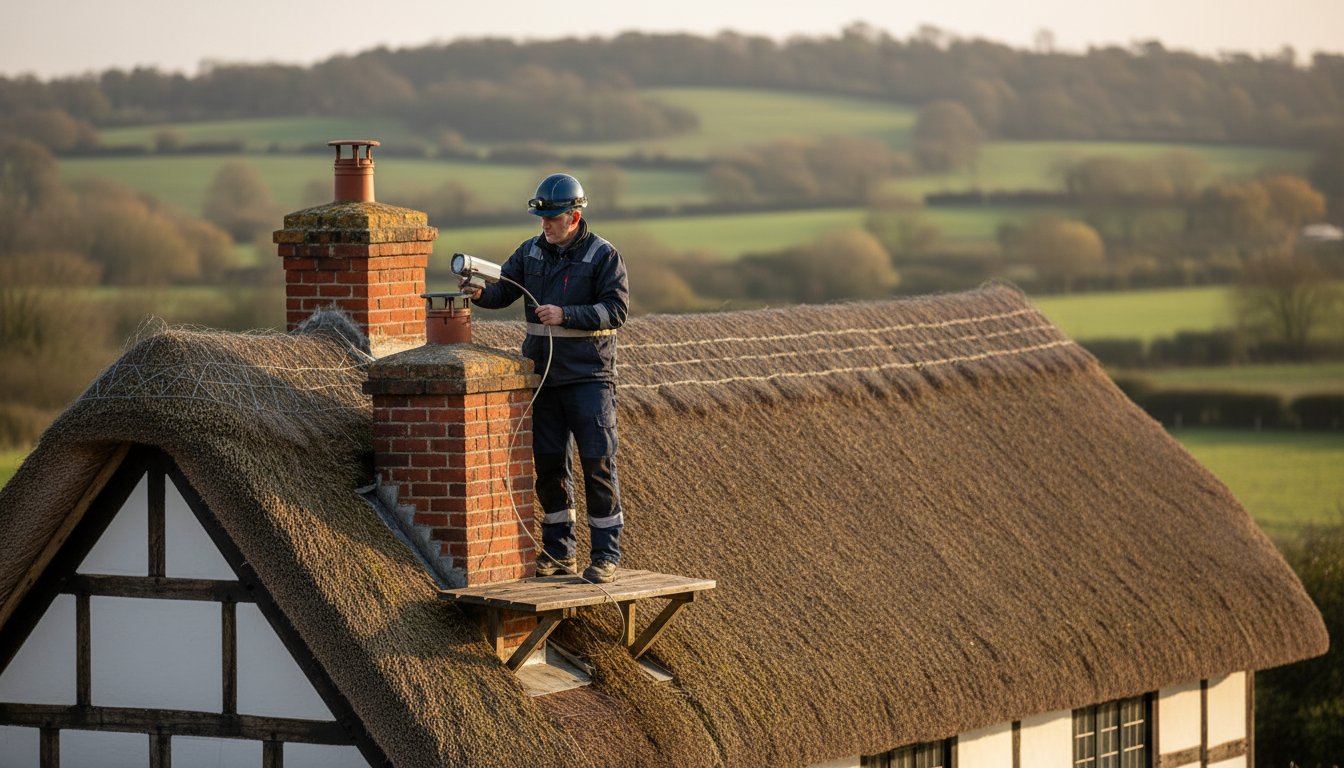
What if your home insurance policy became completely invalid because of a single missing date on a sweeping certificate? For owners of historic homes in Warwickshire, this isn't just a hypothetical scenario; it's a common reality that puts both your heritage and your finances at risk. You likely understand that living under a traditional roof requires a higher level of vigilance, yet the conflicting advice on sweeping frequencies often leads to more confusion than clarity. Finding a qualified thatched property chimney sweep Leamington Spa residents can trust is about more than just removing soot. It's about protecting a legacy.
We've designed this 2026 safety guide to give you total peace of mind by breaking down the specific insurance mandates and technical standards required for thatched properties. You'll discover exactly how to maintain your stove to prevent chimney fires and what documentation you must hold to satisfy your provider. We also explain our precision cleaning methods that ensure your historic interiors remain spotless. By the end of this article, you'll have a clear roadmap for keeping your home safe, compliant, and warm throughout the winter months.
Key Takeaways
- Learn why the "Heat Transfer" phenomenon makes specialized maintenance essential for protecting your thatched roof from high flue temperatures.
- Discover how choosing the right manual or power sweeping technique preserves historic Warwickshire flues while maintaining a spotless home interior.
- Understand specific "Thatch Clause" requirements to ensure your insurance remains valid with a professional thatched property chimney sweep Leamington Spa certificate.
- See why non-negotiable CCTV inspections are the only way to identify hidden "leaky" flues before they pose a fire risk to your thatch.
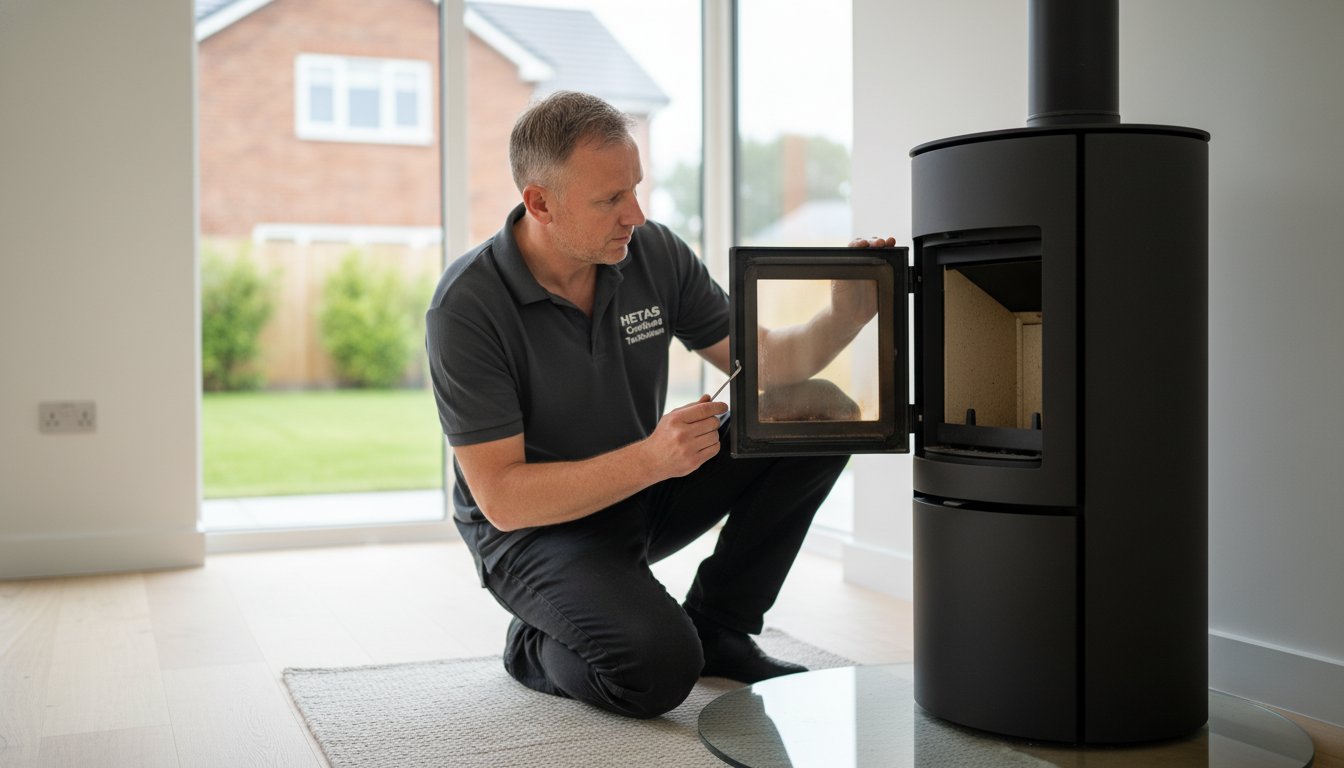
- Benefit from the peace of mind provided by a HETAS-registered expert who understands the unique safety and repair standards of local Leamington cottages.
The Unique Risks of Thatched Property Chimneys in Leamington Spa
Owning a historic home in Warwickshire carries a responsibility that goes beyond simple aesthetics. For residents seeking a thatched property chimney sweep Leamington Spa, understanding the structural differences between a standard brick house and a thatched cottage is the first step toward fire prevention. Standard chimneys dissipate heat into the open air. In contrast, thatched roofs wrap around the chimney stack, creating a dangerous thermal trap that requires specialized maintenance protocols.
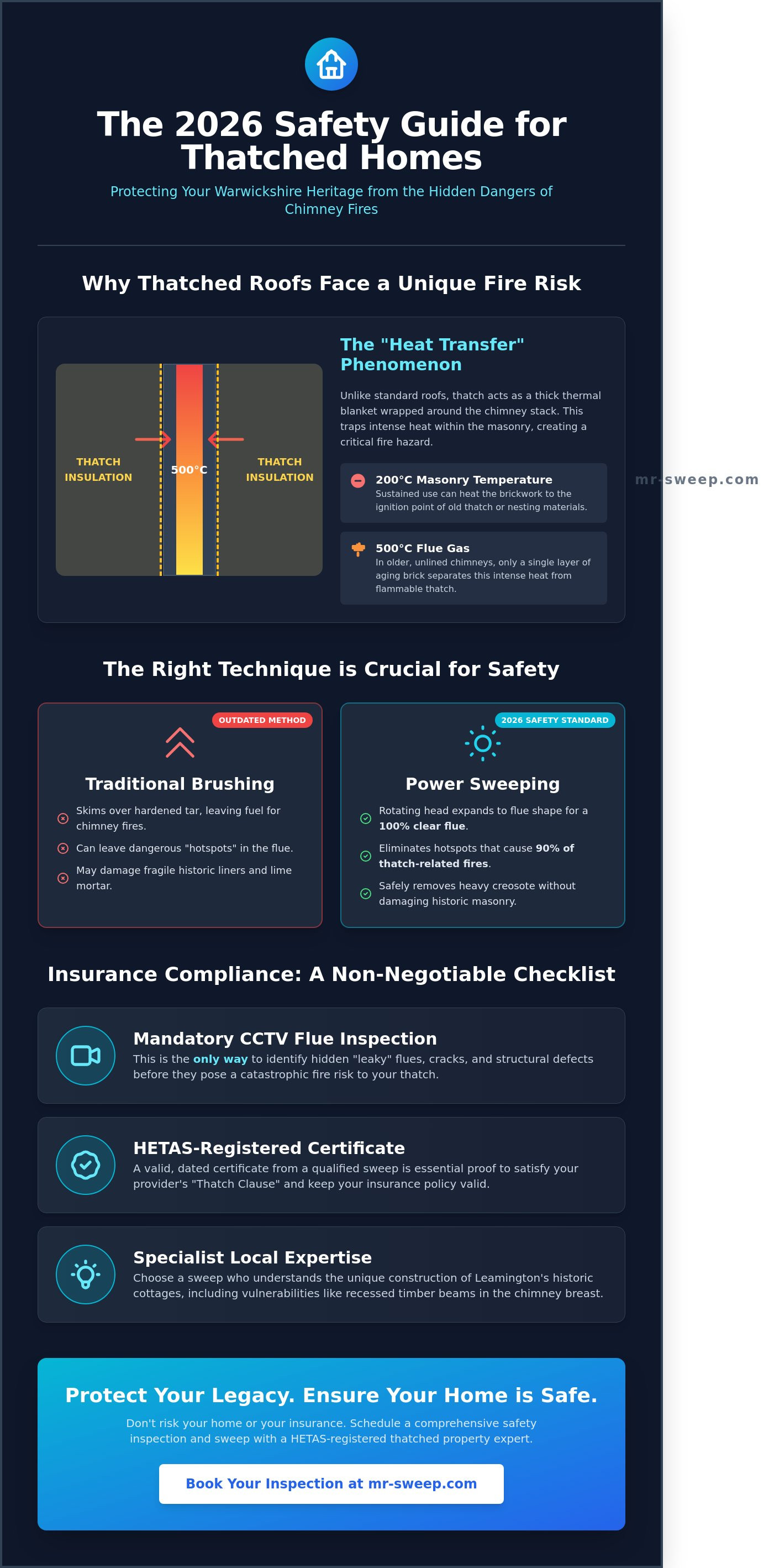
The phenomenon of heat transfer is a leading cause of property loss in the region. Because thatch is designed to keep a home warm, it also prevents the chimney masonry from cooling down effectively. Over several hours of continuous use, temperatures within the brickwork can reach 200°C. This is the critical ignition point for many dried nesting materials or old thatch layers. Exploring the Thatching craft and materials reveals how these natural fibers, while excellent for insulation, require specific clearance distances from active flues to remain safe from combustion.
Leamington Spa architecture often features 18th-century timber-framed cottages with wattle and daub components. These older chimneys often lack modern liners. This means only a single layer of aging brick separates a 500°C flue gas stream from a highly flammable roof. Without a professional inspection, these structural gaps remain hidden until a crisis occurs.
Why Thatch Fire Safety is Different
Thatch acts as a heavy thermal blanket. It traps heat within the chimney stack instead of letting it escape through the masonry. This sustained high temperature can lead to pyrolysis, where the thatch near the chimney chemically changes and becomes even more flammable over time. Spark ejection is another critical threat; a single ember from an unmaintained flue can travel upwards and settle on the dry, uneven surface of the roof. Creosote is the primary fuel source for chimney fires.
Warwickshire Climate and Your Thatch
The damp Leamington winters, with average humidity levels often exceeding 80% in December and January, contribute significantly to moisture buildup inside the flue. When residents burn local hardwoods like Oak or Ash, the moisture content dictates how much soot is produced. Oak provides high heat but creates dense smoke if it isn't seasoned for at least 24 months. This leads to rapid creosote accumulation. Many Leamington Spa properties built before 1850 have structural vulnerabilities, such as recessed timber beams built directly into the chimney breast, which require professional inspection during every thatched property chimney sweep Leamington Spa visit.
Specialized Sweeping Techniques for Thatch Safety
Maintaining a thatched cottage requires more than a standard brush and bucket. In Leamington Spa, where historic properties date back centuries, the chimney flue is often the most vulnerable point. A professional thatched property chimney sweep Leamington Spa must adhere to HETAS-registered standards to ensure the structural integrity of the flue remains intact while removing hazardous deposits. These standards require specific training to identify internal flue defects that standard sweeps might overlook during a routine visit.
Traditional methods often fall short when dealing with the heavy creosote buildup found in older Warwickshire homes. Standard brushes might skim over hardened tar, leaving behind fuel for a potential chimney fire. Expert sweeps now utilize specialized equipment designed for the delicate nature of lime mortar and historic brickwork. This ensures that every inch of the flue is accounted for, reducing the risk of heat transfer to the surrounding thatch material, which is the primary cause of ignition in these unique structures.
Power Sweeping vs. Traditional Brushes
Power sweeping has become the industry benchmark for 2026 safety protocols. Unlike manual brushing, which relies on vertical friction, power sweeping uses flexible rods and a rotating head that expands to the exact shape of the flue. This precision is vital for protecting delicate chimney linings in Grade II listed buildings. It ensures a 100% clear flue, eliminating the heat hotspots that cause 90% of thatch-related fires according to recent fire safety data. The controlled torque allows for the removal of third-stage creosote without damaging the fragile masonry of older Leamington residences.
Maintaining a Soot-Free Home
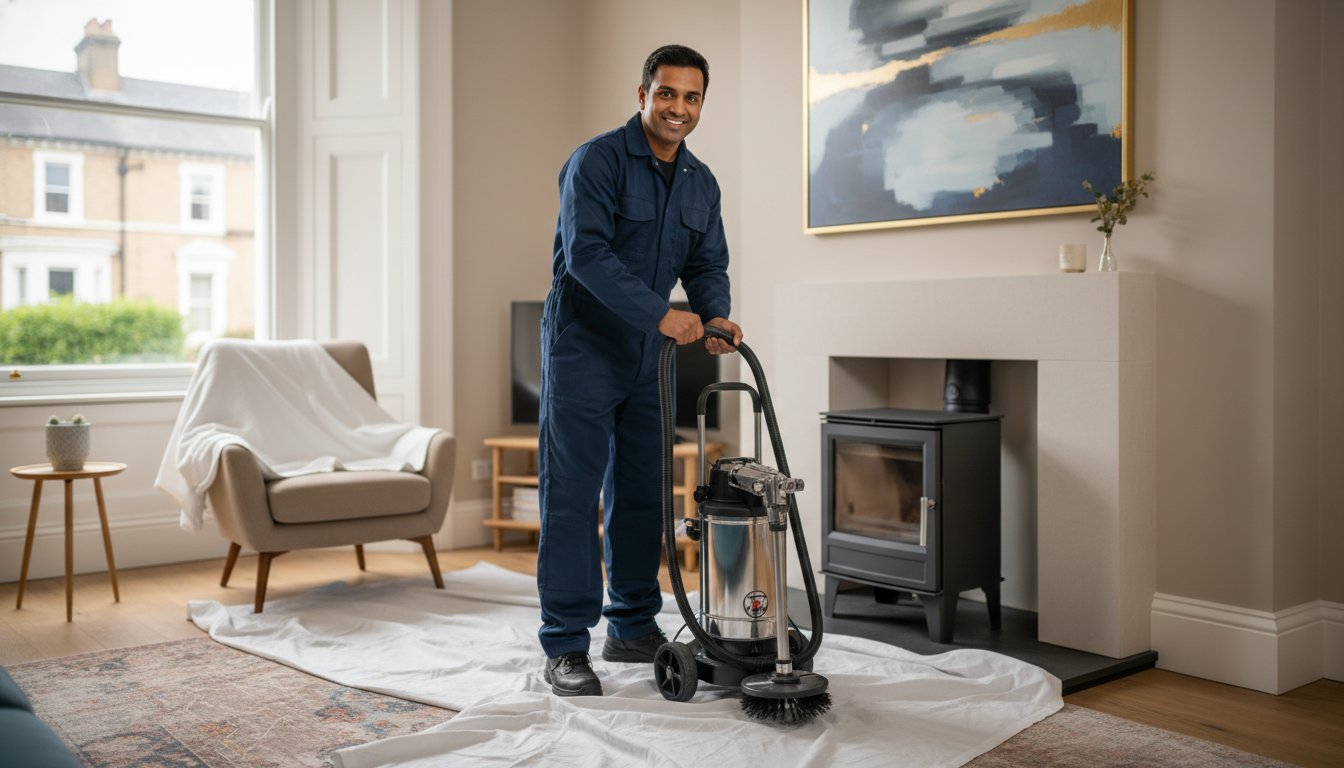
Protecting the interior of a historic home is just as important as the chimney itself. Adrian’s approach to dust containment involves a multi-stage sealing process before the sweep even begins. We use industrial-grade HEPA-filtered vacuum systems that capture 99.97% of particles as small as 0.3 microns. This technology prevents the dreaded "blowback" that can coat a thatched cottage's living room in fine soot during high-pressure cleaning. Floor protection protocols include heavy-duty runners and hearth shrouds to ensure your home remains pristine throughout the process. If you're concerned about the safety of your flue, you can book a professional inspection to verify your chimney's condition. These specialized sweeping techniques provide peace of mind, allowing you to enjoy your fireplace without compromising your property's safety.
Insurance Compliance and Safety Certificates
Insurance providers for historic homes don't view chimney maintenance as a suggestion. For owners of heritage buildings, the "Thatch Clause" is a binding part of the insurance contract that dictates specific safety protocols. Failure to adhere to these requirements can lead to the immediate voiding of a policy. Choosing a professional thatched property chimney sweep Leamington Spa ensures your home remains protected by a specialist who understands these legal nuances. A standard receipt from an unregistered sweep is insufficient for modern claims. You need a comprehensive safety certificate that proves the work met industry standards.
Documenting your chimney health serves two purposes. First, it provides a paper trail for insurance adjusters if an incident occurs. Second, it acts as a vital "logbook" for the property. When the time comes to sell a thatched cottage in Warwickshire, prospective buyers and their surveyors will demand proof of regular maintenance. Having a multi-year history of professional certificates can significantly smooth the conveyancing process and reassure lenders.
The Anatomy of a Safety Certificate
A valid safety certificate must contain specific technical data to satisfy UK insurers. This includes the date of the service, the type of appliance cleaned, the fuel being used, and a clear statement on the integrity of the flue. It should also highlight any defects or recommendations for repairs. MR-SWEEP issues documentation that clearly displays HETAS registration details, which is the gold standard for solid fuel safety in the UK. We provide both digital and physical records for every sweep, ensuring your compliance data is always accessible for annual renewals or unexpected inspections.
Meeting Insurance Frequencies
Insurance mandates for thatch properties are significantly stricter than for standard brick-and-tile homes. While a modern house might only require an annual sweep, many thatch policies require service every 90 days during the burning season. Typical requirements include quarterly or bi-annual sweeping to prevent the buildup of flammable creosote. Missing a single scheduled service can leave you personally liable for damages in the event of a fire. Staying on top of these dates is vital for Chimney Fire Safety in Leamington Spa and your long-term financial protection. Booking your thatched property chimney sweep Leamington Spa in advance helps you maintain a perfect compliance record without the stress of last-minute scheduling.
Beyond the Sweep: CCTV Inspections and Stove Repairs
A standard brush and vacuum service is the baseline for safety, but for a thatched property chimney sweep Leamington Spa, it isn't the complete solution. Thatch fires often originate from heat transfer through the chimney structure itself rather than just sparks exiting the pot. If a flue is "leaky," hot combustion gases escape through degraded mortar joints, heating the surrounding masonry and eventually the thatch to its auto-ignition temperature. This process can happen silently over several hours.
CCTV Chimney Surveys in Leamington Spa
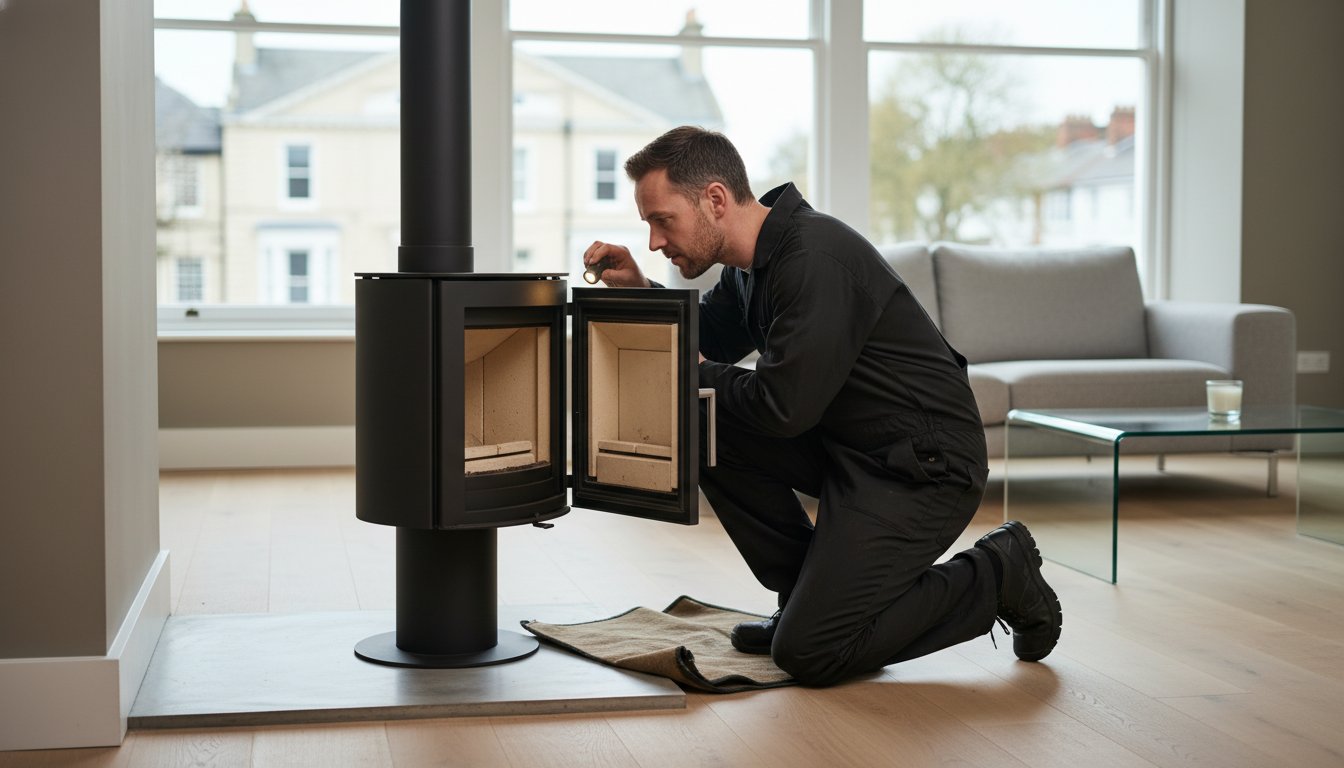
CCTV inspections are a non-negotiable tool for homeowners in South Warwickshire. While a brush removes soot, it cannot identify a hairline crack in a clay liner or a failing mid-feather wall. Our high-definition cameras provide a 360-degree view of the internal flue, offering visual proof of structural integrity. You should always book a diagnostic survey after a bird nest removal; nesting materials often trap moisture against the liner, causing localized corrosion or hidden blockages that a standard sweep might miss.
Stove Component Maintenance
The efficiency of your stove directly impacts the safety of your thatch. Cracked firebricks are a common but dangerous find in local cottages. These bricks act as a thermal barrier, protecting the stove’s outer casting. When they fail, the stove body can reach excessive temperatures, radiating heat into the hearth and surrounding timbers. Controlling the burn rate is equally vital for spark prevention.
Worn door rope seals are a primary cause of "over-firing." If the seal is compromised, the stove draws in unregulated oxygen, creating an uncontrollably hot fire that sends high-temperature gases into the flue. Maintaining these small components is a simple way to reduce fire risk. For a deeper look at keeping your appliance safe, read our guide on Wood Burning Stove Repair Leamington.
Structural repairs often focus on the "200mm rule," where building regulations suggest at least 200mm of solid masonry between the flue and the thatch. In many historic Leamington Spa properties, the brickwork is significantly thinner. Installing a modern, insulated twin-wall liner can reduce external chimney temperatures by up to 45 percent, providing a critical safety margin. This structural upgrade ensures that even during a long winter evening, the heat stays inside the pipe and away from your roof.
Don't leave your safety to chance. Ensure your home is fully protected by booking a comprehensive chimney safety inspection with our expert team today.
Why Choose MR-SWEEP for Your Leamington Thatched Home
Adrian is a HETAS-registered technician who has spent years mastering the specific needs of Warwickshire's historic buildings. Choosing a thatched property chimney sweep Leamington Spa specialist isn't just about cleaning soot; it's about understanding the unique thermal dynamics of a combustible roof. Adrian brings technical precision to every job, ensuring that your flue meets the strict safety standards required by modern insurance providers. He combines traditional sweeping methods with advanced technology to provide a service that is both thorough and protective of your home's heritage.
The MR-SWEEP approach focuses on three core pillars: safety, compliance, and cleanliness. Our comprehensive service includes more than just a brush and vacuum. We offer:
- HETAS-certified inspections: Ensuring your appliance and flue are safe for continued use.
- CCTV flue surveys: Identifying internal cracks or mortar decay that are invisible to the naked eye.
- Expert repairs: Fixing minor issues before they become major fire hazards.
- Insurance-approved certification: Providing the paperwork you need to keep your thatch policy valid.
A Local Specialist You Can Trust
Adrian is a familiar face in the villages surrounding Leamington Spa, including Barford, Hatton, Wasperton, and Wellesbourne. Local knowledge is vital because the architectural styles in the Warwick district vary significantly. A chimney in a 17th-century cottage requires a different approach than one in a Victorian renovation. The "Mr. Sweep" promise is built on reliability, punctuality, and an obsession with cleanliness. We use industrial-grade HEPA filtration and specialized floor protection to ensure not a single speck of soot enters your living space. For a broader look at our services, visit our Chimney Sweep Leamington Spa Pillar guide.
Booking Your 2026 Thatch Safety Check
Don't wait for the first frost of the 2026 season to think about your chimney. Demand for a qualified thatched property chimney sweep Leamington Spa usually spikes by 40% between October and December. Booking your inspection during the spring or summer months allows for a more relaxed schedule and ensures any necessary repairs are completed long before you need to light the fire. Adrian offers multi-service discounts for homeowners who require sweeping, a CCTV survey, and a bird guard installation in a single visit. This efficiency saves you time and provides total peace of mind for the year ahead. Book your specialized thatch sweep today and protect your Leamington home with Warwickshire's trusted chimney expert.
Secure Your Leamington Thatch for 2026 and Beyond
Protecting a historic home requires more than just a standard brush and ladder. For 2026, insurance providers increasingly demand documented proof of maintenance to mitigate the heightened fire risks associated with traditional roofing. A professional thatched property chimney sweep Leamington Spa provides the specialized care needed to meet these rigorous safety standards. Using full CCTV diagnostic equipment, we identify hidden masonry cracks and soot buildup that often lead to chimney fires in older structures. This technical precision, combined with HETAS-registered expertise, ensures your property remains compliant and your family stays safe.
At MR-SWEEP, we combine modern technology with a deep respect for traditional craftsmanship. Our technicians focus on clean, efficient service that leaves your home spotless and your flue functioning at peak performance. We've built our reputation on reliability and the specific technical knowledge required for historic Leamington residences. You've worked hard to maintain your beautiful home; let us handle the complex safety requirements of your chimney system. Book Your Specialized Thatched Property Sweep with MR-SWEEP today to ensure your fireplace is ready for the season ahead. It's the simplest way to gain total peace of mind while protecting your heritage property.
Frequently Asked Questions
How often should a thatched property chimney be swept in Leamington Spa?
You should have your chimney swept at least twice a year during the burning season if you use wood. For smokeless fuels, once a year is the minimum requirement for safety. Booking a specialized thatched property chimney sweep Leamington Spa ensures that soot and creosote don't build up to dangerous levels. Regular maintenance prevents 90% of chimney fires according to fire safety statistics from 2024.
Does my insurance require a HETAS-registered sweep for a thatched home?
Most specialist insurers, including NFU Mutual and Hiscox, require a certificate from a professional sweep to maintain your policy coverage. Using a HETAS-registered sweep provides documented proof that your system meets UK Building Regulations. Without this paperwork, your insurance may be void in the event of a fire claim. We provide a recognized certificate of sweeping after every visit for your records.
Can a bird nest in a thatched chimney cause a fire?
A bird nest in a thatched chimney is a major fire hazard because it blocks the flue and causes heat to build up rapidly. This trapped heat can reach 500 degrees Celsius, potentially igniting the surrounding thatch material. We install stainless steel bird guards to prevent jackdaws from nesting in your stack. Statistics show that blocked flues cause over 3,000 chimney fires in the UK every year.
What is the cost of a specialized thatched property chimney sweep?
The cost of a specialized sweep for a thatched home depends on the height of the chimney and the degree of creosote buildup. While standard sweeps have a set base rate, thatched properties often require more time and specialized power-sweeping equipment. We recommend requesting a bespoke quote to ensure all safety checks are included. Our pricing reflects the precision and clean work guarantee we provide to every customer.
Why is a CCTV inspection recommended for thatched cottages?
CCTV inspections are recommended because they reveal internal structural damage that's invisible to the naked eye. We look for cracks as small as 5mm or failing liners that could allow heat to transfer to the thatch. According to the Thatch Advice Centre, faulty flues are a leading cause of fires in historic homes. Our high-definition cameras provide a clear 360 degree view of your chimney's interior condition.
Are wood-burning stoves safe in thatched properties?
Wood-burning stoves are safe in thatched properties provided they meet current Building Regulations and use a twin-wall insulated flue. The chimney should ideally extend 1.8 meters above the thatch ridge to ensure sparks disperse safely in the wind. We check these clearances during our thatched property chimney sweep Leamington Spa service. Proper installation and regular maintenance make modern stoves a reliable heating option for traditional cottages.
What happens if I don't have a chimney sweep certificate?
If you don't have a valid chimney sweep certificate, your home insurance provider will likely reject any fire-related claims. This leaves the homeowner with 100% of the financial liability for repairs and restoration costs. Certificates prove you've exercised due diligence in maintaining your property's safety. Our team issues digital certificates immediately after the job is finished, ensuring your records stay up to date for 2026.
Can MR-SWEEP repair my stove glass while sweeping the chimney?
Yes, MR-SWEEP can replace damaged stove glass and door seals during your scheduled chimney sweep appointment. We carry common sizes of heat-resistant ceramic glass and high-temperature rope seals to fix leaks on the spot. A cracked glass pane reduces your stove's efficiency by 20% and poses a significant safety risk. Fixing these issues during the sweep saves you a second call-out fee and ensures total operational safety.