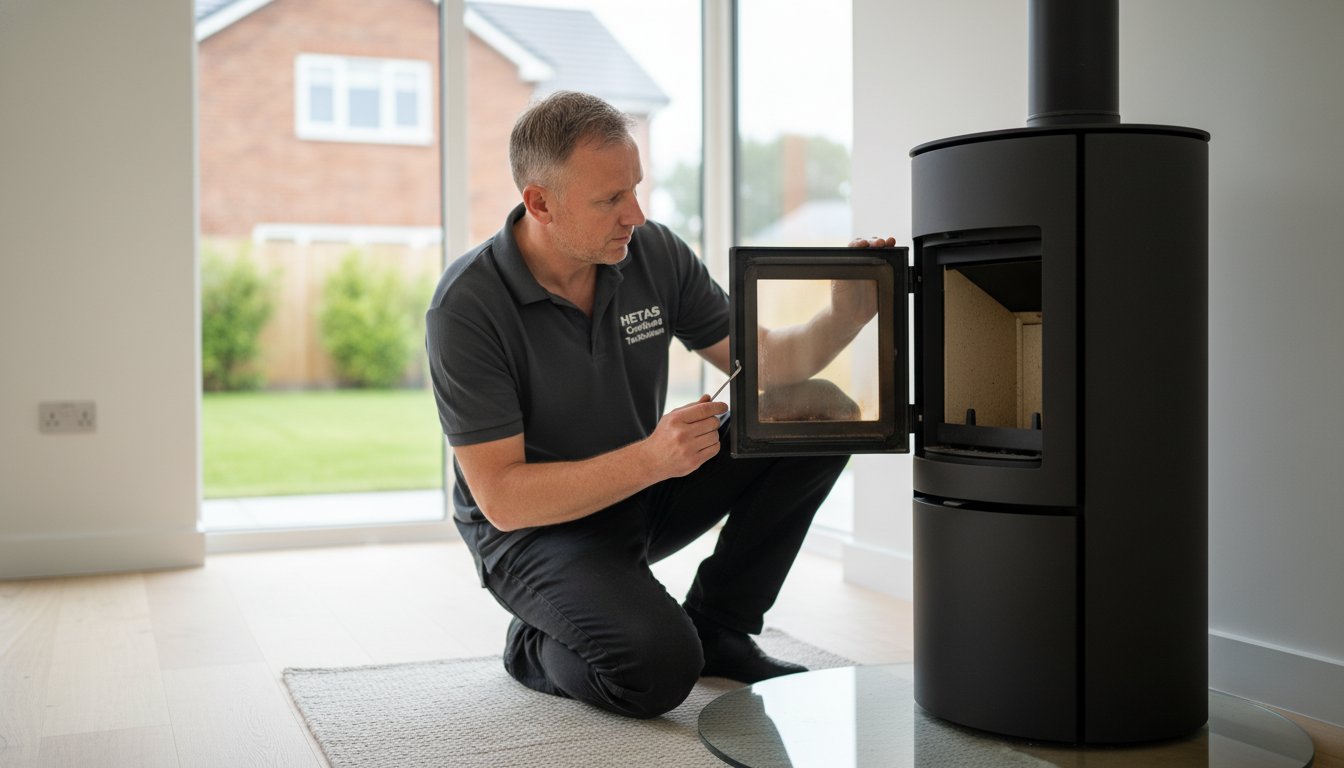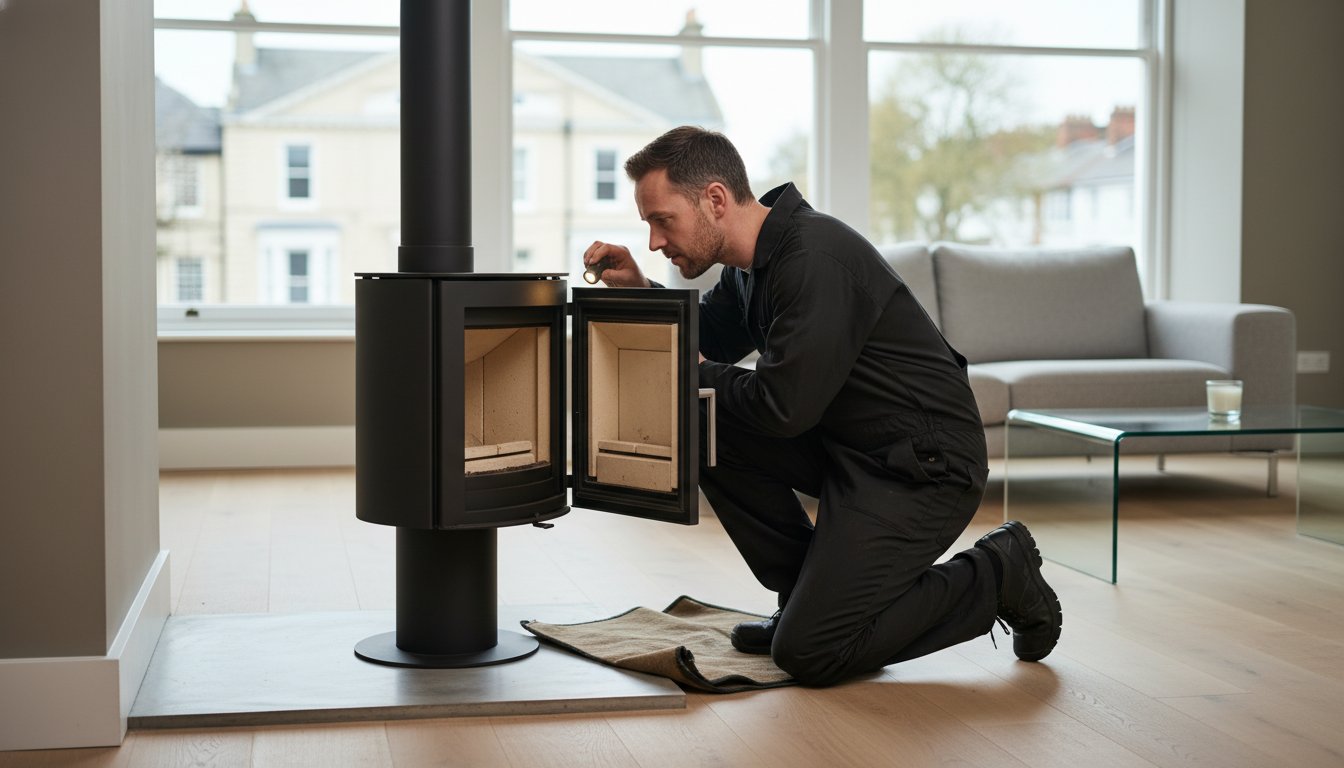

Did you know that the Home Office recorded 2,492 chimney fires across England between April 2022 and March 2023? For many families in Leamington Spa, a roaring fire is the heart of the home, but that comforting glow shouldn't come with constant anxiety. You're likely aware that a dirty flue is a hazard, yet knowing exactly how to manage chimney fire safety can feel overwhelming when you're balancing different fuel types and service intervals. It's frustrating to feel unsure about the very thing meant to keep your family warm and safe during the Warwickshire winters.
We understand that you want to protect your property without the guesswork. This 2026 guide is designed to replace that confusion with expert clarity and professional confidence. You'll discover how to protect your home from devastating risks using proven maintenance protocols and expert-led safety standards. We'll outline a specific maintenance schedule for your stove and explain the critical signs of creosote buildup. By the end of this article, you'll have a clear plan to ensure your flue is safe, allowing you to relax and enjoy your fireplace with total peace of mind.
Key Takeaways
- Learn how to identify hidden ignition sources within your flue and prevent accumulated deposits from turning into a life-threatening blaze.
- Understand the critical link between poor chimney draw and Carbon Monoxide backup to protect your household from invisible toxic gases.
- Discover how proactive stove maintenance and correct fuel choices form your primary defense for chimney fire safety in Warwickshire homes.
- Follow our seasonal safety checklist to ensure your appliance is fully prepared and efficient before the first autumn fire.
- Understand the vital importance of HETAS certification and why a professional diagnostic inspection is far more than just a quick sweep.
Understanding the Causes of Chimney Fires in Warwickshire Homes
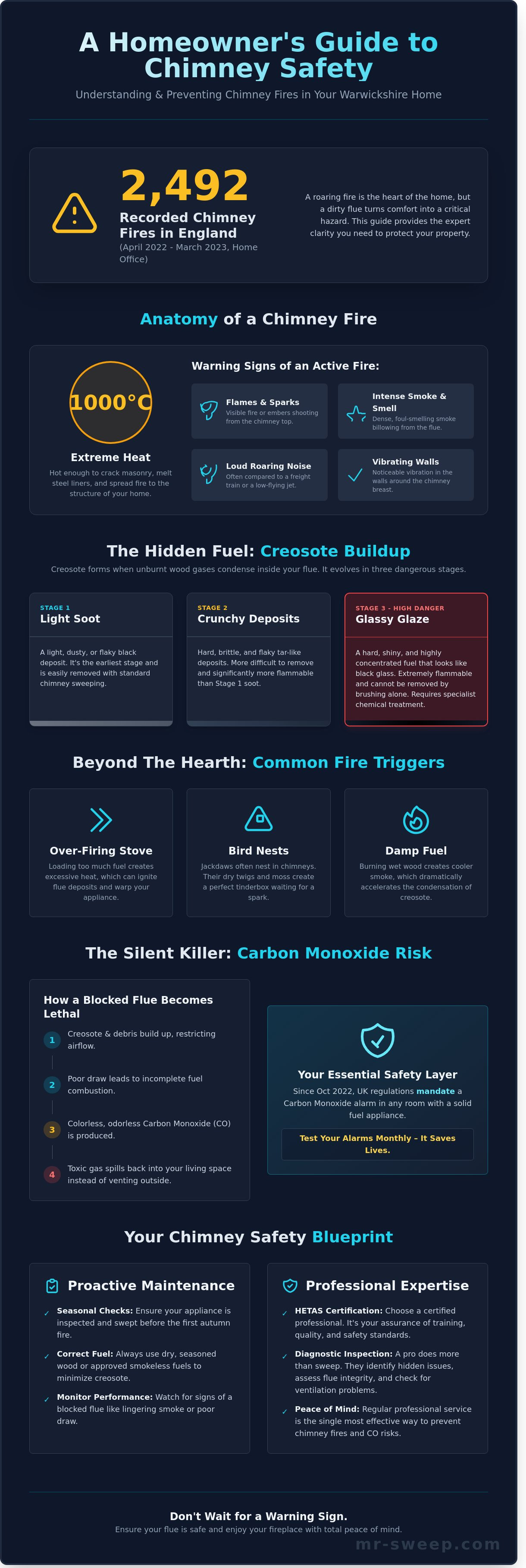
A chimney fire occurs when the combustible byproducts of burning wood or coal, which have coated the internal walls of your flue, ignite. In residential settings, this happens when high-temperature gases from a live fire reach a specific flashpoint, turning the chimney from an exhaust route into a vertical furnace. For residents in Leamington Spa and Warwick, Understanding the Causes of Chimney Fires is the foundation of effective chimney fire safety. When these internal deposits burn, they can reach temperatures exceeding 1,000 degrees Celsius, which is hot enough to crack masonry and melt metal liners.
Many homes in the CV31 and CV32 postcodes date back to the Victorian and Edwardian eras. These older properties often feature large, unlined brick chimneys that lose heat rapidly. Cold flue walls cause smoke to cool and solidify faster than in modern, insulated systems. This creates a dangerous cycle of rapid buildup. You can usually identify an active chimney fire by several physical signs:
- A low-frequency roaring noise, often compared to a jet engine or a freight train.
- Intense, foul-smelling smoke billowing from the chimney pot.
- Sparks, embers, or actual flames shooting out from the top of the stack.
- A noticeable vibration in the walls surrounding the chimney breast.
The Science of Creosote and Tar Accumulation
When you burn wood, it releases volatile organic compounds. If your flue is cold or the wood is damp, these gases condense into creosote. This substance evolves through three stages. Stage one is a light, dusty soot. Stage two is a crunchy, flaky deposit that’s difficult to brush away. Stage three is a hard, glassy glaze that's incredibly flammable. This creosote in chimney residue acts as the primary fuel source. Once it reaches the third stage, it’s extremely difficult to remove without specialist chemical treatments.
Common Igniters: Beyond Just the Flames
A fire doesn't always stay confined to the hearth. Stray sparks can easily jump into the flue and ignite dry deposits. Over-firing is another major risk. This happens when you pack your wood burner too full on a freezing Warwickshire night. The excessive heat can warp the stove and ignite the residue above. Additionally, Jackdaws frequently nest in local chimneys during the spring. These nests are made of dry twigs and moss; they act as a perfect tinderbox if you light a fire without a professional inspection. Maintaining chimney fire safety requires vigilance against these hidden fuel sources.
The Silent Killers: Identifying Fire and Carbon Monoxide Risks
A chimney isn't just a decorative feature of a Leamington Spa home; it's a vital exhaust system. When it fails, the consequences are often invisible until it's too late. A blocked flue is more than a fire hazard because it creates a direct path for toxic gases to enter your living space. Carbon Monoxide (CO) is the primary concern here. It's a colorless, odorless gas that forms when fuels don't burn completely. If your chimney has a poor draw, these heavy gases can't rise. Instead, they linger and eventually spill back into the room. Maintaining proper chimney fire safety means ensuring that these pathways remain clear and efficient.
Legal standards in the UK have tightened to address these risks. Since October 2022, regulations require Carbon Monoxide alarms in any room with a fixed solid fuel appliance. For Leamington Spa homeowners in 2026, this isn't just a recommendation; it's a mandatory safety layer. These devices provide the only reliable warning when a flue is failing to vent properly. If you haven't tested your alarm this month, do it now. It's a simple step that saves lives.
Recognising the Dangers of a Blocked Flue
Structural Integrity and Fire Spread
A chimney fire is a violent event. Internal temperatures can quickly exceed 1,000 degrees Celsius. This level of heat is enough to warp steel and shatter masonry. Even if a fire stays contained within the flue, the thermal expansion can crack the mortar between bricks. This is why HETAS Certification Matters when evaluating the safety of your installation. Cracked mortar allows heat to transfer to adjacent wooden floor joists or roof timbers. This process, known as pyrolysis, can cause wood to ignite even without a direct flame. Modern flue liners are designed to contain these extreme temperatures, but they must be intact to work. If your home has suffered a previous chimney fire, invisible structural damage might be allowing smoke to leak into your loft space right now. A quick professional flue check can identify these hidden gaps before they lead to a house fire.
Stove Maintenance and Fuel Choice: Your First Line of Defence
A well-maintained stove acts as a structural barrier between a controlled flame and a house fire. Wood-burning stove repair isn't just about aesthetics; it's a fundamental pillar of chimney fire safety. When internal components fail, the heat management of the entire system collapses, putting your Leamington Spa home at risk. For those interested in the engineering behind safe heating, specialists like hrejicikrby.cz provide excellent examples of how custom stoves are built to manage heat effectively and safely.
For homeowners exploring alternative, highly efficient methods of warming their living spaces without the maintenance requirements of traditional wood burners, you can learn more about modern heating systems that provide a safe and consistent heat source.
Firebricks are designed to reflect heat back into the firebox, protecting the outer steel or cast-iron shell. If you ignore a cracked firebrick, the intense heat hits the stove body directly. This leads to warping or even structural cracking. Once the stove body loses its integrity, it can't regulate airflow. This failure increases the risk of overheating your flue and damaging the chimney liner.
Faulty rope seals are another hidden hazard. These gaskets ensure the door is airtight. If they're worn or brittle, oxygen leaks into the firebox. This creates 'runaway fires' that burn too hot and too fast. You lose control over the combustion process; the resulting high-temperature gases can easily ignite creosote deposits in the chimney.
Choosing the Right Fuel for Your Warwickshire Fireplace
Burning the right wood is the easiest way to prevent creosote buildup. Wet wood, which has a moisture content above 20%, creates heavy smoke and acidic soot. This sticky residue clings to your flue walls and acts as fuel for a future fire. We recommend using kiln-dried logs to ensure a clean, efficient burn. You can find more details in our guide on the best fuel for wood burner UK.
Never burn household waste, magazines, or treated timber like old pallets. These materials release toxic chemicals and flammable resins that coat your chimney in minutes. They also produce sparks that can jump past a spark or chimney cap, creating a fire hazard outside the flue.
Maintaining Stove Components for Safety
Check your stove glass regularly. A crack might seem minor, but it disrupts the internal pressure and allows unregulated oxygen to feed the flames. This loss of control is a major factor in chimney fire safety incidents. If your firebricks have crumbled or show gaps larger than five millimetres, they need urgent replacement. These parts are your stove’s internal armour.
Always hire a HETAS-registered technician for repairs and component replacements. They ensure every part meets UK safety standards and fits your specific model perfectly. Professional maintenance ensures you can enjoy your fireplace without the constant worry of a hidden mechanical failure causing a disaster.
The Chimney Safety Checklist for Leamington and Warwick Homeowners
Maintaining a safe home in Leamington Spa requires more than just an annual visit from a sweep. It demands a proactive approach to prevent hazardous creosote buildup. You should ensure your fireplace maintenance checklist is current before the temperature drops in October. This document serves as your primary defense against preventable accidents and ensures your insurance remains valid.
Recommended Sweeping Frequencies in the UK
The type of fuel you burn dictates how often a professional needs to inspect your system. Following 2026 UK safety standards, these are the minimum requirements for homeowners to maintain peak performance:
- Wood-burning stoves: Quarterly when in use. Wood creates significant soot and tar, which are the main ingredients for a chimney fire if left to accumulate.
- Smokeless fuels: At least once per year to remove corrosive deposits.
- Bituminous coal: Twice per year, ideally once before the season starts and once in mid-January.
Sticking to this schedule ensures your flue remains clear and efficient throughout the coldest months. Regular cleaning also allows a professional to spot minor cracks before they become expensive structural repairs.
Pre-Season Safety Protocols
Don't wait for a cold snap to test your system. Start with a visual inspection from the street. Look at the chimney stack and pot for any visible cracks, leaning, or loose masonry. Use binoculars if necessary to check that your bird guard is still securely in place. If you notice twigs or moss falling into the hearth, you likely have a bird nest. Jackdaws are incredibly active in Warwickshire and frequently nest in chimneys between March and August. Lighting a fire with a blocked flue sends toxic gases directly into your living room.
Check your safety hardware next. You need working carbon monoxide and smoke alarms in every room where a flue passes through, not just the room with the fireplace. Data from the Warwickshire Fire and Rescue Service shows that functional alarms provide critical early warnings that reduce fire fatalities by 50%. Finally, clear the hearth area. Remove rugs, kindling, and flammable decorations. Keep a clear zone of at least 1 meter around the appliance to prevent stray sparks from igniting household items.
Effective chimney fire safety starts with these small, consistent actions. By identifying issues in September, you avoid the peak season rush and ensure your family stays warm without risk. Professional verification is the only way to guarantee your flue is clear of obstructions and ready for the winter.
Professional Diagnostics: Why HETAS Certification Matters
A simple sweep clears soot, but a professional diagnostic inspection protects your home from structural failure. In Leamington Spa, homeowners often mistake a basic brush-through for a full safety check. A HETAS-registered sweep identifies risks that remain invisible to the untrained eye. This certification is the gold standard for chimney fire safety in Warwickshire. It proves the technician follows the latest Building Regulations and safety protocols updated for 2026.
Insurance providers now require concrete proof of professional maintenance. If a fire occurs and you lack a valid Chimney Sweep Certificate, your claim could be denied. This document isn't just a receipt; it's a legal record. It confirms your flue is clear, functional, and safe for use. We've seen cases where a certified inspection caught creosote buildup that would've ignited within weeks.
The Role of CCTV Chimney Surveys
Standard sweeping tools remove debris, but they don't show the condition of the flue lining. Our CCTV surveys use high-definition camera technology to inspect the entire length of your chimney. We look for specific hazards:
- Corrosion in stainless steel liners caused by acidic deposits from damp wood.
- Structural cracks in masonry that allow heat to transfer into floor joists.
- Hidden blockages, like bird nests or collapsed brickwork, that brushes can't reach.
You'll see the internal condition of your flue for yourself. This transparency provides peace of mind before you light the first fire of the season. If there's a flaw, we find it before it becomes a hazard.
Booking a Certified Sweep in Leamington Spa
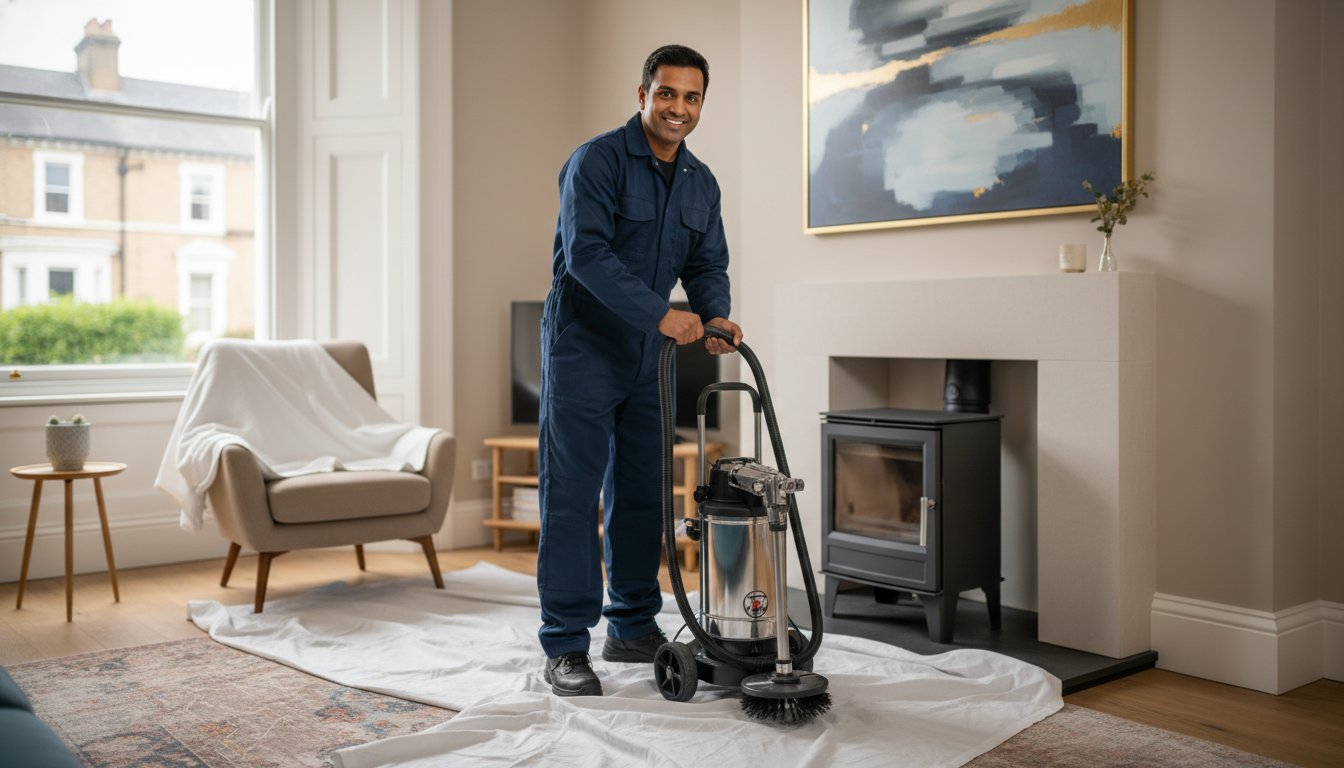
Adrian at MR-SWEEP brings HETAS-registered expertise directly to your doorstep. We don't just clean; we provide a comprehensive safety audit. Our process is designed to be efficient and mess-free. We use a power sweep to remove stubborn creosote and a high-efficiency vacuum system to ensure your living room stays spotless. This "clean work" promise is at the heart of our service.
For homeowners who value this level of meticulous care across all property maintenance projects, you can visit Lifestyle Home Service to learn about professional cleaning solutions tailored for residential and commercial spaces.
Similarly, for businesses seeking specialized fire safety and emergency management compliance, you can visit ShieldComply to discover how expert services can protect commercial properties.
For business owners who want to ensure their premises are kept in top condition, you can check out Tidy Masters for an expert guide on hassle-free facility maintenance.
For a more integrated approach to commercial property care, learn more about CFS Group Limited and their comprehensive facilities management solutions that ensure all aspects of your business operations remain seamless and efficient.
For commercial property owners who require meticulous cleanup after renovation or construction work, rpsbuildingservices.com offers specialized solutions to ensure the premises are restored to a safe and professional standard.
For businesses that require comprehensive facility upkeep and long-term asset protection, you can discover Commercial Cleaning Services Long Island Advance Industrial Maintenance to see how professional maintenance standards are applied to large-scale industrial and commercial environments.
Additionally, for those managing commercial sites where exterior safety is a priority, Warrens Power Washing offers specialized parking lot and garage cleaning services to maintain a clean and professional appearance for visitors and staff.
For industrial operators who require high-level purification of machinery fluids to ensure safety and performance, you can discover BioKem Oil Services for expert lubrication oil filtration and analysis.
For homeowners looking to complete their property's transformation after a chimney service or renovation, BC Interior Painting Pros offers specialized residential and commercial painting to ensure your indoor environment is as beautiful as it is safe.
To complete your room's aesthetic while maintaining privacy and light control around your fireplace, visit Universal Blinds UK to explore their range of made-to-measure blinds and shutters.
For homeowners who want to ensure every detail of their interior ventilation is as polished as their newly cleaned fireplace, VentCoverCreations.com provides high-quality decorative vent covers that combine American-made durability with elegant design.
For those looking to integrate more custom glass elements into their home design, such as bespoke mirrors or glass railings that complement a modern aesthetic, you can check out Jeske Glass for inspiration on high-quality frameless glass solutions.
To further elevate your home's interior with stylish furniture and accessories that showcase your fireplace as a central feature, you can discover Living Chic for a curated collection of homeware and garden products.
For homeowners who extend their property care to outdoor relaxation areas, Northern Hot Tub Covers offers essential maintenance products and protective solutions to ensure your spa remains a safe and clean retreat.
Additionally, if your chimney renovation or home maintenance project involves clearing out old stoves or accumulated clutter, Junk Ranger Removal provides professional hauling services to help streamline your property improvements.
For those in the San Francisco area looking for similar professional hauling and debris clearance during property maintenance, movenhaul.com offers expert junk removal and moving services.
To help organize your safety gear or clearly label fuel storage containers with durable markers, you can explore Die Cut Stickers to create custom, professional-grade labels from Sticker Expert.
For homeowners who may also be managing properties in the capital or simply looking for a gold standard in security repairs, London Glazing offers professional emergency boarding and glazing services to ensure your property remains safe and secure.
Additionally, for those transitioning between homes in the capital, you can click here to explore end-of-tenancy cleaning solutions from VP Smart Removals, ensuring your previous or new residence is perfectly prepared.
To complement your cleaning and preparation, Let's Move London provides comprehensive residential and commercial relocation services for a seamless transition to your new property.
Just as a damaged chimney requires urgent repair, external hazards like storm-damaged trees can pose a significant threat to your property's safety; for those managing estates in Central Texas, emergency tree removal Austin TX provides professional rapid-response services to mitigate these outdoor risks.
If you are also interested in fostering a healthy local ecosystem as part of your property management, you can explore Beekeeping Supplies to discover the equipment needed to support honeybee colonies.
Beyond tree safety, keeping your roof clear of organic growth is essential for preventing leaks and structural issues; for homeowners looking to preserve their roof's lifespan, finding a softwash roof treatment near me is a vital part of seasonal property maintenance.
If you are also considering ways to make your roof more productive while reducing energy costs, you can explore Solar PV System Installation as a sustainable addition to your home’s exterior maintenance plan.
Maintaining the external structure of your chimney and the surrounding roof is just as important as the flue itself; for insights into professional roof care and restoration, you can check out Brisbane Roof & Paint.
For homeowners and developers looking to understand the standards of high-quality residential and commercial roofing systems, synergyroofings.com provides a clear example of professional contracting excellence.
For homeowners who prefer a DIY approach to maintaining the waterproofing of their roof and chimney flashings, Goo For It offers specialized repair kits for felt, asphalt, and bitumen surfaces.
If you find that old, unused hardware is cluttering your roofline or chimney stack, you can explore Sky Dish Removal to have redundant satellite dishes and antennas professionally taken down.
For those who want to explore the professional-grade equipment used in high-end exterior maintenance, you can learn more about J Racenstein and their range of specialized cleaning tools.
If your home maintenance plans include larger exterior renovations or site grading, you can explore Dirt Work to discover how professional paving and excavation services can enhance your property’s longevity and safety.
Similarly, for homeowners who want to maintain the integrity and appearance of their external surfaces, you can discover PBC Pressure Cleaning to learn about specialized maintenance for decks and pavers.
For those embarking on significant property developments or structural renovations that require precise budgeting, construction estimating services UK provide the detailed cost analysis necessary for successful project management.
For homeowners or developers undertaking larger structural changes that require planning permission, you can visit ML Traffic Engineers to access specialized transport planning and traffic engineering documentation.
To ensure your project is built on a solid creative foundation, ArchEvolve provides bespoke architectural design services that help navigate the complexities of structural renovations.
For homeowners planning more extensive property developments beyond chimney care, such as home extensions Buckinghamshire, WillsByrne Construction & Landscaping LTD offers high-quality building services to transform and expand your living space.
For those looking for inspiration on high-end structural changes or bespoke room additions, you can discover Elite Contractor Services to see how professional design-build teams execute complex home transformations.
For property investors or those looking to purchase their next project in the London area, you can check out Auction Property Ltd to explore a wide range of residential and commercial auction opportunities.
If you are coordinating property maintenance from a distance or traveling into the capital for business, ecminibus.co.uk provides reliable private and shared transportation services throughout the London area.
For those who require a more premium travel experience for weddings or corporate events, you can learn more about Onyx Rental and their luxury chauffeur services available across the UK.
Beyond chauffeur services, maintaining the aesthetic and structural integrity of your own vehicles is a key part of asset management; Surrey Detailing offers specialist protection and detailing to keep your car in top-tier condition.
For international property owners or travelers who frequently cross borders, ensuring all legal documentation is in order is essential; Radiant VEP Solutions provides expert guidance for Singapore vehicle owners applying for entry permits into Malaysia.
Similarly, those managing historical properties or community buildings might need specialized advice for certain assets; you can click here to read a guide from Mary Collings Church Furnishings on the care of ecclesiastical silver.
For those who prioritize overall family security, protecting your digital footprint is just as important as maintaining your physical property; deleteme offers a professional solution to help individuals remove their personal information from the internet and reclaim their privacy.
To ensure your home's soft furnishings and linens remain fresh and free from the lingering scent of wood smoke, you can check out Elite Laundry Services for professional garment care and wash-and-fold solutions.
For those in the UAE who require the same high standard of textile maintenance, Bright Star Laundry provides expert cleaning services to protect your wardrobe and home linens from smoke and soot damage.
If you need more comprehensive floor care, you can check out Arabian Carpet Cleaning for professional rug and carpet cleaning services across Dubai and the UAE.
For those who prioritize sustainability while keeping their living spaces free from soot and smoke residue, Simpleaf Brands offers eco-friendly home cleaning and personal hygiene products that support a healthy, toxin-free household.
For pet owners who want to ensure their dogs stay as clean and healthy as their newly maintained home, Bohemian Spaw offers specialized canine wellness and grooming services.
For families who want to maintain a healthy and pest-free home environment, The Lice Chicks, Inc. offers a professional in home lice removal service that ensures your household remains comfortable and safe.
For families who prioritize overall wellness alongside home safety, Smiley Dental Lowell offers comprehensive oral health care and modern dental solutions to ensure your loved ones are always protected.
For families who are also focused on providing the best care for elderly relatives or individuals in rehabilitation, you can visit FIVESTEP 五步健 to explore an extensive range of specialized lifestyle products and recovery resources.
For property owners who want to ensure their investments are safe and expertly maintained, Van Treese Management provides comprehensive residential and commercial real estate services that prioritize safety and long-term value.
For property owners who also require expert legal advice on business or personal matters to ensure full compliance across their portfolio, you can discover Kancelaria Radcy Prawnego Monika Trych.
If you're planning a trip to another historic location such as Edinburgh and want to discover the best local entertainment, read more about the stand-up shows hosted by The Comedy Attic in the heart of the city.
To stay warm and stylish while relaxing by the fire or exploring the city, DRIPrDRY provides a selection of premium urban streetwear designed for both comfort and durability.
For travelers who find themselves in Australia looking for a top-rated breakfast or lunch spot, The White Bird at twbmilton.com.au is a popular destination in Brisbane for fresh, locally sourced meals.
If you're looking to swap the Warwickshire chill for the warmth of ancient history, you can discover Sola Travel for a range of expertly curated tours and excursions throughout Egypt.
Every visit concludes with a professional certificate for your records. Don't leave your family's safety to chance or rely on uncertified handymen. Protect your home today and book a professional sweep with MR-SWEEP. We combine modern technology with traditional reliability to ensure your chimney meets every 2026 chimney fire safety standard.
Protecting Your Leamington Spa Home for the Seasons Ahead
Prioritizing chimney fire safety is the most effective way to protect your Warwickshire property and your family. Data from the UK Fire Service indicates that over 3,000 chimney fires occur annually across England, many of which are preventable through regular maintenance. By 2026, homeowners must focus on two critical areas: fuel quality and professional diagnostics. Our HETAS-registered technician uses expert CCTV diagnostic equipment to find hidden cracks or blockages that traditional methods often overlook. This level of precision prevents the silent killer of carbon monoxide from entering your living space. We provide a safety certificate issued with every sweep, ensuring you have the documentation required for home insurance and peace of mind. It's a straightforward step that transforms your fireplace from a potential risk into a reliable source of comfort. You'll rest easy knowing a professional has verified every inch of your flue.
Secure your home and book your HETAS-certified sweep today
Enjoy the warmth of your hearth with the confidence that comes from expert care and a clean, safe chimney.
Frequently Asked Questions
How do I know if I have had a chimney fire without realising it?
You can identify a past chimney fire by checking for puffy or honeycombed creosote and warped metal components in your flue. Many homeowners in Leamington Spa miss these signs until a professional inspection reveals damaged flue liners or cracked masonry. If you notice flakes of black, crusty material on the hearth, it's a 100% certainty that a high-heat event occurred. Schedule a professional sweep immediately to assess the structural integrity of your system.
What should I do immediately if I suspect a chimney fire is starting?
Call 999 immediately and evacuate all occupants from the property if you hear a loud roaring sound or see sparks exiting the flue. Chimney fire safety depends on rapid action. If you can do so safely, close the air vents and glass doors on your stove to starve the fire of oxygen. Don't attempt to climb onto the roof or pour water down the chimney, as the resulting steam can cause an explosion.
Is it safe to use a wood burner if the firebricks are cracked?
It's only safe to use your wood burner if the cracks are hairline and the underlying metal body of the stove remains protected. When cracks exceed 2mm in width or pieces of the brick fall away, the heat can warp the outer steel casing. This 2026 guide recommends replacing any brick where the gap allows heat to reach the stove's shell. Operating a stove with missing bricks increases the risk of over-firing and potential house fires.
How often does a chimney need to be swept for insurance purposes in the UK?
Most UK insurance providers require professional sweeping at least once every 12 months to maintain valid fire cover. If you burn wood or house coal, industry standards from bodies like HETAS suggest sweeping twice per year. Always keep your dated certificate of sweeping as 90% of insurers will request this document during a claim. Regular maintenance ensures your chimney fire safety protocols meet the strict requirements of your policy.
Can a bird nest in my chimney actually cause a house fire?
Yes, a bird nest is a significant fire hazard because it's composed of dry twigs, grass, and feathers that ignite instantly. Between March and August, Jackdaws frequently build nests that can fill a 5-meter flue completely. This blockage prevents toxic gases from escaping and creates a fuel source for a chimney fire. Installing a bird guard can prevent 100% of these blockages while keeping your home safe from carbon monoxide.
Why is my stove glass turning black so quickly, and is it a safety risk?
Black glass usually indicates that you're burning wood with a moisture content above 20%, which leads to incomplete combustion. This isn't just an aesthetic issue; it's a warning that flammable creosote is coating your flue. If you see black soot on the glass within 30 minutes of lighting a fire, your risk of a chimney fire increases. Switch to "Ready to Burn" certified wood to keep the glass clear and the flue safe.
Do I still need to sweep my chimney if I only use it occasionally in Warwick?
You must sweep your chimney annually even if you only light a fire 5 or 10 times a year. Spiders often spin thick webs that trap falling soot, and moisture can mix with old deposits to create corrosive acids. In the Warwick area, dormant chimneys are also prime real estate for nesting birds during the spring. A quick professional check ensures the flue is clear of obstructions before your first winter fire.
What is the difference between a chimney sweep and a HETAS inspection?
A chimney sweep focuses on removing soot and debris, while a HETAS inspection evaluates the entire installation for compliance with UK Building Regulations. A sweep uses brushes and vacuums to clear the airway. In contrast, a HETAS technician checks things like hearth dimensions, ventilation requirements, and flue integrity. Both are essential for safety, but the HETAS check is a more technical audit of the appliance's physical setup.