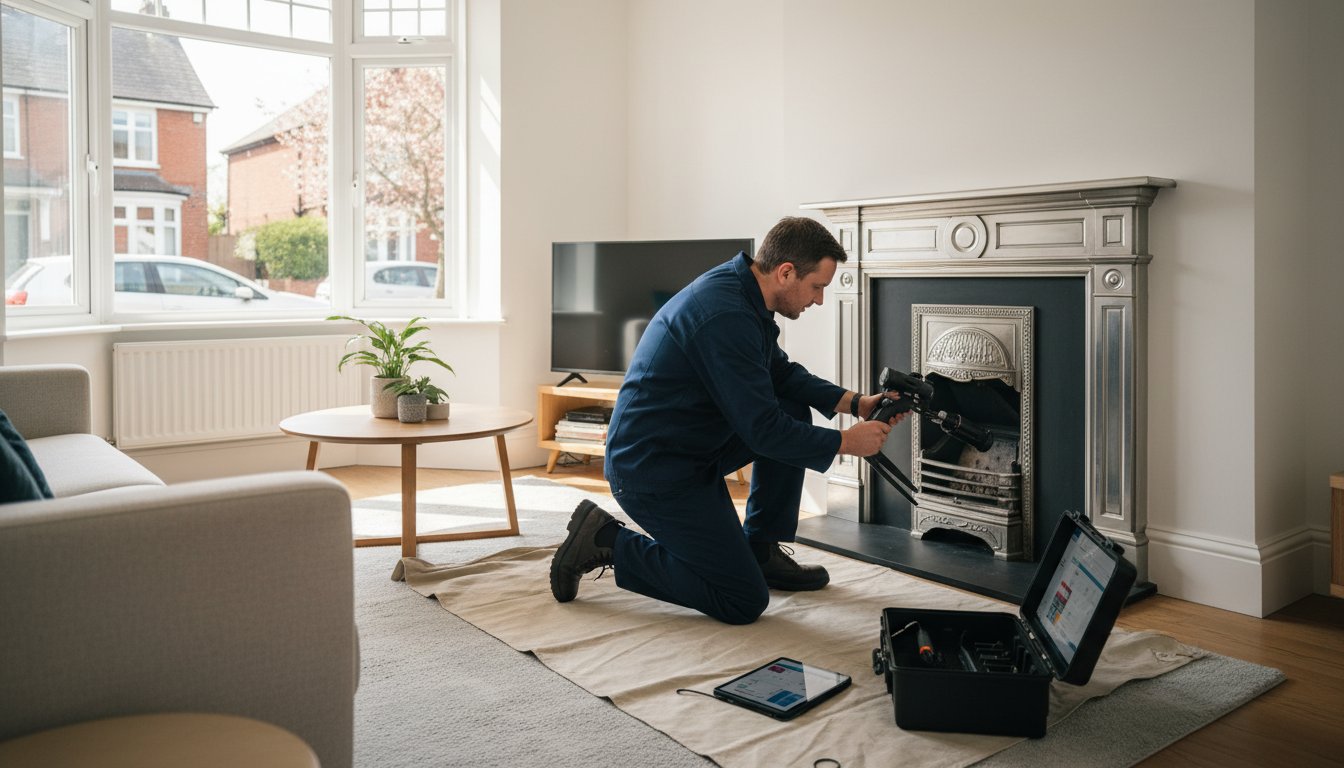
Last October, a homeowner in Leamington Spa discovered that a single blocked flue could lead to a chimney fire in under ten minutes, a risk that 3,130 UK households faced during the 2022/23 reporting period according to Home Office data. You probably understand that booking a professional chimney sweep service is the most effective way to protect your family, yet the fear of soot ruining your furniture or the headache of HETAS compliance often makes the task feel daunting. It's a common concern, especially when you just want a warm, safe home without the mess.
We're here to change that perception by showing you how a modern, expert approach keeps your living room pristine while maximizing your stove's efficiency. This 2026 checklist reveals exactly what to expect from a high-quality sweep and how to prepare your Warwickshire property for a stress-free visit. You'll learn about bird nest removal, the importance of valid safety certificates for your home insurance, and the specific steps we take to guarantee a clean, efficient burn all winter long. It's time to stop worrying about your hearth and start enjoying the peace of mind that comes with a truly professional clean.
Key Takeaways
- Learn why a HETAS-registered technician is essential for UK building compliance and how they combine traditional skills with modern diagnostic tools.
- Understand the step-by-step process of a professional chimney sweep service, from deep brush cleaning to critical internal visual inspections of your hearth and flue.
- Identify the specific warning signs, such as soot fall or lighting difficulties, that indicate your Leamington Spa home is overdue for professional maintenance.
- Discover the simple steps to prepare your home, including the 24-hour cooling rule, to ensure a clean and efficient visit from your technician.
- Explore why comprehensive maintenance goes beyond cleaning, covering vital stove repairs and firebrick inspections to maximize heating efficiency.
Understanding the Chimney Sweep Service: Why Your Warwickshire Home Needs One
A professional chimney sweep service in 2026 represents a sophisticated blend of traditional craftsmanship and advanced technology. While the industry is rooted in the history of chimney sweeping, modern technicians now use high-definition CCTV cameras and industrial HEPA-filtered vacuum systems to ensure your home remains soot-free. In Warwickshire, where historic architecture meets modern living standards, this service is a vital part of seasonal property maintenance.
HETAS-registered technicians provide more than just a clean flue; they ensure your heating system complies with UK Building Regulations, specifically Document J. This compliance is critical for homeowners in Leamington Spa and Warwick who live in period properties. These older chimneys often feature intricate brickwork or outdated liners that are prone to rapid deterioration. Professional intervention identifies these structural risks before they become emergency repairs. It's about precision, safety, and peace of mind.
The Dangers of Neglect: Creosote and Carbon Monoxide
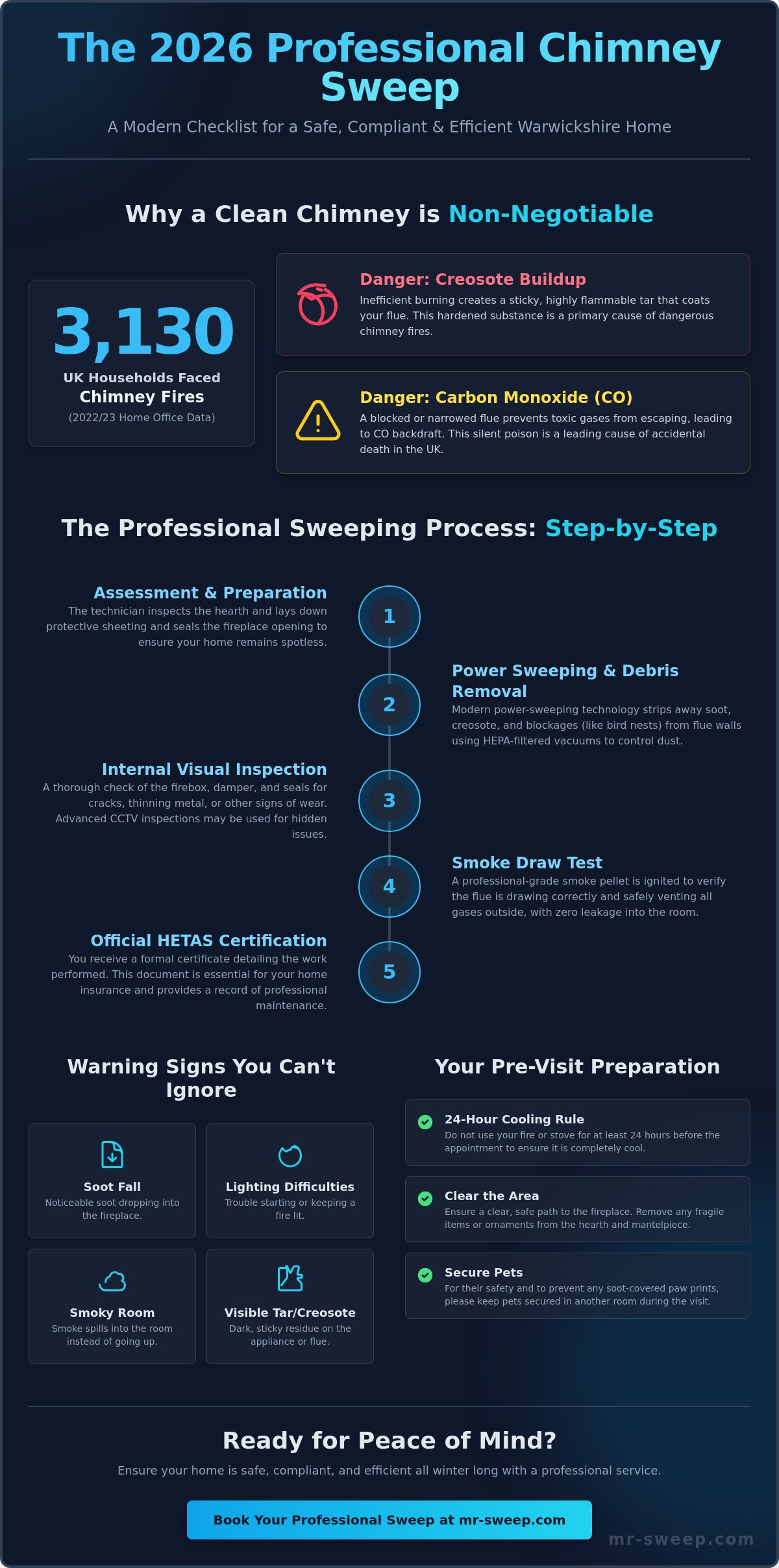
Burning wood or coal naturally produces soot, but inefficient combustion transforms this dust into a sticky, flammable tar. Creosote is a hardened, highly combustible byproduct of wood combustion. Once this substance coats your flue, it becomes a permanent fire hazard that standard brushes can't always remove. A blocked or narrowed flue also prevents toxic gases from escaping your home. This leads to carbon monoxide backdrafting into enclosed rooms, which remains a leading cause of accidental poisoning in the UK. Regular maintenance keeps the airway clear and your family safe.
Insurance and Certification Requirements in 2026
By 2026, UK insurance providers have become significantly stricter regarding fire damage claims. Most policies now require a valid certificate from a registered chimney sweep service to pay out after a hearth-related incident. A receipt from a general handyman won't meet these professional standards. You need a formal safety certificate that details the condition of the flue and the specific work performed. Prioritizing chimney fire safety in Leamington Spa ensures your home insurance remains valid and your property is protected against the unexpected. It's a small investment that prevents catastrophic financial loss and ensures your appliance operates at peak efficiency.
The Professional Chimney Sweeping Checklist: What Happens During a Visit
A professional chimney sweep service isn't just about removing soot; it's a technical safety inspection designed to protect your property. The process begins with a standard brush and vacuum cleaning. We use modern power-sweeping technology to strip away creosote and debris from the flue walls. This is vital because creosote buildup is the leading cause of chimney fires in the UK. Following the official chimney cleaning guidance ensures your home stays compliant with safety standards and insurance requirements.
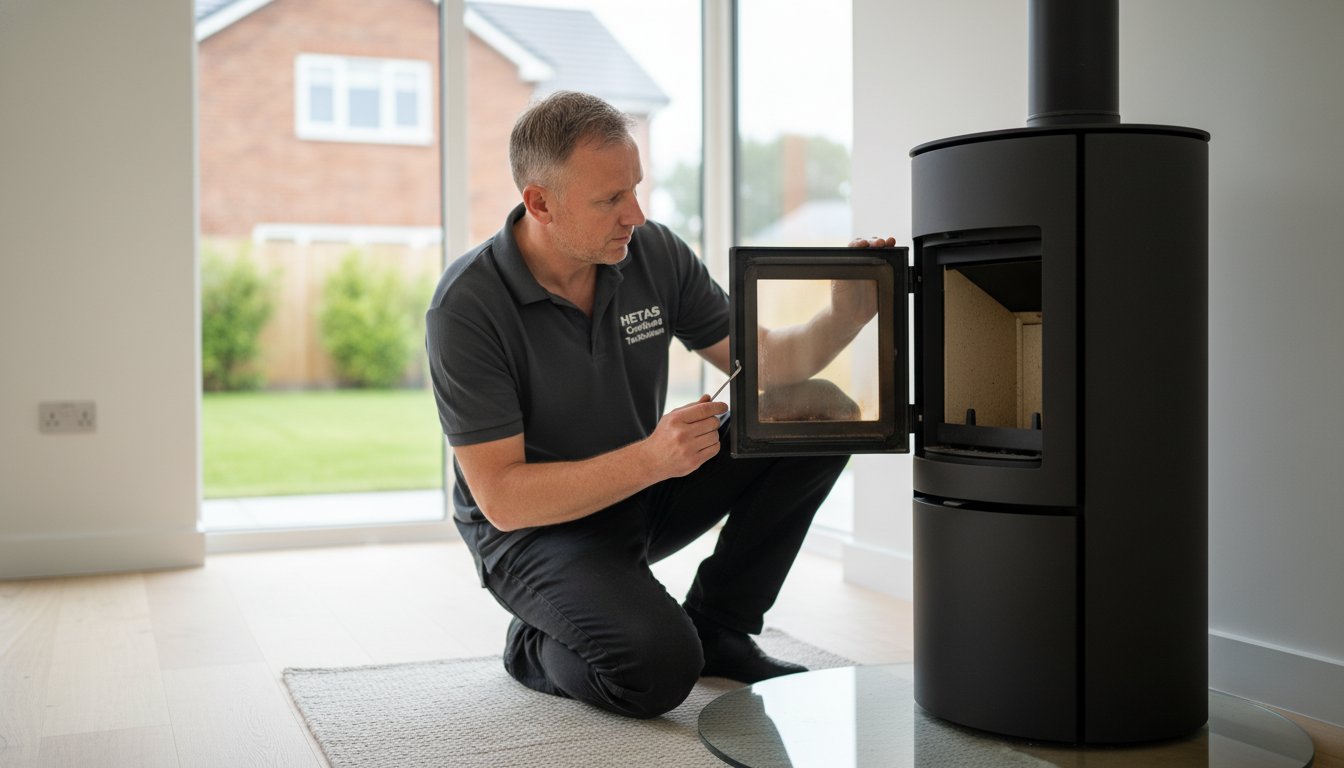
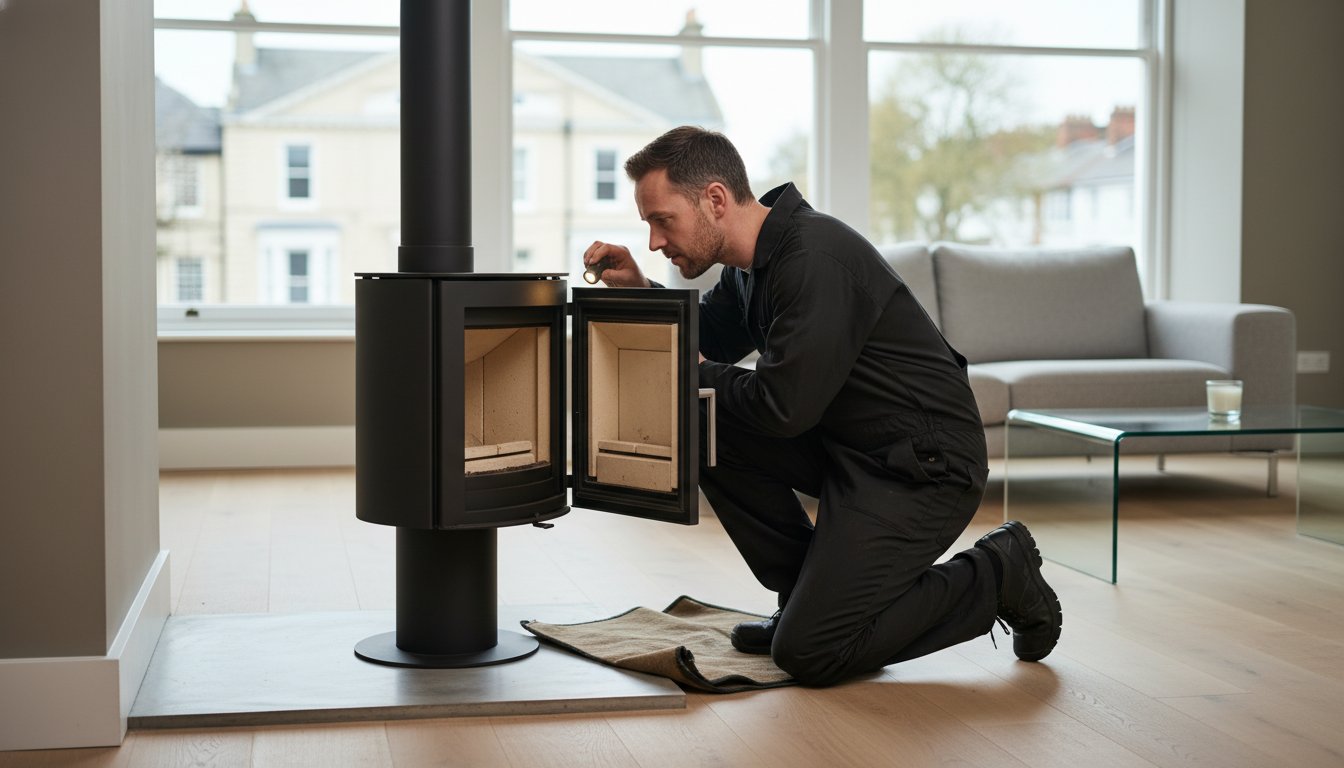
Our technicians perform a detailed internal visual inspection of the hearth, firebox, and damper. We look for signs of thinning metal, cracked masonry, or failing seals. Once the physical cleaning is complete, we conduct a smoke draw test. We ignite a professional-grade smoke pellet to verify that the flue is drawing air correctly and venting all gases safely out of the stack. After the inspection, we issue an official HETAS certificate of sweeping. This document is essential for your home insurance and provides a record of maintenance for 2026.
- Full Flue Clearance: Removal of soot, bird nests, and obstructions.
- Safety Inspection: Checking the integrity of the firebox and dampener.
- Venting Verification: Smoke testing to ensure zero leakage into the room.
- Official Certification: Delivery of a HETAS-recognised certificate.
Advanced Diagnostics: CCTV Chimney Inspections
There are times when a standard sweep isn't enough to guarantee safety. For Warwickshire's older properties, many of which feature original brickwork from the 19th century, internal damage is a constant risk. We use high-definition CCTV cameras to check the integrity of chimney liners. These cameras identify structural cracks, internal collapses, or mortar decay that are invisible from the ground. Seeing "inside the stack" provides absolute peace of mind, especially if you've recently moved into a period home or haven't used your fireplace in several years.
The "Clean Work" Guarantee
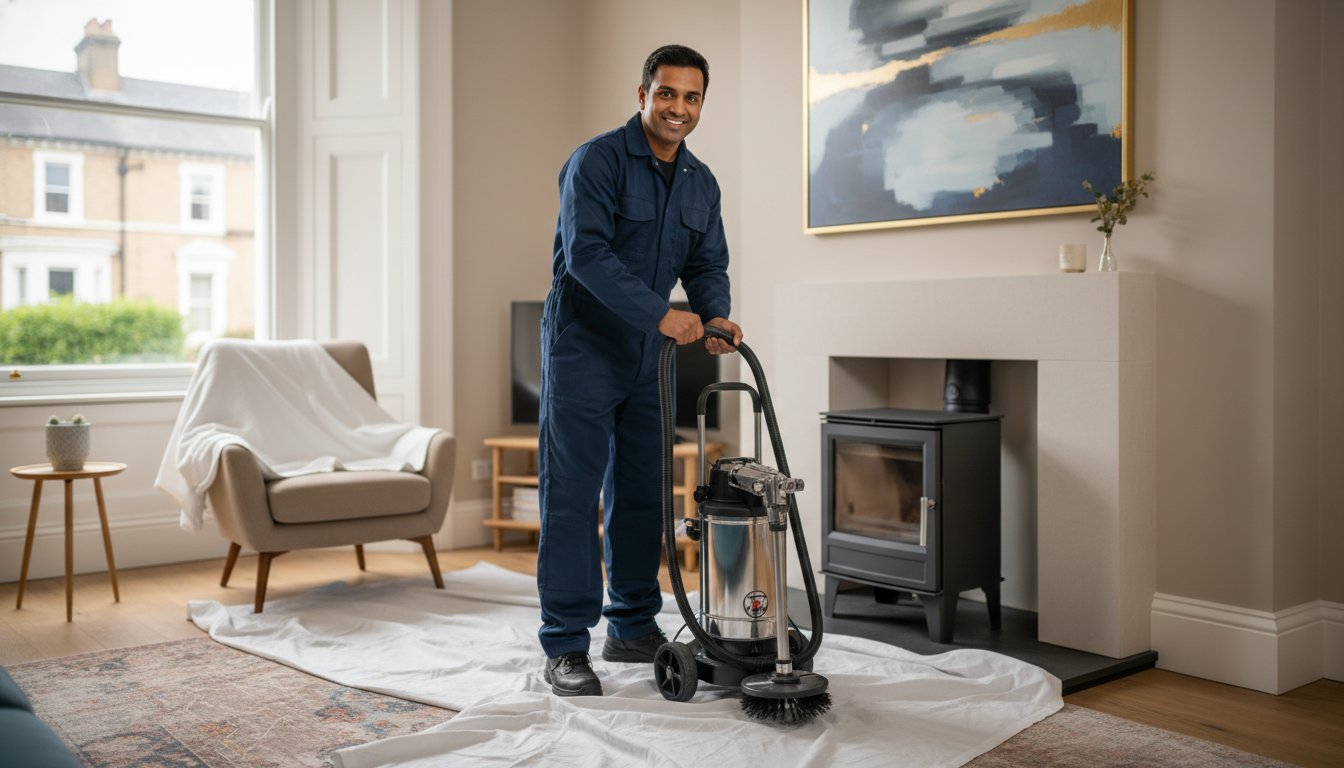
We've eliminated the mess traditionally associated with chimney sweeping. Mr. Sweep uses industrial-grade HEPA-filtered vacuums that capture 99.97% of fine dust particles. Our process involves sealing the fireplace opening with heavy-duty sheeting before the brushes ever enter the flue. We use thick floor coverings to protect your carpets and furniture throughout the visit. We pride ourselves on leaving your living room as clean as we found it. If you want a safe fire without the cleanup, you can book your professional sweep with our expert team today.
Spotting the Warning Signs: When to Call a Chimney Sweep in Leamington Spa
Recognizing the early indicators of a blocked or dirty flue prevents chimney fires and protects your family from carbon monoxide risks. You might notice black soot flakes falling onto the hearth or see visible, sticky tar deposits on the chimney pot. These are clear signals that your appliance isn't venting correctly. If smoke enters the living room when you open the stove door or the fire is unusually difficult to light, a professional chimney sweep service is required immediately. A persistent, smoky "barbecue" smell during the summer months, even without a fire lit, indicates a heavy buildup of creosote. This acidic substance can damage your flue liner and poses a significant fire hazard if left untreated. Keep an eye on the roof; birds frequently landing on the stack or attempting to enter the flue suggest an obstruction is forming.
The Seasonal Sweeping Schedule
We recommend booking your sweep just before the "first light" in September or October. This ensures your system is safe for the peak Warwickshire winter before the cold weather truly sets in. The frequency of your maintenance depends entirely on your fuel choice. Wood burners require a chimney sweep service twice a year to manage resinous buildup. Smokeless coal users can typically stick to once a year. For a detailed breakdown of how often your specific appliance needs attention, check the chimney sweep Leamington Spa guide for a full frequency table. Regular maintenance keeps your home insurance valid and your burning efficiency high.
The Jackdaw Problem: Bird Nest Warning Signs
Jackdaws are particularly active across Leamington Spa and Warwick, often choosing warm chimney stacks for nesting between March and August. These birds can fill a flue with several metres of debris in just a few days. You'll know they've moved in if you find twigs in the grate or hear muffled chirping sounds coming from behind the register plate. It's vital to act with caution. Under the Wildlife and Countryside Act 1981, it's illegal to remove or destroy an active nest while it's being built or in use. We must wait until the fledglings have left the nest, usually by late July or August, before we can safely clear the blockage. Once cleared, we recommend installing a bird guard to prevent the same problem occurring the following spring. Professional removal ensures the flue is completely clear and safe to use again.
Homeowner Preparation Checklist: Getting Ready for Your Mr. Sweep Visit
Preparing your home for a professional chimney sweep service ensures the process is efficient, safe, and completely mess-free. Our technicians arrive with specialized equipment designed to contain soot and debris, but they need the right environment to work effectively. Following these steps helps us maintain our high standards of cleanliness and precision.
- Extinguish all fires 24 hours in advance: The chimney and appliance must be completely cold. Residual heat can damage industrial HEPA filters and poses a safety risk to the technician.
- Clear the hearth and mantlepiece: Remove all ornaments, candles, and delicate items. While we take every precaution, clearing these items prevents accidental damage and gives us the room needed to seal the fireplace opening.
- Empty the grate: Remove any unburnt fuel, logs, or large piles of ash before we arrive. This allows us to inspect the firebricks and grate immediately upon arrival.
- Clear a path: Ensure there's a direct, unobstructed route from your front door to the fireplace. Our technicians carry bulky vacuum units and rod bags that require a bit of maneuvering space.
- Secure pets and children: For their safety and to prevent distractions, please keep pets and small children in a separate room. The sound of the vacuum and the movement of rods can be unsettling for animals.
Space and Access Requirements
To perform a thorough inspection and cleaning, we need room to operate. A minimum of 2 metres of clear space in front of the fireplace is ideal for laying out protective floor cloths and assembling rod systems. It's best to move coffee tables, footstools, or light rugs to another part of the room. This prevents any accidental trips or the transfer of dust to soft furnishings. Additionally, our equipment requires a standard 13-amp power socket within reach of the fireplace to power our specialized soot extraction vacuums.
Parking and Local Access in Warwickshire
Our service vans carry a full suite of chimney sweep service tools, so proximity to your property is vital. Please ensure a parking space is available as close to your entrance as possible. In restricted zones like central Leamington Spa or the historic streets of Warwick, please have a visitor parking permit ready if required. If you live in a terraced house with limited rear access, let us know in advance. Knowing whether we need to bring equipment through the front door or a side gate allows us to stay on schedule and provide the most reliable service possible for your Warwickshire home.
Beyond the Brush: Comprehensive Stove and Flue Maintenance
A professional chimney sweep service doesn't stop at the top of the flue. Your annual visit is the perfect time to integrate essential stove repairs. Neglecting internal components leads to poor performance and significantly higher fuel costs. It's about more than just cleanliness; it's about the mechanical integrity of your heating system.
Cracked firebricks are more than a minor cosmetic issue. These bricks insulate the firebox to keep combustion temperatures high. When they fail, heat transfers directly into the outer casing. This can cause the metal to warp or crack over time. Replacing bricks for premium brands like Clearview, Charnwood, and Stovax ensures your stove maintains the efficiency levels promised by the manufacturer.
The door seal is another critical safety point. Worn rope seals allow uncontrolled oxygen into the firebox. This leads to over-firing, where the stove burns through fuel too quickly and puts immense stress on the internal metalwork. We check these seals during every visit to ensure your stove remains fully controllable and safe to operate throughout the winter.
Specialist Stove Component Repairs
Identifying whether your stove glass is simply dirty or permanently etched is a key part of our inspection. Surface soot wipes away with the right cleaner, but etching appears as a permanent white cloud. This chemical damage occurs when moisture reacts with ash on the glass surface during a cold burn. If your glass is etched, it's structurally weaker and requires professional replacement to prevent a mid-winter failure. For a detailed look at part lifecycles and maintenance, read our guide on wood burning stove repair Leamington.
Bird Nest Removal and Prevention
Jackdaws are notorious for filling flues with massive amounts of debris between March and July. Removing a nest is a labour-intensive process. It often involves pulling down several buckets of twigs, mud, and animal waste that can completely block the airflow. This creates a massive fire risk and a carbon monoxide hazard.
We never guess if the job is done. A CCTV inspection is a mandatory part of our bird nest removal service. It's the only way to guarantee the flue is 100% clear before you light a fire. To prevent a repeat performance, we install high-quality bird guards and cowls. These stainless steel solutions keep wildlife out while allowing smoke to escape freely, protecting your home for the long term. Using a professional chimney sweep service ensures these guards are fitted securely and meet current building regulations.
Protect Your Home and Enhance Your Stove’s Efficiency
Maintaining a clean flue is a critical safety requirement for every Warwickshire home. Statistics from the Home Office show that over 2,500 chimney fires occur annually in England, most of which are preventable with a regular chimney sweep service. By following this 2026 checklist, you ensure your wood-burning stove operates at peak performance while protecting your property from carbon monoxide risks. Professional maintenance keeps you compliant with insurance requirements and local safety standards.
Working with a HETAS-registered technician means you're choosing expertise and reliability. We provide a full safety certificate with every sweep, giving you the documentation needed for peace of mind. From routine cleaning to expert wood-burning stove repairs and component replacement, we handle every detail so you don't have to. Taking care of these tasks now ensures your fireplace remains a safe, warm focal point for your family throughout the year.
Book your professional MR-SWEEP service in Leamington Spa or Warwick today
Your home deserves the highest standard of care, and we're ready to help you achieve it.
Frequently Asked Questions
How much does a chimney sweep service cost in Warwickshire?
A standard chimney sweep service in Warwickshire typically costs between £60 and £95 depending on the type of appliance you have. Wood burning stoves often fall at the higher end of this range because they require specific brushes for the flue liner. You should expect to pay more if your chimney requires bird nest removal or a full CCTV internal inspection.
How long does a professional chimney sweep take?
A professional sweep usually takes between 45 and 90 minutes to complete the entire process. This duration includes the initial safety assessment, the actual sweeping, and a smoke draw test to confirm the flue is venting correctly. If it's been more than 12 months since your last clean, the technician might need extra time to remove heavy soot deposits.
Will a chimney sweep make a mess in my house?
No, a professional chimney sweep service uses specialized equipment to ensure your living room stays spotless. We use industrial HEPA-filtered vacuums and heavy-duty floor runners to protect your carpets and furniture. By sealing the fireplace opening with magnetic covers or foam blocks, we contain 100% of the soot and debris within the vacuum system.
Do I need to sweep my chimney if I only use it occasionally?
Yes, you must have your chimney swept at least once every 12 months regardless of how often you light a fire. Dormant chimneys are prone to blockages from cobwebs, falling masonry, or nesting birds that create significant fire hazards. Regular maintenance helps prevent the 4,000 chimney fires reported annually across the UK due to poor flue conditions.
Can I sweep my own chimney with a DIY kit?
You shouldn't attempt to sweep your own chimney because consumer DIY kits often lack the strength to remove glazed creosote. Professional rods and power-sweeping tools are designed to navigate flue bends without causing structural damage. Most UK home insurance providers won't pay out for fire damage unless you can produce a certificate from a registered professional.
What is a HETAS certificate and why is it important?
A HETAS certificate is an official document that proves your biomass or solid fuel heating system complies with UK Building Regulations. It's important because it verifies the installation is safe to use and meets environmental standards. You'll need this paperwork when selling your property or when renewing your home insurance policy to prove the appliance is maintained correctly.
What should I do if I suspect a bird is nesting in my chimney?
If you suspect a bird is nesting, you must wait until the nesting season ends, typically between March and August, before clearing the flue. It's a criminal offense under the Wildlife and Countryside Act 1981 to destroy or remove an active nest. Once the birds have fledged, a professional can remove the debris and install a bird guard to prevent future nesting.
Do you provide chimney sweeping for thatched properties in Warwickshire?
Yes, we provide a specialized chimney sweep service tailored to the unique requirements of thatched homes in Warwickshire. These properties often require sweeping twice a year to satisfy the strict conditions of specialist thatch insurance policies. We pay close attention to spark arrestors and flue integrity to ensure your home remains protected from the higher risks associated with straw or reed roofs.