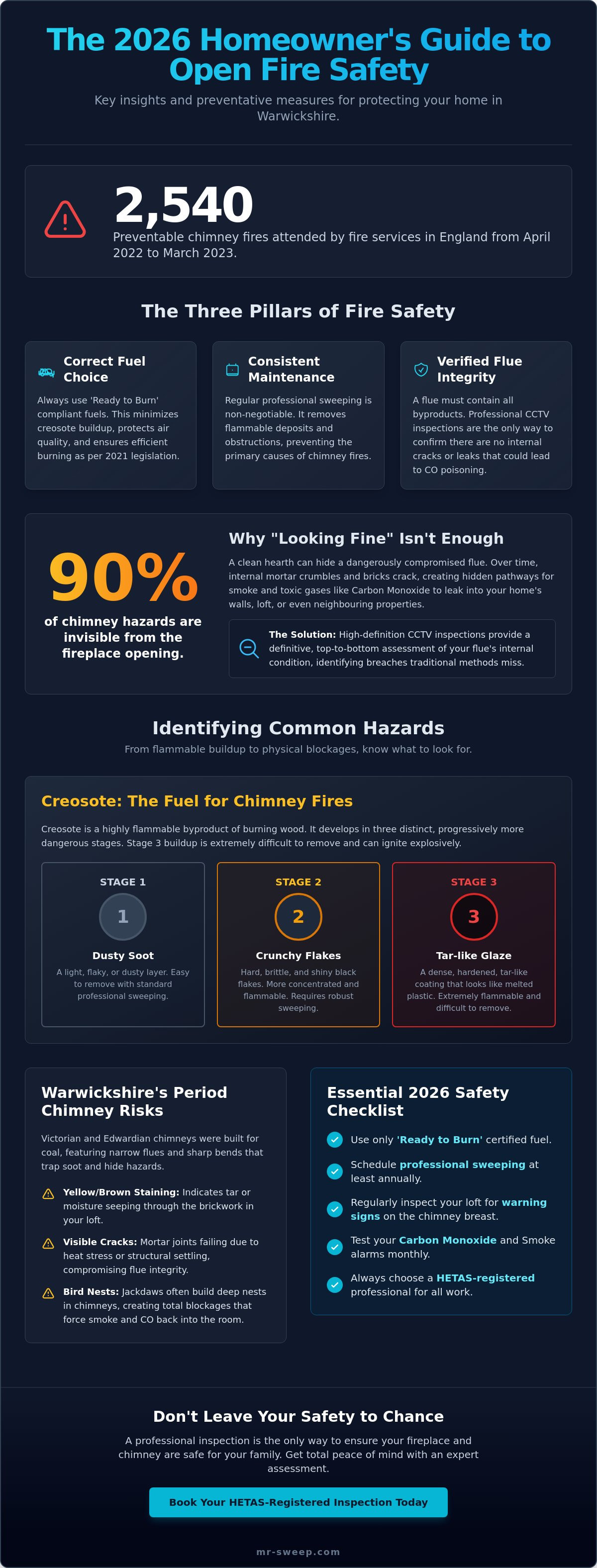
Did you know that fire and rescue services in England attended 2,540 chimney fires between April 2022 and March 2023? Many of these preventable incidents in Warwickshire happen during the first cold snap of November when homeowners light their hearths for the first time without a professional inspection. Prioritising open fire safety isn't just about following local regulations; it's about ensuring your home remains a sanctuary rather than a hazard.
You likely love the traditional warmth of a real flame, but that nagging worry about a chimney fire or carbon monoxide leak is hard to ignore. It's frustrating when you receive conflicting advice about which fuels are safest or exactly how many months you should wait between professional sweeps. We understand that you want expert guidance that cuts through the noise and puts your family's safety first.
This 2026 guide helps you master the essentials of chimney maintenance and risk prevention in Leamington Spa and Warwick. You'll learn how to identify early warning signs, establish a reliable maintenance schedule, and choose the right fuels to keep your chimney clean and your home secure. We've simplified the technical details so you can focus on enjoying your fireplace with total peace of mind.
Key Takeaways
- Understand why the historic period properties of Leamington Spa and Warwick require more frequent inspections to maintain flue integrity and prevent hazards.
- Master the essentials of open fire safety by learning how to identify and eliminate creosote buildup, the leading cause of chimney fires.
- Compare the specific safety profiles of open grates versus enclosed stoves to better manage spark risks and "runaway" fire hazards in your home.
- Follow our 2026 homeowner’s checklist to ensure you are using 'Ready to Burn' compliant fuels that protect Warwickshire’s air quality.
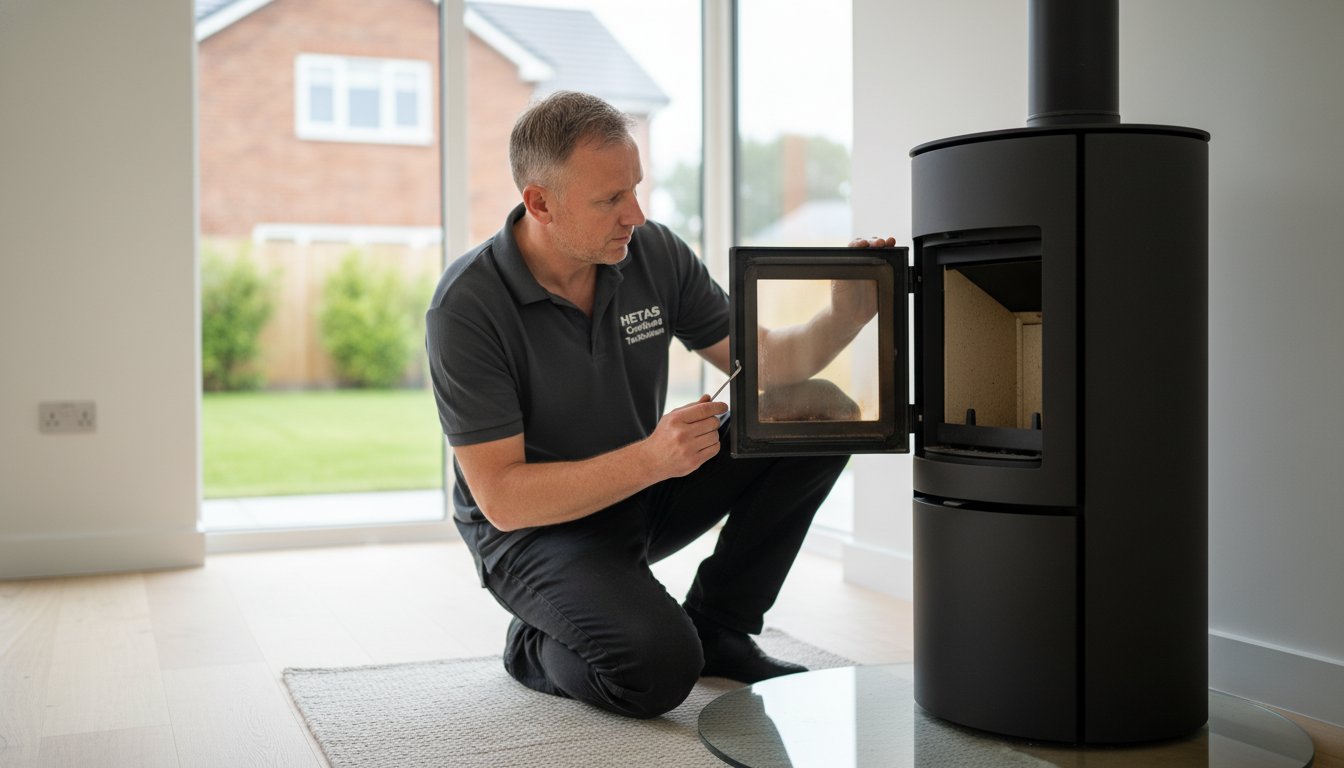
- Discover the importance of HETAS-registered professional care and what to expect during a comprehensive MR-SWEEP safety inspection.
Open Fire Safety in Warwickshire: Why Maintenance Matters
True open fire safety is a disciplined combination of three specific elements: correct fuel choice, consistent equipment maintenance, and verified flue integrity. For homeowners in Leamington Spa and Warwick, this isn't a seasonal suggestion but a critical safety protocol. Since the 2021 "Ready to Burn" legislation, the standards for domestic burning have tightened, making professional oversight more important than ever for the 2026 season. Neglecting these systems creates immediate risks, specifically the threat of toxic gas leakage and understanding chimney fires that can devastate period properties. A HETAS-registered technician acts as your first line of defence, ensuring your installation complies with Document J of the Building Regulations and operates at peak efficiency.
The Unique Challenges of Warwickshire's Period Chimneys
Warwick and Kenilworth are famous for their stunning Victorian and Edwardian architecture, but these properties present specific risks. The structural integrity of 19th-century brickwork often degrades over decades of use. Victorian chimney designs were built for coal, featuring narrow flues and sharp bends that easily hide dangerous soot pockets. If these aren't swept professionally, the accumulated creosote becomes a high-energy fuel source for a fire. Homeowners should regularly check the chimney breast within the loft space for specific warning signs:
- Yellow or brown staining on the brickwork, which indicates moisture or tar seepage.
- Visible cracks in the mortar joints caused by thermal expansion or structural settling.
- Heat radiating from the masonry long after the fire has died down.
Professional sweeps in Warwickshire use power-sweeping technology to reach these hidden areas where traditional brushes often fail. This ensures that the entire length of the flue is clear of obstructions and flammable deposits.
Why 'Looking Fine' Isn't Enough for Fire Safety
A tidy hearth often masks a dangerous flue. Statistics from UK fire services suggest that 90% of chimney hazards are completely invisible from the fireplace opening. Internal mortar can crumble between the bricks, creating "leaky" flues that allow smoke to enter wall cavities. We use high-definition CCTV inspections to identify these internal breaches, providing a clear view of the flue's condition from top to bottom. Flue integrity is the ability of the chimney system to contain all combustion byproducts and vent them safely to the atmosphere. When this integrity fails, the risk of carbon monoxide poisoning increases, as the gas can migrate through porous walls into adjacent rooms or even neighbouring terrace houses. Don't rely on visual guesswork; professional diagnostic tools are the only way to confirm your home is truly safe.
Identifying Common Hazards: From Creosote to Bird Nests
Safe heating starts with understanding what happens inside your chimney when the fire is lit. Most homeowners in Leamington Spa enjoy the glow of an open grate without realizing that invisible hazards are accumulating just inches above the flames. Effective open fire safety isn't just about using a fireguard; it's about managing the chemical and physical byproducts of combustion that can turn a cozy evening into a structural emergency.
The Creosote Risk: A Silent Threat
Creosote is a highly flammable, dark brown or black substance that builds up inside your flue. It's the primary cause of chimney fires in the UK, often ignited by a stray spark or high temperatures. This substance develops in three distinct stages. Stage one is a light, dusty soot that's easy to brush away. Stage two presents as crunchy, black flakes that contain concentrated carbon. Stage three is the most dangerous: a dense, hardened, tar-like glaze that's incredibly difficult to remove and acts like rocket fuel if it catches fire.
You can often spot early warning signs by checking your firebricks for sticky, oily deposits. If you see a glass-like sheen on the masonry, you're likely dealing with stage three buildup. For a deeper look at these hazards, read our detailed guide on creosote in chimney risks to understand how we remove these deposits safely.
Bird Nests and Blockages in Leamington Spa
In Warwickshire, particularly in areas like Wellesbourne and Southam, jackdaws pose a significant seasonal risk. These birds find the warmth of chimney stacks irresistible for nesting between March and July. A single pair of jackdaws can fill a flue with several meters of tightly packed twigs, moss, and sheep's wool in just a few days. This debris doesn't just block smoke; it acts as a fuse. Because the material is bone-dry, it can ignite instantly from the heat of a fire below.
A blocked chimney also forces toxic gases, including carbon monoxide, back into your living room. While homeowners often focus on the fire itself, applying fire risk assessment principles to your property helps you recognize that a physical blockage is a critical failure point. Professional nest removal is the only way to ensure the flue is 100% clear, as DIY poking often just compacts the debris further.
The Danger of Wet Wood
Burning "wet" or unseasoned wood (wood with a moisture content above 20%) is a major contributor to rapid soot buildup. When you burn damp logs, the fire spends its energy evaporating water rather than producing heat. This creates cool, heavy smoke that condenses quickly on the flue walls, accelerating creosote formation. Always use a moisture meter to check your fuel; it's a simple step that keeps your chimney cleaner for longer. If you haven't had your flue inspected after a season of burning logs, a quick check-up with Mr. Sweep can ensure your home remains protected against these hidden threats.
Comparison: Open Fire vs. Wood Burning Stove Safety
Choosing between a traditional open hearth and a modern wood burning stove involves more than just aesthetics. The safety profiles of these two systems differ significantly. An open fire operates as an atmospheric system, drawing large volumes of air from the room. This makes heat control difficult. Once the fuel is lit, you have limited ways to dampen the flame, creating a "runaway" fire risk if the chimney isn't perfectly maintained. Open fires typically achieve only 15% to 20% efficiency, meaning most heat escapes up the flue along with unburnt particulates. These particulates settle as soot and creosote, increasing the frequency of required sweeps in Leamington Spa homes.
Enclosed stoves provide a controlled environment. By adjusting air vents, you dictate the burn rate and temperature. Modern Ecodesign stoves operate at over 80% efficiency, burning off gases that an open fire would simply vent. This leads to cleaner flues and lower risks of chimney fires. However, stoves introduce mechanical points of failure that open grates don't have. Safety depends on the physical condition of the unit rather than just the chimney's draught.
Spark Guards and Hearth Safety
For open fire safety, a kite-marked fire guard is a mandatory requirement, not an optional accessory. Open grates offer no barrier against "spitting" fuels. Softwoods like larch or spruce contain high resin pockets that explode when heated, launching embers several feet into a room. Under UK Building Regulations (Document J), your hearth must extend at least 300mm in front of the fire opening and 150mm to each side. If your Warwickshire property has original timber flooring, a heavy-duty mesh guard prevents stray sparks from causing a domestic fire while you're out of the room.
Stove Integrity: Glass and Rope Seals
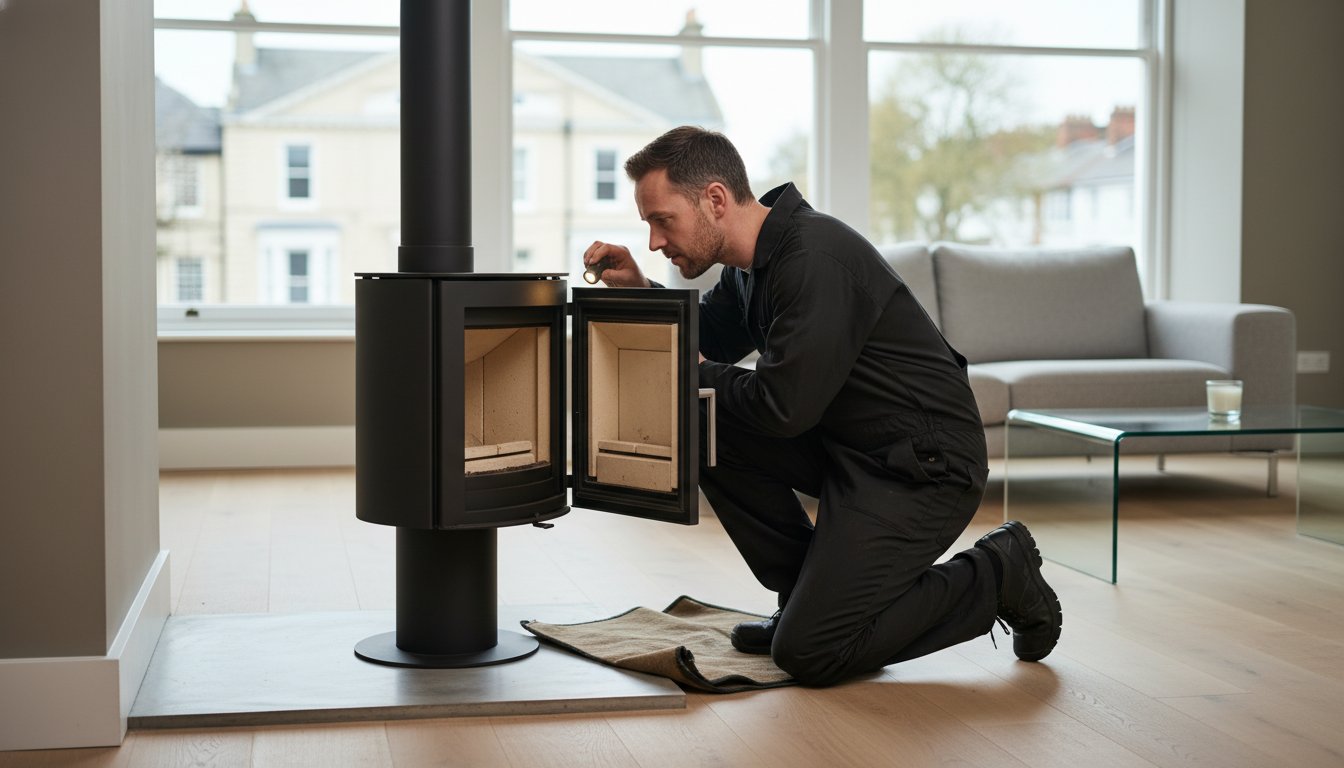
A wood burning stove is only safer than an open fire if its seals remain airtight. The rope seal around the door prevents uncontrolled oxygen from entering the firebox. If this seal hardens or perishes, the stove can over-fire, reaching temperatures that warp the internal baffle plates. A cracked glass panel is an immediate hazard; it turns a controlled appliance into an unpredictable open flame. Regular wood burning stove repair is essential to ensure these components stay functional. Gaps in the stove's structure don't just affect efficiency; they allow carbon monoxide to leak into your living space. We recommend checking these seals annually at the start of the heating season to maintain open fire safety standards across all heating types.
The Essential Homeowner’s Safety Checklist for 2026
Maintaining open fire safety in Leamington Spa and Warwick requires a proactive approach. By 2026, heating standards have evolved to prioritize both air quality and household protection. You shouldn't wait for a problem to appear before taking action. A safe fireplace depends on a combination of regular maintenance, correct fuel choices, and reliable detection systems. Following a strict checklist ensures your home remains a sanctuary rather than a hazard.
- Sweeping frequency: If you burn seasoned wood, you need your chimney swept at least twice a year; once before the season starts and once mid-winter. For those using smokeless coal, an annual sweep is the minimum requirement to remove corrosive deposits.
- The 'Ready to Burn' standard: Only use fuel with the official 'Ready to Burn' logo. This ensures the wood has less than 20% moisture, which is vital for Warwickshire’s air quality and prevents flammable creosote from clogging your flue.
- Alarm testing: Test your smoke and Carbon Monoxide alarms every single month. Replace batteries annually or upgrade to 10-year sealed units to ensure constant protection.
- Bedtime protocols: Never leave a fire unattended. Use a secure spark guard and ensure the fuel has completely burned out before you sleep. Use a metal ash bucket for debris; embers can stay hot for over 48 hours.
Choosing the Right Fuel for Safety
The quality of your fuel directly impacts the safety of your chimney. Seasoned wood with a moisture content below 20% burns cleaner and hotter. If you use wet wood, you'll face a rapid buildup of tar and creosote, which is the primary cause of chimney fires in the UK. You can learn more about sourcing quality local supplies in our guide for best fuel for wood burner UK. Avoid burning treated wood, painted fence panels, or household rubbish. These materials release corrosive chemicals and toxic fumes that damage your flue liner and pollute your living space.
Detecting the Silent Killer: CO Safety
Carbon Monoxide is a lethal gas you can't see, smell, or taste. Every room with an open fire must have a dedicated CO alarm. Install the alarm between 1 and 3 meters away from the fireplace, either on the ceiling or high on a wall. Don't place it directly above the fire or in a drafty corner where the sensor might fail to trigger. For a deeper look at the hazards, see our post on carbon monoxide fireplace risk. Common symptoms of poisoning include persistent headaches, nausea, and exhaustion. If your alarm sounds or you feel unwell, open all windows, get everyone outside, and contact a professional immediately.
Professional Chimney Care in Leamington Spa & Warwick
Professional chimney maintenance isn't just about removing soot; it's the foundation of long-term open fire safety. In Leamington Spa and Warwick, homeowners should always prioritize HETAS registration when hiring a technician. This accreditation acts as the gold standard in the UK. It proves the sweep understands the complex physics of ventilation and the legal requirements for solid fuel appliances. A HETAS-trained expert can identify subtle structural flaws that an unqualified person might miss, such as micro-cracks in the flue lining or inadequate air supply.
A standard MR-SWEEP safety visit follows a rigorous protocol. We don't just push a brush through the stack. We inspect the terminal, check the flue's integrity, and perform a smoke draw test. This process ensures that toxic gases like carbon monoxide exit your home correctly. After every successful sweep, you receive a Chimney Sweep Certificate. If you live in Warwickshire, keep this document safe. Most home insurance providers require proof of professional maintenance to validate claims related to chimney fires. Without this certificate, you could face significant financial liability if an incident occurs.
- Verification of flue integrity to prevent gas leakage.
- Removal of flammable creosote and bird nests.
- Visual inspection of the chimney pot and cowl.
- Advice on fuel quality and burning habits.
The MR-SWEEP Safety Guarantee
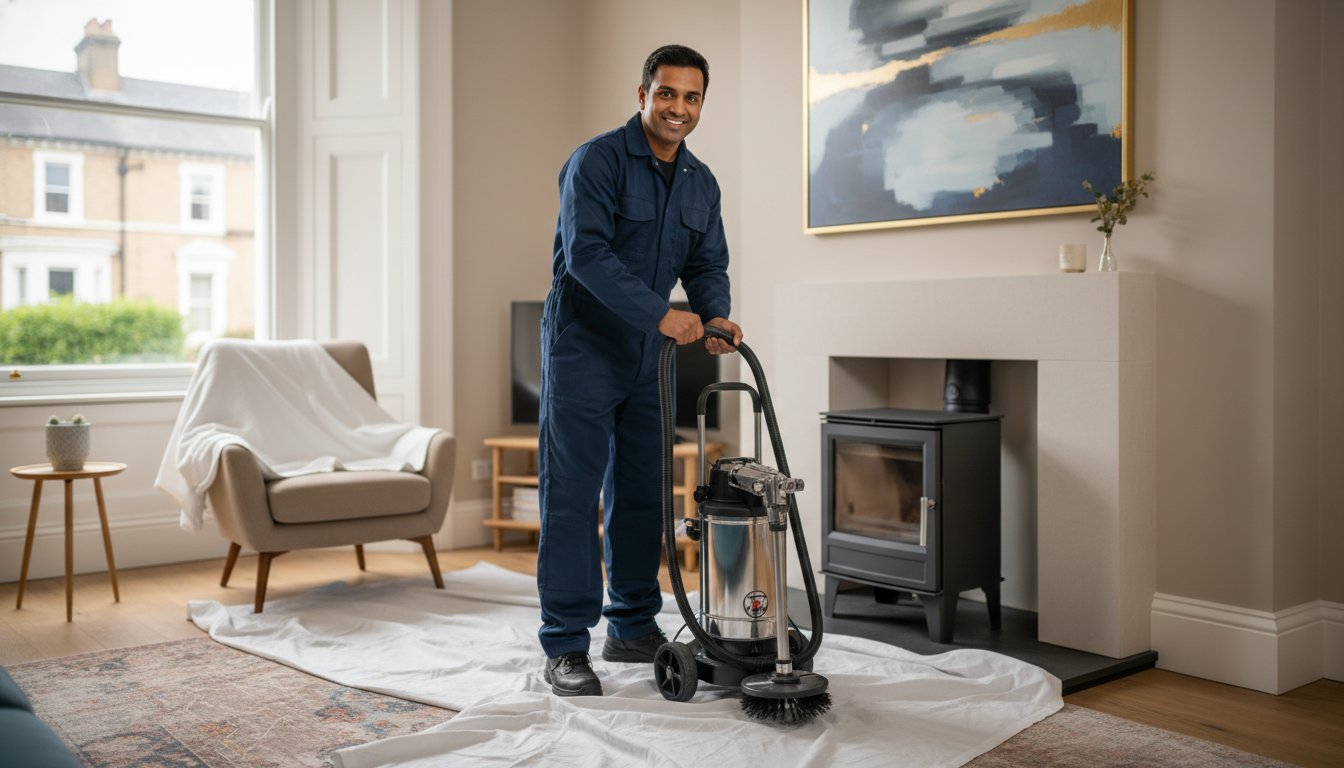
Adrian provides a specialized service across Coventry, Rugby, and Leamington Spa. Every visit focuses on precision and cleanliness. We use high-powered industrial vacuums and specialized brushes designed for modern flue liners and traditional masonry alike. This technology prevents soot escape and protects your furniture. Scheduling a regular chimney sweep leamington spa is your best defense against fire because it removes the flammable creosote that fuels most chimney blazes. We guarantee a mess-free experience that leaves your home as clean as we found it.
Preparing for Your Safety Visit
To ensure a smooth inspection, please clear the hearth area of any ornaments or fragile items. The fire must be completely out for at least 24 hours before your appointment. This allows the internal masonry to cool sufficiently for a thorough check. MR-SWEEP prides itself on being a local, friendly service that puts your family's protection first. We recommend booking your inspection during the spring or summer months to avoid the October peak. Don't wait for a chimney fire to take action. Secure your home's open fire safety today by scheduling a professional visit before the winter rush begins.
Prioritise Your Home’s Warmth and Security in 2026
Maintaining open fire safety is a year-round commitment that protects your property and your family. Statistics from the UK Home Office show that nearly 4,000 chimney fires occur annually in England; these are often due to preventable creosote buildup or blockages. Regular maintenance isn't just about cleanliness. It's about identifying structural risks before they become emergencies. By removing bird nests and scheduling annual inspections, you ensure your fireplace remains an asset rather than a hazard.
Working with a HETAS-registered technician guarantees your system meets current UK safety standards. Every sweep includes a safety certificate for your insurance records. Whether you need specialist bird nest removal or a detailed CCTV inspection to check for internal masonry cracks, professional care provides total certainty. It's the most effective way to enjoy your hearth without worrying about hidden dangers.
Ensure your home is safe: book your professional chimney sweep in Leamington Spa today
Take this proactive step today so you can relax by the fire tomorrow. Your home deserves the attention of a specialist who values precision and safety as much as you do.
Frequently Asked Questions
How often should I have my chimney swept for an open fire in Warwickshire?
You should have your chimney swept at least once a year if you burn smokeless fuel and twice a year if you burn wood. For homeowners in Leamington Spa and Warwick, regular maintenance prevents the buildup of creosote, which causes 90% of chimney fires in the UK. Schedule your visit before the burning season starts in September to ensure your flue remains clear and efficient.
Is it safe to leave an open fire burning when I go to bed?
No, it's never safe to leave an open fire burning when you go to bed. You must extinguish the flames and ensure the embers are cool before leaving the room. Unattended fires are a leading cause of domestic property damage in Warwickshire. Use a spark guard if you must leave the room briefly, but always put the fire out completely before sleeping to maintain open fire safety.
What are the signs that my chimney might be on fire?
A loud roaring noise that sounds like a low-flying jet engine is the most common sign of a chimney fire. You might also see sparks or dense smoke shooting out from the top of the chimney stack outside. Indoors, the chimney breast may feel hot to the touch or you might smell a strong, metallic odour. If you notice these signs, evacuate the property and call 999 immediately.
Do I really need a carbon monoxide alarm if I have an open fireplace?
You absolutely need a carbon monoxide alarm because CO is a tasteless, odourless gas that can be fatal. UK Building Regulations require a CO alarm in any room with a solid fuel appliance installed since 2010. Place the alarm between 1 and 3 metres from the fireplace. This simple device protects your family from leaks caused by blocked flues or poor ventilation issues.
Can I use a DIY chimney cleaning kit instead of a professional sweep?
DIY kits often fail to remove hardened creosote and can't provide the professional certification required by most UK insurers. A professional sweep uses specialist brushes and vacuum systems to ensure a dust-free environment. We also perform a smoke draw test to confirm the flue is functioning correctly. Professional intervention identifies structural cracks that a standard DIY rod will likely miss.
What should I do if a bird gets stuck in my chimney?
Don't light a fire if you suspect a bird is trapped, as the smoke will kill the animal and create a dangerous blockage. If the bird is alive, contact a local sweep or the RSPCA for advice on safe removal. To prevent this, install a bird guard or cowl on your chimney pot. Statistics show that jackdaws are responsible for 80% of bird-related chimney blockages in Warwickshire homes.
Will my home insurance cover a chimney fire if I haven't had it swept?
Most home insurance policies won't cover damage from a chimney fire if you can't provide a certificate of sweeping from the last 12 months. Insurers view regular maintenance as a mandatory condition of the policy. If a fire occurs and the flue is found to be neglected, your claim could be rejected. Keep all your receipts from a registered sweep to prove you've prioritised open fire safety.
What is the safest fuel to burn in an open fire in the UK?
Dry, seasoned wood with a moisture content below 20% or HETAS-approved smokeless fuels are the safest choices. Burning "wet" wood creates excessive soot and tar, which increases the risk of a chimney fire by 50%. Look for the "Ready to Burn" logo on fuel packaging. This ensures you're complying with the UK's Clean Air Act regulations while keeping your flue cleaner for longer.